
Business Angels for Your Startup Business

Business Angels for Your Startup Business
By Mike Cain
Setting up a new business can be a daunting prospect. There’s the possibility of failure, and with it, the risk of losing the money you’ve invested in your company, as well as seeing all your months or even years of hard work go to waste. But, there’s truth in the old saying, “nothing ventured, nothing gained.” The biggest rewards accrue to those who not only have a vision for their business but also are prepared to see it through and have the courage of their convictions.
Nonetheless, it can be hard finding sources of funding for a new business. In many cases, finding a business angel may be your best bet for sourcing capital to start up a new company. But, let’s have a look at some of the other options available to you.
First and most obvious, you may have the available funds yourself. Depending on the level of risk, you may not feel comfortable dipping into your savings to fund a new business; this is a decision you will have to consider long and hard. However, if you feel able to use some of your savings to finance a startup, then so much the better.
Another option is to borrow money from family or friends. If you’re doing this, the best and fairest way to get them on board is as investors, making sure that they have the chance to share in your success – but also warning them of the potential pitfalls. Make sure they are clear on the nature of the risk they are undertaking – many friendships have been broken down the years due to money. It’s often a good idea to put your agreement in writing, just so there is absolutely no misunderstanding further down the line about the terms on which you borrowed the money. It’s up to you, to be honest about your chances of success and to give them all the information they need.
The second major type of financing is acquired by taking out a standard loan. This may be from your bank or another lender, and can include bank loans, overdraft facilities, or credit cards. Taking out one or several loans is not a bad idea, but you must make sure you’re not taking on more debt than you can afford to repay.
Take a careful look at repayment terms and interest rates, and make sure you’re getting the best possible deal before signing anything. Even if your fledgling business is doing well, excessive loan repayments can be a heavy drag on your profits, so do the sums beforehand, and make sure you can afford to repay the debt even in a worst-case scenario. You might also want to think about remortgaging your house, or other investment properties you may own. The same rules apply; make sure you don’t take on more debt than you can afford to repay. Taking out a large loan or remortgage can force you to make an honest appraisal of your business plan; sometimes it can be just the reality check you need.
If you don’t have any equity with which to take out a loan, then there is another option, called the Small Business Loan Guarantee scheme; it’s a business loan 75% guaranteed by the Government. You are required to contribute just 25% of the security, so this is an excellent option for anyone who doesn’t have a huge amount of capital with which to set up their small business. However, it’s worth noting that these loans do have an administration fee attached, and the rate of interest is normally relatively high – some 1.5 to 2.0% higher than base rate.
We hope you found this article about “Business Angels for Your Startup Business” helpful. If you have questions or need expert tax or family office advice that’s refreshingly objective (we never sell investments), please contact us or visit our Family office page or our website at www.GROCO.com. Unfortunately, we no longer give advice to other tax professionals gratis.
To receive our free newsletter, contact us here.
Subscribe our YouTube Channel for more updates.
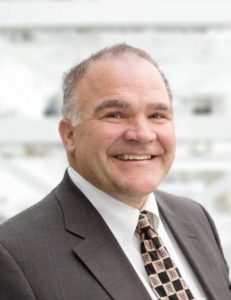
Alan Olsen, is the Host of the American Dreams Show and the Managing Partner of GROCO.com. GROCO is a premier family office and tax advisory firm located in the San Francisco Bay area serving clients all over the world.
Alan L. Olsen, CPA, Wikipedia Bio

GROCO.com is a proud sponsor of The American Dreams Show.

The American Dreams show was the brainchild of Alan Olsen, CPA, MBA. It was originally created to fill a specific need; often inexperienced entrepreneurs lacked basic information about raising capital and how to successfully start a business.
Alan sincerely wanted to respond to the many requests from aspiring entrepreneurs asking for the information and introductions they needed. But he had to find a way to help in which his venture capital clients and friends would not mind.
The American Dreams show became the solution, first as a radio show and now with YouTube videos as well. Always respectful of interview guest’s time, he’s able to give access to individuals information and inspiration previously inaccessible to the first-time entrepreneurs who need it most.
They can listen to venture capitalists and successful business people explain first-hand, how they got to where they are, how to start a company, how to overcome challenges, how they see the future evolving, opportunities, work-life balance and so much more..
American Dreams discusses many topics from some of the world’s most successful individuals about their secrets to life’s success. Topics from guest have included:
Creating purpose in life / Building a foundation for their life / Solving problems / Finding fulfillment through philanthropy and service / Becoming self-reliant / Enhancing effective leadership / Balancing family and work…

MyPaths.com (Also sponsored by GROCO) provides free access to content and world-class entrepreneurs, influencers and thought leaders’ personal success stories. To help you find your path in life to true, sustainable success & happiness. It’s mission statement:
In an increasingly complex and difficult world, we hope to help you find your personal path in life and build a strong foundation by learning how others found success and happiness. True and sustainable success and happiness are different for each one of us but possible, often despite significant challenges.
Our mission at MyPaths.com is to provide resources and firsthand accounts of how others found their paths in life, so you can do the same.
Mastering Business Growth with Howard Shore
Howard Shore, Founder and CEO of Activate Group Inc. discusses managing, even mastering, business growth and the challenges growing quickly can present on Alan Olsen‘s American Dreams Show. Transcript: Alan Olsen Welcome to American Dreams. My guest today is Howard Shore. Howard, welcome to today’s show. Howard Shore Alan, thank you for having me. Alan…
Prosperity and Self-Reliance Zealot Steve Alder
From North America to Ghana, Africa, Steve Alder, President of Ensign Global College (www.ensign.edu.gh), sits down to discuss how a professor helps to build global prosperity and self-reliance on Alan Olsen‘s American Dreams Show. Transcript: Alan Olsen Welcome to American Dreams I’m visiting here today with Steve Alder. Steve, welcome to today’s program. Steve Alder Thank…
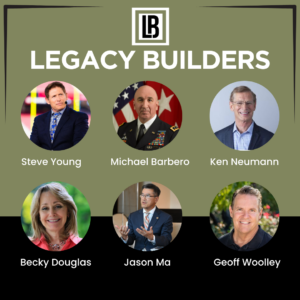
Steve Young on Building an Epic Family Legacy
Retired 49r Steve Young Discusses Building a Family Legacy at the Legacy Builders Event on May 15, 2024 As GROCO celebrates three decades of excellence in family office tax and advisory services, we have developed the Legacy Builders to stands as a testament to the firm’s enduring vision: to transform wealth into a powerful tool…
Leadership, Duty, Honor & Country With Lt. Gen. Mike Barbero
Retired US Army Lieutenant General, Michael D. Barbero, discusses leadership, service, duty, honor, and country on Alan Olsen‘s American Dreams Show. Transcript: Alan Olsen Hi, this is Alan Olsen and welcome to American Dreams. My guest today is General Michael Barbero. General, welcome to today’s show. Mike Barbero Thanks, Alan, how are you? Thanks for having me. It’s…