
How to Attract Business Capital – An Upstart’s Guide

How to Attract Business Capital – An Upstart’s Guide
By Kenneth Jahzeal Aqwu
Many aspiring entrepreneurs set out with grandiose ideas about what they hope to achieve with their newly-conceived business idea. But a few months down the road, especially as realities begin to set in, that initial fiery enthusiasm often begins to die down. And more often than not, the embryonic business dies even before it begins. Indeed, besides the numerous businesses that die within the first five years of their establishment, there are countless other business ideas that die as ideas – a stillbirth.
Several factors have been identified as reasons why some business ideas do not see the light of day. Central to such failed concepts is the failure of the budding entrepreneur to attract sponsorship, i.e. to convince any investor to buy into the idea he is proposing. The idea behind a business may not be defective in itself. Quite the contrary, some of them are actually backed by brilliant if romantic ideas. But as venture capitalists, banks, and other investors often point out, more is needed in turning a business idea into something that is bankable than a fanciful concept.
As an aspiring entrepreneur, you need to find ways to transform your business idea into a product that can be sold that is unique in some respects. You’ll also need to show what existing or newly-identified needs this product is going to satisfy, how similar products are doing in the market, as well as how this new idea is different from what the competition is already offering. In order words, you are to prove that the product is capable of turning a profit. Therefore between the two stages of conceptualization of a business idea and business success, several important calculations and analysis are required. We can put all these intervening activities under one broad heading: Planning.
Having come up with a business idea, you need a business plan which should include such items as management plan, customer service plan, operational efficiency plan, sales plan, succession plan, and so on. The list of plans is actually endless, and it is not necessary to incorporate every one of the plans into your business idea. If you wait until all plans are perfectly in place then you may never start. But you must have a business plan. The idea is to pick a few that are particularly pertinent and crucial to the business you are pondering. No business financier will take you seriously if your business idea is bereft of a clear-cut plan of how you intend to implement the ideas you are proposing. You also need to bear in mind that plans are not ends in themselves; they are merely tools to help you arrive at your destination, namely, a profitable and enduring enterprise. Hence, the true worth of a plan is not in the beauty of the prose or the presentation (though these are not to be overlooked), but the quality of decisions it engenders.
Next, your plans should adequately consider the financial implications of the various activities the business will entail. How much will it cost to implement each stage of your business concept, and how much is the resultant product expected to generate? Also, what proof is there that you can deliver on your promise?
Investors are often put off by business ideas or even business plans that blissfully ignore financial implications. Indeed, no investor will take a blind chance with their hard-earned dollar. Therefore if you hope to attract investors, get a business loan, or simply hope to perform efficiently and turn a profit, your plans should not be all flowery words and superfluous promises. They must be backed by financial facts based on sound statistics and logic.
Examining your new business idea along this checklist will increase your chances of winning the attention of investors, as well as enhancing your own chances of success. Prospective investors will then begin to see reasons to believe in your proposed business plan and in your ability to succeed in that line of business. Indeed any business plan that fails to adequately address these concerns will amount to mere ‘busyness’, a waste of your precious time and those of others who have to look through the idea.
We hope you found this article about “How to Attract Business Capital – An Upstart’s Guide” helpful. If you have questions or need expert tax or family office advice that’s refreshingly objective (we never sell investments), please contact us or visit our Family office page or our website at www.GROCO.com. Unfortunately, we no longer give advice to other tax professionals gratis.
To receive our free newsletter, contact us here.
Subscribe to our YouTube Channel for more updates.
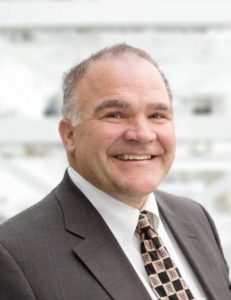
Alan Olsen, is the Host of the American Dreams Show and the Managing Partner of GROCO.com. GROCO is a premier family office and tax advisory firm located in the San Francisco Bay area serving clients all over the world.
Alan L. Olsen, CPA, Wikipedia Bio

GROCO.com is a proud sponsor of The American Dreams Show.

The American Dreams show was the brainchild of Alan Olsen, CPA, MBA. It was originally created to fill a specific need; often inexperienced entrepreneurs lacked basic information about raising capital and how to successfully start a business.
Alan sincerely wanted to respond to the many requests from aspiring entrepreneurs asking for the information and introductions they needed. But he had to find a way to help in which his venture capital clients and friends would not mind.
The American Dreams show became the solution, first as a radio show and now with YouTube videos as well. Always respectful of interview guest’s time, he’s able to give access to individuals information and inspiration previously inaccessible to the first-time entrepreneurs who need it most.
They can listen to venture capitalists and successful business people explain first-hand, how they got to where they are, how to start a company, how to overcome challenges, how they see the future evolving, opportunities, work-life balance and so much more..
American Dreams discusses many topics from some of the world’s most successful individuals about their secrets to life’s success. Topics from guest have included:
Creating purpose in life / Building a foundation for their life / Solving problems / Finding fulfillment through philanthropy and service / Becoming self-reliant / Enhancing effective leadership / Balancing family and work…

MyPaths.com (Also sponsored by GROCO) provides free access to content and world-class entrepreneurs, influencers and thought leaders’ personal success stories. To help you find your path in life to true, sustainable success & happiness. It’s mission statement:
In an increasingly complex and difficult world, we hope to help you find your personal path in life and build a strong foundation by learning how others found success and happiness. True and sustainable success and happiness are different for each one of us but possible, often despite significant challenges.
Our mission at MyPaths.com is to provide resources and firsthand accounts of how others found their paths in life, so you can do the same.
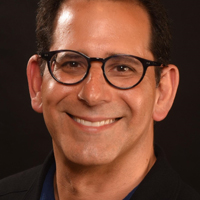
Mastering Business Growth with Howard Shore
Howard Shore, Founder and CEO of Activate Group Inc. discusses managing, even mastering, business growth and the challenges growing quickly can present on Alan Olsen‘s American Dreams Show. Transcript: Alan Olsen Welcome to American Dreams. My guest today is Howard Shore. Howard, welcome to today’s show. Howard Shore Alan, thank you for having me. Alan…
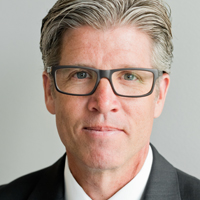
Prosperity and Self-Reliance Zealot Steve Alder
From North America to Ghana, Africa, Steve Alder, President of Ensign Global College (www.ensign.edu.gh), sits down to discuss how a professor helps to build global prosperity and self-reliance on Alan Olsen‘s American Dreams Show. Transcript: Alan Olsen Welcome to American Dreams I’m visiting here today with Steve Alder. Steve, welcome to today’s program. Steve Alder Thank…
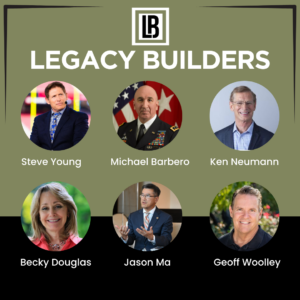
Steve Young on Building an Epic Family Legacy
Retired 49r Steve Young Discusses Building a Family Legacy at the Legacy Builders Event on May 15, 2024 As GROCO celebrates three decades of excellence in family office tax and advisory services, we have developed the Legacy Builders to stands as a testament to the firm’s enduring vision: to transform wealth into a powerful tool…
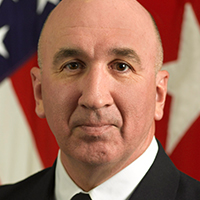
Leadership, Duty, Honor & Country With Lt. Gen. Mike Barbero
Retired US Army Lieutenant General, Michael D. Barbero, discusses leadership, service, duty, honor, and country on Alan Olsen‘s American Dreams Show. Transcript: Alan Olsen Hi, this is Alan Olsen and welcome to American Dreams. My guest today is General Michael Barbero. General, welcome to today’s show. Mike Barbero Thanks, Alan, how are you? Thanks for having me. It’s…