
Know the Basics of the 7 Types of Funds When You Are Sourcing For Business Funding

Know the Basics of the 7 Types of Funds When You Are Sourcing For Business Funding
By Ben Ang
You probably would have experienced the countless tormenting stresses and difficulties in getting the required funding for your new business ideas or products. Deep down within your heart, you know that your business idea or product will fetch significant returns for your investors. However, you do not know where to start from as your understanding of the basic fundamentals and characteristics of the various funds available are limited. Here are the descriptions of the 7 types of funds that you need to know when you are sourcing for business funding:
1. Leveraged buyout.
This is a form of private fund that is essentially a strategy that involves the acquisition of another company using a significant amount of borrowed money that is in either bonds or loans to meet the cost of acquisition. Most of the time, the assets of the company being acquired are used as collateral for loans in addition to the assets of the acquiring company. This type of fund is to allow companies to make large acquisitions without having to commit a lot of capital. There is usually a ratio of 70 percent debt to 30 percent equity for leveraged buyout.
2. Private equity.
This refers to the shareholding of a company by investors who have invested in the company in exchange for its shares, thus having a certain degree of management control. These shares are not traded in public stock markets.
3. Private fund.
This fund is invested by the individual, or is pooled money from affluent individuals or institutions setup. This type of fund is invested solely in targeted companies and may or may not be managed by professional fund managers.
4. Growth capital.
This is a form of private fund which has the feature of a very flexible type of financing. The money borrowed under a growth capital line of credit can be used for any corporate purposes. Growth capital is a beneficial way to extend a company’s runway between rounds of financing. The extra time can be utilized for completing additional milestones that will raise the company’s valuation or as a form of insurance to ensure that all intended milestones are successfully accomplished. Besides, there are no requirements to provide invoices or other backup material when borrowing under this type of facility, hence the ease of an administration process.
5. Venture capital.
This is a form of private fund that is typically provided by external investors for financing new, growing or struggling businesses. These venture capital investments are regarded as high risk investments and are invested by venture capitalists. However, these investments offer the potential for above average returns.
6. Angel investor.
This investor is an affluent individual who provides capital for a business start-up in exchange usually for ownership equity. Angel investors do not manage the pooled money of others in a professionally managed fund. However, they often organize themselves into angel networks or angel groups to share research and pooling of investment capital. In Europe, they are termed business angel or in short angel.
7. Mezzanine capital.
This is a form of private fund that is also equivalent to unsecured, high yielding subordinated debt or preferred stock that represents a claim on a company’s assets that is senior only to that of a company’s shareholders. Mezzanine capital, also termed mezzanine debt often includes an equity stake in the form of warrants attached to the debt obligation or a debt conversion feature identical to that of a convertible bond. It is a more expensive financing source for a company compared to secured debt or senior debt because of the increased credit risk as it is less likely to be repaid in full in the event of a default. This type of fund can only be secured by the equity of the company not including the tangible assets. In compensation for the increased risk, a higher interest payment or an equity stake in the company will be rewarded to mezzanine debt holders. It is still a cheaper source of financing than equity as the current equity holders achieve less dilution.
When financing for your business, you have to bear in mind that the external fund that is injected into your company will result in losing a certain degree of control over your business. Differences in opinion by investor and investee teams will have a detrimental effect on your company as they are not focusing on the determined strategy but instead, ironing out the differences and procedures. This will result in loss of valuable productivity and induce unnecessary tension in your workplace. In the worst scenario, there will be loss of potential deals due to the inability to make swift settlements. However, there will be a pool of invaluable expertise, management skills and contacts that are brought together into the company with the funds by the investors, hence ensuring a higher level of productivity and efficiency that leads to a continuous expansion success.
Ben Ang is a entrepreneur, trader, investor, internet marketer and blogger. He has been trading and investing for the past 2 to 3 years, and always keen and willing to learn new knowledge or techniques to improve his trading, investing and also enhance his business. He has a investing blog where he shares knowledge and past experiences on his trading and investment.
We hope you found this article about “Know the Basics of the 7 Types of Funds When You Are Sourcing For Business Funding” helpful. If you have questions or need expert tax or family office advice that’s refreshingly objective (we never sell investments), please contact us or visit our Family office page or our website at www.GROCO.com. Unfortunately, we no longer give advice to other tax professionals gratis.
To receive our free newsletter, contact us here.
Subscribe to our YouTube Channel for more updates.
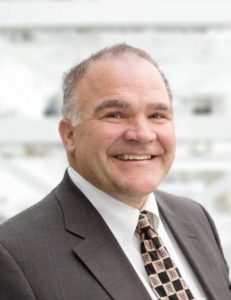
Alan Olsen, is the Host of the American Dreams Show and the Managing Partner of GROCO.com. GROCO is a premier family office and tax advisory firm located in the San Francisco Bay area serving clients all over the world.
Alan L. Olsen, CPA, Wikipedia Bio

GROCO.com is a proud sponsor of The American Dreams Show.

The American Dreams show was the brainchild of Alan Olsen, CPA, MBA. It was originally created to fill a specific need; often inexperienced entrepreneurs lacked basic information about raising capital and how to successfully start a business.
Alan sincerely wanted to respond to the many requests from aspiring entrepreneurs asking for the information and introductions they needed. But he had to find a way to help in which his venture capital clients and friends would not mind.
The American Dreams show became the solution, first as a radio show and now with YouTube videos as well. Always respectful of interview guest’s time, he’s able to give access to individuals information and inspiration previously inaccessible to the first-time entrepreneurs who need it most.
They can listen to venture capitalists and successful business people explain first-hand, how they got to where they are, how to start a company, how to overcome challenges, how they see the future evolving, opportunities, work-life balance and so much more..
American Dreams discusses many topics from some of the world’s most successful individuals about their secrets to life’s success. Topics from guest have included:
Creating purpose in life / Building a foundation for their life / Solving problems / Finding fulfillment through philanthropy and service / Becoming self-reliant / Enhancing effective leadership / Balancing family and work…

MyPaths.com (Also sponsored by GROCO) provides free access to content and world-class entrepreneurs, influencers and thought leaders’ personal success stories. To help you find your path in life to true, sustainable success & happiness. It’s mission statement:
In an increasingly complex and difficult world, we hope to help you find your personal path in life and build a strong foundation by learning how others found success and happiness. True and sustainable success and happiness are different for each one of us but possible, often despite significant challenges.
Our mission at MyPaths.com is to provide resources and firsthand accounts of how others found their paths in life, so you can do the same.
Mastering Business Growth with Howard Shore
Howard Shore, Founder and CEO of Activate Group Inc. discusses managing, even mastering, business growth and the challenges growing quickly can present on Alan Olsen‘s American Dreams Show. Transcript: Alan Olsen Welcome to American Dreams. My guest today is Howard Shore. Howard, welcome to today’s show. Howard Shore Alan, thank you for having me. Alan…
Prosperity and Self-Reliance Zealot Steve Alder
From North America to Ghana, Africa, Steve Alder, President of Ensign Global College (www.ensign.edu.gh), sits down to discuss how a professor helps to build global prosperity and self-reliance on Alan Olsen‘s American Dreams Show. Transcript: Alan Olsen Welcome to American Dreams I’m visiting here today with Steve Alder. Steve, welcome to today’s program. Steve Alder Thank…

Steve Young on Building an Epic Family Legacy
Retired 49r Steve Young Discusses Building a Family Legacy at the Legacy Builders Event on May 15, 2024 As GROCO celebrates three decades of excellence in family office tax and advisory services, we have developed the Legacy Builders to stands as a testament to the firm’s enduring vision: to transform wealth into a powerful tool…
Leadership, Duty, Honor & Country With Lt. Gen. Mike Barbero
Retired US Army Lieutenant General, Michael D. Barbero, discusses leadership, service, duty, honor, and country on Alan Olsen‘s American Dreams Show. Transcript: Alan Olsen Hi, this is Alan Olsen and welcome to American Dreams. My guest today is General Michael Barbero. General, welcome to today’s show. Mike Barbero Thanks, Alan, how are you? Thanks for having me. It’s…