
10 Things Every Taxpayer Needs to Know About the Pension Law

10 Things Every Taxpayer Needs to Know About the Pension Law
The Pension Protection Act, signed into law on August 17, 2006, is designed to address the nation-wide problem of under-funded pension plans. The law penalizes noncompliant companies and encourages employee contributions, but many of the changes directly impact taxpayers of all ages, regardless of retirement status.
“Taxpayers will benefit from many of the act’s provisions, some of which come in the form of tax breaks, but individuals cannot take full advantage of the tax breaks until the new laws are fully understood,” said Michael Smith, Managing Authorized Taxpayer Representative at tax services firm FSI Tax Corp. (www.fsitax.com).
The following is a rundown of the most important tax code changes and how they will likely affect taxpayers, as well as retirees.
1. Direct IRA Tax Return Deposits
Taxpayers can now have their tax returns deposited directly into their IRA accounts. The IRS already offers taxpayers the option to automatically deposit returns into checking and saving accounts. By adding IRA accounts, legislators hope taxpayers will contribute more funds toward their retirement accounts.
2. 529 College Savings Plans
Many temporary tax laws enacted by the 2001 tax cuts were made permanent by the Pension Protection Act. This includes the ability to make withdrawals from 529 college savings plans without suffering tax penalties.
“Tax-free college savings withdrawals may seem inappropriate in a pension law, but this provision is welcomed by parents who would otherwise resort to tapping their IRAs to fund their children’s education,” said Smith.
3. Saver’s Credit
Another 2001 tax break that was set to expire this year is the Saver’s Credit, a tax credit matching up to $2,000 for lower-income workers who put money into their retirement accounts. This tax break benefits workers who earn less than $25,000 because pre-tax contributions lower the taxpayer’s reportable income and the Saver’s Credit provides additional tax relief with its matching funds.
4. Increased Contribution Levels
In 2001, the IRS temporarily raised employee-sponsored retirement plan contribution levels from $2,000 to $4,000 this year, $5,000 in 2008 and then adjusted by inflation. The higher limits were set to expire in 2010, but the act made them a permanent increase.
This change, also intended to encourage increased contribution amounts, applies to 401(k)s, IRAs, 403(b)s, 457s and catch-up contributions for workers aged 50 and older.
5. Direct Rollovers from a 401(k) to a Roth IRA
Employees who move from one workplace to another were previously permitted to transfer their 401(k)s to traditional IRAs, both of which require taxes to be paid once money is withdrawn. Only then was the individual allowed to transfer the account into a Roth IRA.
The law now permits former employees to transfer their employer-funded retirement accounts directly into a Roth IRA, a popular option due to the fact that contributions are made after taxes are taken from earnings, which means that there are no taxes due upon withdrawing funds.
“The tax code changes enacted by the Pension law benefit taxpayers and steer them toward contributing to their own retirements,” explained Smith. “While companies should be held accountable for funding employee pensions, each taxpayer should take advantage of changes that make it easier to ensure a secure retirement.”
Tax Deductions for Charitable Giving
Non-pension-related tax code changes include several provisions that significantly increase charitable giving regulations, some of which are unlikely to please donors.
5. Documenting Items
To discourage taxpayers from inflating the value of non-monetary charitable donations for inflated tax deductions, the IRS now requires taxpayers to fill out a form detailing the gifts. Additionally, any significant household item, valued at more than $500, must be appraised before the taxpayer can take a deduction.
Many charitable organizations, including Goodwill Industries International, say the new provisions will guard against worthless donations more suitable for the trash bins, but critics argue that increased regulation will discourage would-be donors and cause a decrease in charitable giving.
6. Documenting Monetary Gifts
Monetary donations will also require documentation. Regardless of the amount, a taxpayer should retain proof of any donation. Appropriate documentation can be a bank record, canceled check, credit card statement or receipt from the charity.
“These records are not required to be included in the tax return but they should be kept on hand should the IRS request proof,” advised Smith.
7. Direct Donations from IRAs for Seniors
Another tax law that many charities support affects only seniors. For the next two years, donors 70 ½ or older will be able to donate to charities directly from their IRAs, an accommodation that keeps the donated amount tax-free and avoids tax penalties for early withdrawals.
This provision benefits eligible taxpayers who take the standard deduction, which many older filers do because they receive larger standard deductions. This can also benefit individuals facing donation limits. Generally, people cannot donate more that 50 percent of their incomes, but the money does not count as income when it comes directly from the IRA.
Officials at charities such as United Way claim that despite being temporary, this provision will likely bring in tens of millions of dollars.
Other Pension Provisions
8. Automatic 401(k) Sign Up
Employers are allowed to automatically sign up employees for a 401(k). This change encourages participation from people who may not otherwise bother to sign up for the plan in the first place, though they will have the option to opt out.
9. Investment Advice
Because employees often choose safer investments for their 401(k)s, which generally result in modest returns, the act allows them to receive investment planning advice to encourage riskier investments with the potential for higher returns. The act also provides protection against dishonest advisers who steer employees toward decisions that could increase their own profit.
10. Non-Spousal Benefits
Two provisions that expand allowable withdrawals are pleasing gay rights activists. The non-spousal rollover lets retirement account assets be transferred to a designated beneficiary upon the retiree’s death and the hardship distribution allows retirement account assets be used for a medical or financial emergency of a beneficiary other than a spouse or a dependent.
The majority of the Pension Protection Act aims to ensure that companies fully fund traditional pension plans over a seven-year period, starting in 2008. But many provisions promote increased individual employee participation in retirement planning.
Smith said that while the new law expands allowances and makes it easier for individuals to increase retirement savings, it may be a step toward employee-funded retirement plans – a move that has many critics concerned.
Maggie Beetz is a writer for FSI Financial Literacy based in Columbia, MD. FSI Financial Literacy aims to spread financial awareness to clients of FSI Tax Corp., Debt Shield, Inc. and the general public.
We hope you found this article about “10 Things Every Taxpayer Needs to Know About the Pension Law” helpful. If you have questions or need expert tax or family office advice that’s refreshingly objective (we never sell investments), please contact us or visit our Family office page or our website at www.GROCO.com. Unfortunately, we no longer give advice to other tax professionals gratis.
To receive our free newsletter, contact us here.
Subscribe our YouTube Channel for more updates.
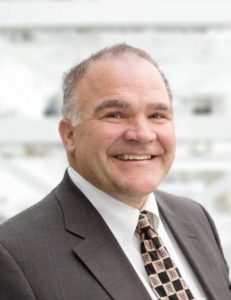
Alan Olsen, is the Host of the American Dreams Show and the Managing Partner of GROCO.com. GROCO is a premier family office and tax advisory firm located in the San Francisco Bay area serving clients all over the world.
Alan L. Olsen, CPA, Wikipedia Bio

GROCO.com is a proud sponsor of The American Dreams Show.
The American Dreams show was the brainchild of Alan Olsen, CPA, MBA. It was originally created to fill a specific need; often inexperienced entrepreneurs lacked basic information about raising capital and how to successfully start a business.
Alan sincerely wanted to respond to the many requests from aspiring entrepreneurs asking for the information and introductions they needed. But he had to find a way to help in which his venture capital clients and friends would not mind.
The American Dreams show became the solution, first as a radio show and now with YouTube videos as well. Always respectful of interview guest’s time, he’s able to give access to individuals information and inspiration previously inaccessible to the first-time entrepreneurs who need it most.
They can listen to venture capitalists and successful business people explain first-hand, how they got to where they are, how to start a company, how to overcome challenges, how they see the future evolving, opportunities, work-life balance and so much more..
American Dreams discusses many topics from some of the world’s most successful individuals about their secrets to life’s success. Topics from guest have included:
Creating purpose in life / Building a foundation for their life / Solving problems / Finding fulfillment through philanthropy and service / Becoming self-reliant / Enhancing effective leadership / Balancing family and work…

MyPaths.com (Also sponsored by GROCO) provides free access to content and world-class entrepreneurs, influencers and thought leaders’ personal success stories. To help you find your path in life to true, sustainable success & happiness. It’s mission statement:
In an increasingly complex and difficult world, we hope to help you find your personal path in life and build a strong foundation by learning how others found success and happiness. True and sustainable success and happiness are different for each one of us but possible, often despite significant challenges.
Our mission at MyPaths.com is to provide resources and firsthand accounts of how others found their paths in life, so you can do the same.
Mastering Business Growth with Howard Shore
Howard Shore, Founder and CEO of Activate Group Inc. discusses managing, even mastering, business growth and the challenges growing quickly can present on Alan Olsen‘s American Dreams Show. Transcript: Alan Olsen Welcome to American Dreams. My guest today is Howard Shore. Howard, welcome to today’s show. Howard Shore Alan, thank you for having me. Alan…
Prosperity and Self-Reliance Zealot Steve Alder
From North America to Ghana, Africa, Steve Alder, President of Ensign Global College (www.ensign.edu.gh), sits down to discuss how a professor helps to build global prosperity and self-reliance on Alan Olsen‘s American Dreams Show. Transcript: Alan Olsen Welcome to American Dreams I’m visiting here today with Steve Alder. Steve, welcome to today’s program. Steve Alder Thank…

Steve Young on Building an Epic Family Legacy
Retired 49r Steve Young Discusses Building a Family Legacy at the Legacy Builders Event on May 15, 2024 As GROCO celebrates three decades of excellence in family office tax and advisory services, we have developed the Legacy Builders to stands as a testament to the firm’s enduring vision: to transform wealth into a powerful tool…
Leadership, Duty, Honor & Country With Lt. Gen. Mike Barbero
Retired US Army Lieutenant General, Michael D. Barbero, discusses leadership, service, duty, honor, and country on Alan Olsen‘s American Dreams Show. Transcript: Alan Olsen Hi, this is Alan Olsen and welcome to American Dreams. My guest today is General Michael Barbero. General, welcome to today’s show. Mike Barbero Thanks, Alan, how are you? Thanks for having me. It’s…