
Systematic Investing: Retirement Plan Opportunities

Systematic Investing: Retirement Plan Opportunities
Tax-deferred retirement plans, especially the popular 401(k) plans, have become the key to building financial independence through regular, systematic investing. Take full advantage of your opportunities.
Self-employed? Start your own retirement plan.
Employed by others but not covered by a retirement plan? If neither you nor your spouse has access to a tax-deferred retirement plan at work, you’re sure to be eligible for a fully tax-deductible IRA. The limit is $3,000 in 2004, but it rises to $4,000 in 2005 and to $5,000 in 2008, with inflation-indexed increases in later years. Limits for taxpayers over age 50 will be even more generous, with an extra $500 allowed through 2005 and an extra $1,000 thereafter.
When you build financial independence through tax-advantaged retirement plans, your chances of success are increased in three ways:
- Structured retirement programs such as 401(k) plans encourage you to invest regularly and systematically. For young people just starting their careers, the amount that they put aside and invest each year is less important than the fact that they’re putting aside something. Tax-deferred compounding, “the eighth wonder of the world,” can turn a little into a lot if you give it enough time to work.
- By investing through a 401(k) plan, or a deductible IRA, you become a taxadvantaged investor. That’s a major advantage. Even though you’ll be taxed on the withdrawals that you eventually make from your retirement wealth, in the meantime you’re accumulating a much, much more substantial nest egg.
- Regular, systematic investing makes it safer to seek the superior long-term returns offered by common stocks. For example, suppose you were an investor back in 1929, the start of the worst ten-year period for stocks since 1925.
If at the end of 1928, you had invested $10,000 in a portfolio of stocks equaling the return of the S&P 500-stock index, after ten years you would still be in the red, with an annualized investment return of -0.9%.
Suppose, instead, that you had started your portfolio with a $1,000 investment and added $1,000 at the end of each year for a total of ten years.
Despite the Crash of ’29 and the Great Depression, ten years later you would have wound up with substantially more than your total investment of $10,000. In fact, your annualized investment return would have been a respectable +7%.
Both the stock market and the bond market can be dangerous places for speculators and short-term investors. For systematic wealth-builders, however, market downturns represent buying opportunities rather than cause for despair.
Tax-advantaged retirement plans
Put money aside for retirement, free from current income tax. Invest the money and reinvest the investment earnings, again without current tax. These are the basic tax advantages offered by various types of retirement plans. Among the retirement plans of interest to business owners are these:
- 401(k) plans. Sometimes referred to as salary reduction plans, 401(k) plans allow participating employees to set aside part of their pay ($13,000 in 2004) and invest it for retirement. The amounts set aside are invested free of federal income tax, and taxes on investment earnings are deferred. Many employers encourage their employees to participate by offering supplementary contributions, such as an additional $1 for each $4 that an employee puts aside, up to certain limits.
- “SIMPLE” plans. Available to certain small employers for the first time in 1997, the “Savings Incentive Match Plan for Employees” permits employees to defer up to $9,000 for 2004. An employer contribution or matching contribution may be required. The SIMPLE plan may be handled as a 401(k) or in IRA form. With the SIMPLE plan the nondiscrimination testing, “top-heavy” rules and administrative burdens of a 401(k) plan are avoided.
- Profit sharing plans. These plans allow employers to put aside before-tax dollars to build retirement funds for their employees. Unlike conventional pension plans, profit sharing plans need not force the employer to make contributions if the business has an unprofitable year. Many profit sharing plans also function as 401(k) plans.
- SEP-IRAs. SEP stands for “Simplified Employee Pension.” The employer simply sets up an IRA for each employee and decides how much to contribute each year. Generally, contributions may not exceed $25,500 per employee or 15% of eligible compensation.
- Keogh plans. Self-employed people may set up retirement plans similar to those available to incorporated businesses. The plan or combination of plans may permit a self-employed individual to set aside as much as 15%, or even 25%, of net self-employment income each year.
We hope you found this article about “Systematic Investing: Retirement Plan Opportunities” helpful. If you have questions or need expert tax or family office advice that’s refreshingly objective (we never sell investments), please contact us or visit our Family office page or our website at www.GROCO.com. Unfortunately, we no longer give advice to other tax professionals gratis.
To receive our free newsletter, contact us here.
Subscribe our YouTube Channel for more updates.
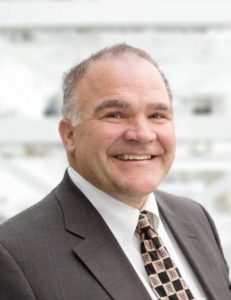
Alan Olsen, is the Host of the American Dreams Show and the Managing Partner of GROCO.com. GROCO is a premier family office and tax advisory firm located in the San Francisco Bay area serving clients all over the world.
Alan L. Olsen, CPA, Wikipedia Bio

GROCO.com is a proud sponsor of The American Dreams Show.
The American Dreams show was the brainchild of Alan Olsen, CPA, MBA. It was originally created to fill a specific need; often inexperienced entrepreneurs lacked basic information about raising capital and how to successfully start a business. Alan sincerely wanted to respond to the many requests from aspiring entrepreneurs asking for the information and introductions they needed. But he had to find a way to help in which his venture capital clients and friends would not mind.
The American Dreams show became the solution, first as a radio show and now with YouTube videos as well. Always respectful of interview guest’s time, he’s able to give access to individuals information and inspiration previously inaccessible to the first-time entrepreneurs who need it most. They can listen to venture capitalists and successful business people explain first-hand, how they got to where they are, how to start a company, how to overcome challenges, how they see the future evolving, opportunities, work-life balance and so much more..
American Dreams discusses many topics from some of the world’s most successful individuals about their secrets to life’s success. Topics from guest have included:
Creating purpose in life / Building a foundation for their life / Solving problems / Finding fulfillment through philanthropy and service / Becoming self-reliant / Enhancing effective leadership / Balancing family and work…

MyPaths.com (Also sponsored by GROCO) provides free access to content and world-class entrepreneurs, influencers and thought leaders’ personal success stories. To help you find your path in life to true, sustainable success & happiness. It’s mission statement:
In an increasingly complex and difficult world, we hope to help you find your personal path in life and build a strong foundation by learning how others found success and happiness. True and sustainable success and happiness are different for each one of us but possible, often despite significant challenges. Our mission at MyPaths.com is to provide resources and firsthand accounts of how others found their paths in life, so you can do the same.
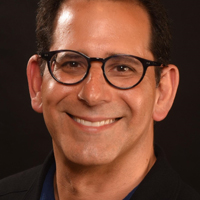
Mastering Business Growth with Howard Shore
Howard Shore, Founder and CEO of Activate Group Inc. discusses managing, even mastering, business growth and the challenges growing quickly can present on Alan Olsen‘s American Dreams Show. Transcript: Alan Olsen Welcome to American Dreams. My guest today is Howard Shore. Howard, welcome to today’s show. Howard Shore Alan, thank you for having me. Alan…
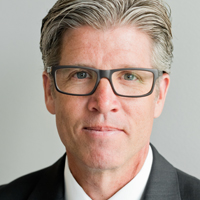
Prosperity and Self-Reliance Zealot Steve Alder
From North America to Ghana, Africa, Steve Alder, President of Ensign Global College (www.ensign.edu.gh), sits down to discuss how a professor helps to build global prosperity and self-reliance on Alan Olsen‘s American Dreams Show. Transcript: Alan Olsen Welcome to American Dreams I’m visiting here today with Steve Alder. Steve, welcome to today’s program. Steve Alder Thank…
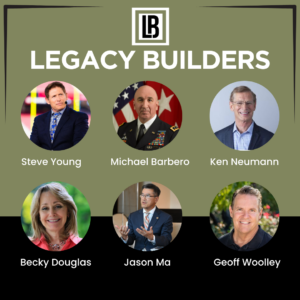
Steve Young on Building an Epic Family Legacy
Retired 49r Steve Young Discusses Building a Family Legacy at the Legacy Builders Event on May 15, 2024 As GROCO celebrates three decades of excellence in family office tax and advisory services, we have developed the Legacy Builders to stands as a testament to the firm’s enduring vision: to transform wealth into a powerful tool…
Leadership, Duty, Honor & Country With Lt. Gen. Mike Barbero
Retired US Army Lieutenant General, Michael D. Barbero, discusses leadership, service, duty, honor, and country on Alan Olsen‘s American Dreams Show. Transcript: Alan Olsen Hi, this is Alan Olsen and welcome to American Dreams. My guest today is General Michael Barbero. General, welcome to today’s show. Mike Barbero Thanks, Alan, how are you? Thanks for having me. It’s…