
Develop a Sound Investment Plan

Develop a Sound Investment Plan
When the stock market heads south, is your first instinct to sell stocks and get into something safer?
With a well-planned portfolio, that’s probably the last thing that you should be doing. After all, a plan tailors a mix of stocks, bonds and cash equivalents to your particular financial goals, your time frame and your tolerance for investment risk.
It takes into account:
• the risk/reward characteristics of each class of investment;
• the short-term volatility and long-term superior return of stocks;
• the steady income and interest-rate sensitivity of bonds;
• and the risk-free principal, but low and fluctuating yields, of T-bills and other money market investments.
Own stocks . . .
You own stocks because, as a whole, equities have tended to increase in value over time. There are several related reasons for this fact. To begin with, stocks represent an ownership interest in the companies that issue them, and successful companies generally produce increasing profits—some of which are paid to stockholders as dividends. Investors seek stocks of companies that they expect to do well in the near future, and willingly pay a price based on that expectation. When a growing number of buyers pursue a limited inventory of stocks, the laws of supply and demand drive prices up.
. . . but consider the risks.
On the other hand, as we saw in 2000 and 2001, stock prices often decline. Corporations may have problems that reduce or eliminate their profits. Changing interest rates and business cycles can drag whole categories of stocks or the entire market down. And it’s important to keep in mind that the daily movements of the stock market may be largely driven by emotion. Traders and speculators—as opposed to long-term investors—tend not just to react but to overreact to each tidbit of market news.
With daily volatility and business cycle trends, the stock market has, over the years since World War II, experienced a “correction” of 10% or more every eight months on average. And in 11 of the past 50 years, stocks, as measured by the Standard & Poor’s 500-stock index, finished the year lower than they began it.
Certainly, recent history has been more encouraging. From the Gulf War to October 27, 1997, the market achieved 84 months free of corrections—the longest such period on record. Although we have since experienced one sharp, brief correction and one bear market, the S&P 500 only has had two down years in the last 19. Nevertheless, we have no guarantee that this pattern will continue.
Make a plan and stay with it.
What this means is that the stock market, although an excellent long-term investment, is no place for money that you’ll be needing in the next year or two. Equally, at present dividend levels, stocks cannot match the income production of bonds. And neither stocks nor bonds can protect your principal as cash equivalents do. So your plan combines the three to meet your needs—and there’s no cause to abandon it reacting to short-term stock market swings.
Of course, you will want to review your plan periodically with your financial adviser to confirm that it’s structured to meet your changing needs and ensure that market trends have not knocked it off the course that you’ve set.
Time to rebalance?
Relative performance of the various assets in your investment portfolio can move you off the risk profile that you chose when you put your investment plan into action.
The obvious example of this situation is the spectacular performance of the U.S. stock market between 1995 and 1999. If you moved your stock gains into bonds each year, you would have sacrificed further gains, but you would have protected your portfolio from the full effect of the more recent bear market.
You won’t necessarily want to rebalance every quarter, or even every year. For one thing, there will be transaction costs—unless the transfer is between mutual funds in the same family—and tax consequences, if the assets are not in a tax-deferred retirement account. Also, markets tend to move in trends, and you may not want to cut back on your stock holdings at a time when stocks are booming.
So you probably won’t want to rebalance if your allocation is just a few percentage points off target. Instead you might choose to wait till the imbalance reaches 5% to 10.
We can help you in matching an asset allocation to your needs, and keeping it on target through changes in market conditions and your financial goals.
Develop a Sound Investment Plan
—————————————————————————————————————————————————————————————————————
We hope you found this article about “Develop a Sound Investment Plan” helpful. If you have questions or need expert tax or family office advice that’s refreshingly objective (we never sell investments), please contact us or visit our Family office page or our website at www.GROCO.com. Unfortunately, we no longer give advice to other tax professionals gratis.
To receive our free newsletter, contact us here.
Subscribe our YouTube Channel for more updates.
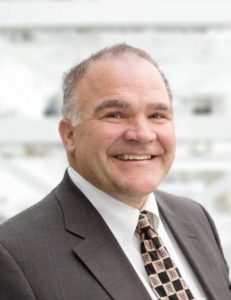
Alan Olsen, is the Host of the American Dreams Show and the Managing Partner of GROCO.com. GROCO is a premier family office and tax advisory firm located in the San Francisco Bay area serving clients all over the world.
Alan L. Olsen, CPA, Wikipedia Bio

GROCO.com is a proud sponsor of The American Dreams Show.

The American Dreams show was the brainchild of Alan Olsen, CPA, MBA. It was originally created to fill a specific need; often inexperienced entrepreneurs lacked basic information about raising capital and how to successfully start a business.
Alan sincerely wanted to respond to the many requests from aspiring entrepreneurs asking for the information and introductions they needed. But he had to find a way to help in which his venture capital clients and friends would not mind.
The American Dreams show became the solution, first as a radio show and now with YouTube videos as well. Always respectful of interview guest’s time, he’s able to give access to individuals information and inspiration previously inaccessible to the first-time entrepreneurs who need it most.
They can listen to venture capitalists and successful business people explain first-hand, how they got to where they are, how to start a company, how to overcome challenges, how they see the future evolving, opportunities, work-life balance and so much more..
American Dreams discusses many topics from some of the world’s most successful individuals about their secrets to life’s success. Topics from guest have included:
Creating purpose in life / Building a foundation for their life / Solving problems / Finding fulfillment through philanthropy and service / Becoming self-reliant / Enhancing effective leadership / Balancing family and work…

MyPaths.com (Also sponsored by GROCO) provides free access to content and world-class entrepreneurs, influencers and thought leaders’ personal success stories. To help you find your path in life to true, sustainable success & happiness. It’s mission statement:
In an increasingly complex and difficult world, we hope to help you find your personal path in life and build a strong foundation by learning how others found success and happiness. True and sustainable success and happiness are different for each one of us but possible, often despite significant challenges.
Our mission at MyPaths.com is to provide resources and firsthand accounts of how others found their paths in life, so you can do the same.
Mastering Business Growth with Howard Shore
Howard Shore, Founder and CEO of Activate Group Inc. discusses managing, even mastering, business growth and the challenges growing quickly can present on Alan Olsen‘s American Dreams Show. Transcript: Alan Olsen Welcome to American Dreams. My guest today is Howard Shore. Howard, welcome to today’s show. Howard Shore Alan, thank you for having me. Alan…
Prosperity and Self-Reliance Zealot Steve Alder
From North America to Ghana, Africa, Steve Alder, President of Ensign Global College (www.ensign.edu.gh), sits down to discuss how a professor helps to build global prosperity and self-reliance on Alan Olsen‘s American Dreams Show. Transcript: Alan Olsen Welcome to American Dreams I’m visiting here today with Steve Alder. Steve, welcome to today’s program. Steve Alder Thank…
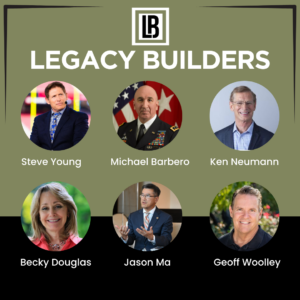
Steve Young on Building an Epic Family Legacy
Retired 49r Steve Young Discusses Building a Family Legacy at the Legacy Builders Event on May 15, 2024 As GROCO celebrates three decades of excellence in family office tax and advisory services, we have developed the Legacy Builders to stands as a testament to the firm’s enduring vision: to transform wealth into a powerful tool…
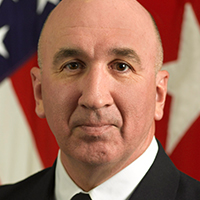
Leadership, Duty, Honor & Country With Lt. Gen. Mike Barbero
Retired US Army Lieutenant General, Michael D. Barbero, discusses leadership, service, duty, honor, and country on Alan Olsen‘s American Dreams Show. Transcript: Alan Olsen Hi, this is Alan Olsen and welcome to American Dreams. My guest today is General Michael Barbero. General, welcome to today’s show. Mike Barbero Thanks, Alan, how are you? Thanks for having me. It’s…