
College Funding: Investing Versus Borrowing

College Funding: Investing Versus Borrowing
If something is worth $1, would you rather pay $1.46 for it, or would you prefer a price of $0.66? That, in a nutshell, is a choice that families must make as they prepare to pay for the cost of college education for their children. Saving and investing for college seems a daunting task, because the goals are so enormous. But the alternative to saving is borrowing, which is by far the more expensive approach.
Even small savings can have a significant impact over time. Every dollar saved offsets a dollar that otherwise would have to be borrowed. More importantly, every dollar saved can earn additional income, which brings down the total cost.
Don’t look to your 401(k) plan or IRA. These accounts are great ways to save for retirement, and they do permit penalty-free withdrawals to pay the costs of higher education. However, these are not good choices for building a college fund. There are potential tax and opportunity costs for tapping your retirement resources early.
Uncle Sam to the rescue
By far the better course is to have independent savings earmarked for education. Happily, the federal government, in the Economic Growth and Tax Relief Reconciliation Act of 2001 (EGTRRA), enhanced two admirable vehicles for accomplishing that goal.
The education IRA, now more fittingly titled the Coverdell Education Savings Account (ESA), has allowed tax-free withdrawals to cover education costs since its introduction in 1997. Its previous low $500 per student per year limit has risen to a far more adequate $2,000.
Over the course of 18 years, that change can make a huge difference in the amount available to defray the high cost of higher education. Assuming investments made at the
beginning of each year and earnings compounding at 8%, you can build an $80,893 college fund rather than just $20,223 under the previous rule. Obviously, that will go a lot farther in paying college costs. (You also can use an ESA to pay primary and secondary school costs, but that choice shortens the time that your contributions have to grow and compound.)
Unfortunately, not everyone can fund an ESA. Individuals’ ability to contribute the full amount phases out between modified adjusted gross income (AGI) of $95,000 and $110,000. For joint-filing couples the phase-out range is now double those amounts, $190,000 to $220,000.
No such limits apply to another college savings provision enhanced by the tax act. State-sponsored “529” plans permit much higher contributions without regard to the donor’s income. Previously, withdrawals of account earnings to cover qualifying education expenses were taxed at the student’s tax rate, presumably lower than that of the parents. Today, withdrawals to cover college costs may be entirely exempt from federal taxes. In addition, educational institutions are able to offer their own prepaid tuition plans under Section 529.
Most states now offer a 529 college funding plan to both residents and nonresidents. However, residents may gain state tax deductions and/or exemptions with their home state’s plan. Investment options vary from plan to plan. We’ll be pleased to help you select the plan that best meets your objectives.
The importance of starting early
The table that follows illustrates the monthly savings needed to accumulate $100,000 over different time periods at various representative rates of return. For example, a monthly investment of $547 dollars for ten years earning an 8% return will do the job. In contrast, the monthly debt service on a $100,000 ten-year loan at 8% interest comes to $1,213.
Higher projected returns reduce the amount of needed savings—if, for example, that 8% is boosted to 12% on the ten-year saving plan, the monthly payment drops by over 20%, to $435. But an even more dramatic reduction can be accomplished by saving at 8% for 15 years instead of ten—the payment falls to a much more manageable $289.
Two things happen when the saving period is extended. First, each payment is smaller because there are many more of them. Just as important, the early payments have much longer to compound, to grow to meet the financial need. To illustrate the true impact of each different saving plan, the table also includes the total of the payments during the period. Doubling the payment period from five to ten years reduces the payment total by roughly 20% to 30%.
Returns are important, BUT STARTING EARLY IS EVEN MORE VITAL
Monthly payments needed to save $100,000 (and total payments)
Years of saving At 8% At 10% At 12%
5 years $1,361 ($81,658) $1,291 (77,482) $1,224 ($73,467)
10 years $547 ($65,593) $488 ($58,581) $435 ($52,165)
15 years $289 ($51,017) $241 (43,429) $200 ($36,030)
For someone saving for five years, increasing the rate of return by 50% decreases the monthly payment required to get to the $100,000 goal by just over 10%. Doubling the number of years of saving drops the payment by nearly 60%. Of course, there are twice as many payments to make. Still, total payments fall by almost 20%.
All rates of return in this table and the accompanying article are for illustrative purposes only and do not reflect the return of any particular investment. Past performance is no indicator of future results.
Source: Merrill Anderson Company
Strategic considerations
If you will be eligible for the Hope and Lifetime Learning Credits, you’ll want to plan carefully. These credits may be taken in the same year that withdrawals from an ESA or 529 plan are used, but they may not cover the same expenses. Therefore, you’ll need to have enough saved outside the plans to cover the expenses required to earn the credits—$2,000 for the Hope Credit in each of the first two years and $10,000 to qualify for a full Lifetime Learning Credit.
Getting your kids through college is one of the three largest financial challenges that you’re likely to face—along with buying a house and securing your retirement. It’s good to know that the federal government is committed to helping you meet the challenge, and that we are here to help guide you to the college funding plan that will best fill your needs.
—————————————————————————————————————————————————————————————————————
We hope you found this article about “College Funding: Investing Versus Borrowing” helpful. If you have questions or need expert tax or family office advice that’s refreshingly objective (we never sell investments), please contact us or visit our Family office page or our website at www.GROCO.com. Unfortunately, we no longer give advice to other tax professionals gratis.
To receive our free newsletter, contact us here.
Subscribe our YouTube Channel for more updates.
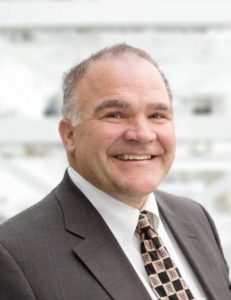
Alan Olsen, is the Host of the American Dreams Show and the Managing Partner of GROCO.com. GROCO is a premier family office and tax advisory firm located in the San Francisco Bay area serving clients all over the world.
Alan L. Olsen, CPA, Wikipedia Bio

GROCO.com is a proud sponsor of The American Dreams Show.
The American Dreams show was the brainchild of Alan Olsen, CPA, MBA. It was originally created to fill a specific need; often inexperienced entrepreneurs lacked basic information about raising capital and how to successfully start a business.
Alan sincerely wanted to respond to the many requests from aspiring entrepreneurs asking for the information and introductions they needed. But he had to find a way to help in which his venture capital clients and friends would not mind.
The American Dreams show became the solution, first as a radio show and now with YouTube videos as well. Always respectful of interview guest’s time, he’s able to give access to individuals information and inspiration previously inaccessible to the first-time entrepreneurs who need it most.
They can listen to venture capitalists and successful business people explain first-hand, how they got to where they are, how to start a company, how to overcome challenges, how they see the future evolving, opportunities, work-life balance and so much more..
American Dreams discusses many topics from some of the world’s most successful individuals about their secrets to life’s success. Topics from guest have included:
Creating purpose in life / Building a foundation for their life / Solving problems / Finding fulfillment through philanthropy and service / Becoming self-reliant / Enhancing effective leadership / Balancing family and work…

MyPaths.com (Also sponsored by GROCO) provides free access to content and world-class entrepreneurs, influencers and thought leaders’ personal success stories. To help you find your path in life to true, sustainable success & happiness. It’s mission statement:
In an increasingly complex and difficult world, we hope to help you find your personal path in life and build a strong foundation by learning how others found success and happiness. True and sustainable success and happiness are different for each one of us but possible, often despite significant challenges.
Our mission at MyPaths.com is to provide resources and firsthand accounts of how others found their paths in life, so you can do the same.
Mastering Business Growth with Howard Shore
Howard Shore, Founder and CEO of Activate Group Inc. discusses managing, even mastering, business growth and the challenges growing quickly can present on Alan Olsen‘s American Dreams Show. Transcript: Alan Olsen Welcome to American Dreams. My guest today is Howard Shore. Howard, welcome to today’s show. Howard Shore Alan, thank you for having me. Alan…
Prosperity and Self-Reliance Zealot Steve Alder
From North America to Ghana, Africa, Steve Alder, President of Ensign Global College (www.ensign.edu.gh), sits down to discuss how a professor helps to build global prosperity and self-reliance on Alan Olsen‘s American Dreams Show. Transcript: Alan Olsen Welcome to American Dreams I’m visiting here today with Steve Alder. Steve, welcome to today’s program. Steve Alder Thank…
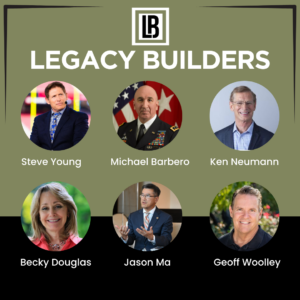
Steve Young on Building an Epic Family Legacy
Retired 49r Steve Young Discusses Building a Family Legacy at the Legacy Builders Event on May 15, 2024 As GROCO celebrates three decades of excellence in family office tax and advisory services, we have developed the Legacy Builders to stands as a testament to the firm’s enduring vision: to transform wealth into a powerful tool…
Leadership, Duty, Honor & Country With Lt. Gen. Mike Barbero
Retired US Army Lieutenant General, Michael D. Barbero, discusses leadership, service, duty, honor, and country on Alan Olsen‘s American Dreams Show. Transcript: Alan Olsen Hi, this is Alan Olsen and welcome to American Dreams. My guest today is General Michael Barbero. General, welcome to today’s show. Mike Barbero Thanks, Alan, how are you? Thanks for having me. It’s…