
Make Your Children Investors While They’re Young

Make Your Children Investors While They’re Young
As an investor, you’re likely to have learned any number of valuable lessons over the years. Some came from observation, some from experience. Why not share some of your life lessons with your children, helping them become knowledgeable investors at an early age?
Here are four ideas with which you can begin their training.
1. Reveal the magic of compounding.
Has it dawned on your children that employment isn’t the only way to fill their wallet or purse? Investments produce income as well. And when that income is reinvested, the income earns income. In short, it’s the power of compounding, something that Albert Einstein is reputed to have called “the greatest mathematical discovery of all time.” Because time is a critical element in wielding its magic, and you’re dealing with youth, you can introduce the concept of investing for the long term dramatically, as shown in the following story, courtesy of www.greekshares.com.
In ancient Greece an Athenian merchant with sound investment sense was entrusted by a friend with a large sum of money. He was directed to put the money in a trust and invest it for 2,000 years.
But the merchant kept all the money for himself, save for a single drachma (a coin that was equivalent to about 19 cents). That drachma was invested in bonds paying 3%
annually, issued by the Athenian government. It is said that even with the merchant’s thievery, the descendants of the merchant would have had quite a sum to pay over to the descendants of the friend. After 2,000 years that single drachma would have grown to exceed the value of all of the other assets on Earth!
2. Explain the importance of paying themselves first.
Stress the significance of figuring out what they can set aside for saving and investing rather than waiting to see what’s left over after expenses and luxuries. By establishing this pattern of saving regularly as youngsters, the habit may well become ingrained. There’s a great deal of money to be saved, says Paul W. Lermitte in Making Allowances: A Dollars-and-Sense Guide to Teaching Kids About Money. He reports that on any given day, North American children between the ages of five and 18 have tens of billions of dollars at their disposal.
3. Keep the discussions lively and simple.
A good starting point for investment education is the Internet. Today’s kids, sad though it may be, aren’t all that interested in libraries and bookstores. But using the Internet is second nature to them. Make it a point to spend some time “surfing the net” with your children, and look at some of the sites devoted to educating young investors about the principles of investing. There are many creative places to visit that offer games and simulations that will teach without seeming like lectures.
4. Concrete is better than hypothetical.
Investing will become exciting to your children if they can see their investments at work. They can track their shares on the Internet and get a bit of feeling for their risk tolerance. (Ask them to describe how they feel when their shares go up or down and how they would react if they had put a great deal of money in the company.) Owning dividend-producing shares of a company means regular checks in the mail. To stimulate their interest, have them pick the stocks of companies with brand names that they recognize. For instance, they might buy shares in the brand labels that they wear, the fast food that they eat or the forms of entertainment that they especially enjoy.
Money sense won’t be learned in the classroom nor can parents expect that saving and investing automatically will become part of their children’s lives without parental guidance. We hope that these starting points help you with your discussions.
—————————————————————————————————————————————————————————————————————
We hope you found this article about “Make Your Children Investors While They’re Young” helpful. If you have questions or need expert tax or family office advice that’s refreshingly objective (we never sell investments), please contact us or visit our Family office page or our website at www.GROCO.com. Unfortunately, we no longer give advice to other tax professionals gratis.
To receive our free newsletter, contact us here.
Subscribe our YouTube Channel for more updates.
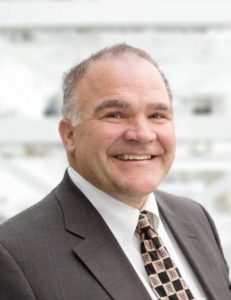
Alan Olsen, is the Host of the American Dreams Show and the Managing Partner of GROCO.com. GROCO is a premier family office and tax advisory firm located in the San Francisco Bay area serving clients all over the world.
Alan L. Olsen, CPA, Wikipedia Bio

GROCO.com is a proud sponsor of The American Dreams Show.

The American Dreams show was the brainchild of Alan Olsen, CPA, MBA. It was originally created to fill a specific need; often inexperienced entrepreneurs lacked basic information about raising capital and how to successfully start a business.
Alan sincerely wanted to respond to the many requests from aspiring entrepreneurs asking for the information and introductions they needed. But he had to find a way to help in which his venture capital clients and friends would not mind.
The American Dreams show became the solution, first as a radio show and now with YouTube videos as well. Always respectful of interview guest’s time, he’s able to give access to individuals information and inspiration previously inaccessible to the first-time entrepreneurs who need it most.
They can listen to venture capitalists and successful business people explain first-hand, how they got to where they are, how to start a company, how to overcome challenges, how they see the future evolving, opportunities, work-life balance and so much more..
American Dreams discusses many topics from some of the world’s most successful individuals about their secrets to life’s success. Topics from guest have included:
Creating purpose in life / Building a foundation for their life / Solving problems / Finding fulfillment through philanthropy and service / Becoming self-reliant / Enhancing effective leadership / Balancing family and work…

MyPaths.com (Also sponsored by GROCO) provides free access to content and world-class entrepreneurs, influencers and thought leaders’ personal success stories. To help you find your path in life to true, sustainable success & happiness. It’s mission statement:
In an increasingly complex and difficult world, we hope to help you find your personal path in life and build a strong foundation by learning how others found success and happiness. True and sustainable success and happiness are different for each one of us but possible, often despite significant challenges.
Our mission at MyPaths.com is to provide resources and firsthand accounts of how others found their paths in life, so you can do the same.
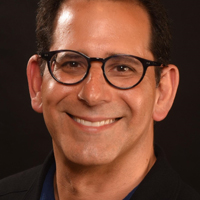
Mastering Business Growth with Howard Shore
Howard Shore, Founder and CEO of Activate Group Inc. discusses managing, even mastering, business growth and the challenges growing quickly can present on Alan Olsen‘s American Dreams Show. Transcript: Alan Olsen Welcome to American Dreams. My guest today is Howard Shore. Howard, welcome to today’s show. Howard Shore Alan, thank you for having me. Alan…
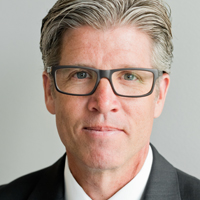
Prosperity and Self-Reliance Zealot Steve Alder
From North America to Ghana, Africa, Steve Alder, President of Ensign Global College (www.ensign.edu.gh), sits down to discuss how a professor helps to build global prosperity and self-reliance on Alan Olsen‘s American Dreams Show. Transcript: Alan Olsen Welcome to American Dreams I’m visiting here today with Steve Alder. Steve, welcome to today’s program. Steve Alder Thank…

Steve Young on Building an Epic Family Legacy
Retired 49r Steve Young Discusses Building a Family Legacy at the Legacy Builders Event on May 15, 2024 As GROCO celebrates three decades of excellence in family office tax and advisory services, we have developed the Legacy Builders to stands as a testament to the firm’s enduring vision: to transform wealth into a powerful tool…
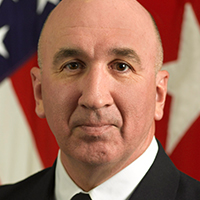
Leadership, Duty, Honor & Country With Lt. Gen. Mike Barbero
Retired US Army Lieutenant General, Michael D. Barbero, discusses leadership, service, duty, honor, and country on Alan Olsen‘s American Dreams Show. Transcript: Alan Olsen Hi, this is Alan Olsen and welcome to American Dreams. My guest today is General Michael Barbero. General, welcome to today’s show. Mike Barbero Thanks, Alan, how are you? Thanks for having me. It’s…