
Car Collections: Collectors, Investors, or Dealers Status

Car Collections: Collectors, Investors, or Dealers Status
Recently a 1936 Bugatti sold for over $30 million. Granted, that’s the world’s most expensive car, and one of only three ever built, but it raises an important financial question for car collectors.
While acquiring beautifully restored antique cars may be someone’s high-octane passion, the IRS could see that “hobby” as a business, thereby changing a person’s tax status.
As with many items within a wide range of expensive collectibles, those interested in classic cars and racecars often claim the reasons for their purchases are varied but most often include personal pleasure and recreation, increasing asset value and even short-term market movement, or business profit.
In terms of tax treatments, the distinction between collectors, investors and dealers is of great importance. Between collectors and investors, the tax rule is generally more favorable to the investors. Whereas, being a vehicle dealer may create unique tax advantages.
A collector is considered someone who buys and sells vehicles for personal pleasure and/or recreation. An investor is seeking profit from the appreciation of a vehicle’s value. A dealer is pursuing business profit by selling vehicles to his or her customers.
The tax rate on long-term (collection held for more than one year) collectible capital gain is 28%, whether you are a collector or investor. With regard to capital loss, investors are allowed to deduct the loss in the current year as long as they have enough capital gain to offset such loss. Otherwise, the loss in excess of $3,000 is carried forward to offset future years’ capital gains.
In contrast, a collector’s capital loss is disallowed. For both collectors and investors, the deduction of collecting expenses (e.g., appraisal fee, maintenance expense, etc.) is treated as miscellaneous itemized deductions, subject to the 2% AGI (adjusted gross income) limitation. Additionally, the unfavorable Hobby Rule may apply to collectors, thereby only allowing them to deduct the expenses to the extent of their hobby income.
With this in mind, consider establishing a vehicle dealership if you are doing substantial and frequent purchases and sales. The disadvantage is that your net income is subject to the ordinary income tax rate. The current highest rate is 35%, 7% higher than the collectible capital gain rate. However, more tax advantages may result from sales tax savings such as a full deduction of ordinary losses and escape from passive loss limitation.
Tremendous sales tax is imposed on valuable antique cars and racecars. A dealer is not required to pay sales tax on vehicle acquisition if they purchase the car as inventory with intent to resell. If the vehicle is sold at retail to an end-user, sale tax will apply. (You may need to be very careful about the more stringent use of the tax rule governed by the California Board of Equalization).
A vehicle dealership is considered ordinary trade or business. Its business-related expenses are completely deductible if they are ordinary, necessary and reasonable. Even if the expenses exceed the sale receipts, the excess is allowed to offset income from other activities, even investment activities (e.g., capital gains) or treated as a net operating loss (NOL) to carry back and forward.
Hobby Loss Risk
Although the risk of an IRS “Hobby Loss” challenge is low, you may still need to pay attention, to not raise red flags. The key point is that you should keep adequate records to substantiate your “for-profit” purpose and reasonable regularity and continuity of your trade or business.
Furthermore, you should avoid the Passive Loss Rule kicking in which could suspend your loss deduction. This requires that you physically participate in the operation and management of your dealership business. As an alternative, properly using the Passive-Activity-Grouping Rule may help you escape the passive loss limitation for both a vehicle dealership and other business activities even though you are not a material participant. You will have a chance to apply exceptions to the passive rule to circumvent undesirable passive loss suspension.
When acquiring antique or classic cars, you have choices, each with pros and cons. It’s highly recommended you consult with a tax advisor for tax implications before any critical decisions are made.
We hope you found this article about “Car Collections: Collectors, Investors, or Dealers Status” helpful. If you have questions or need expert tax or family office advice that’s refreshingly objective (we never sell investments), please contact us or visit our Family office page or our website at www.GROCO.com. Unfortunately, we no longer give advice to other tax professionals gratis.
To receive our free newsletter, contact us here.
Subscribe our YouTube Channel for more updates.
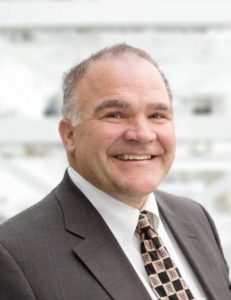
Alan Olsen, is the Host of the American Dreams Show and the Managing Partner of GROCO.com. GROCO is a premier family office and tax advisory firm located in the San Francisco Bay area serving clients all over the world.
Alan L. Olsen, CPA, Wikipedia Bio

GROCO.com is a proud sponsor of The American Dreams Show.
The American Dreams show was the brainchild of Alan Olsen, CPA, MBA. It was originally created to fill a specific need; often inexperienced entrepreneurs lacked basic information about raising capital and how to successfully start a business. Alan sincerely wanted to respond to the many requests from aspiring entrepreneurs asking for the information and introductions they needed. But he had to find a way to help in which his venture capital clients and friends would not mind.
The American Dreams show became the solution, first as a radio show and now with YouTube videos as well. Always respectful of interview guest’s time, he’s able to give access to individuals information and inspiration previously inaccessible to the first-time entrepreneurs who need it most. They can listen to venture capitalists and successful business people explain first-hand, how they got to where they are, how to start a company, how to overcome challenges, how they see the future evolving, opportunities, work-life balance and so much more..
American Dreams discusses many topics from some of the world’s most successful individuals about their secrets to life’s success. Topics from guest have included:
Creating purpose in life / Building a foundation for their life / Solving problems / Finding fulfillment through philanthropy and service / Becoming self-reliant / Enhancing effective leadership / Balancing family and work…

MyPaths.com (Also sponsored by GROCO) provides free access to content and world-class entrepreneurs, influencers and thought leaders’ personal success stories. To help you find your path in life to true, sustainable success & happiness. It’s mission statement:
In an increasingly complex and difficult world, we hope to help you find your personal path in life and build a strong foundation by learning how others found success and happiness. True and sustainable success and happiness are different for each one of us but possible, often despite significant challenges. Our mission at MyPaths.com is to provide resources and firsthand accounts of how others found their paths in life, so you can do the same.
Originally Posted: 10/18/11
Mastering Business Growth with Howard Shore
Howard Shore, Founder and CEO of Activate Group Inc. discusses managing, even mastering, business growth and the challenges growing quickly can present on Alan Olsen‘s American Dreams Show. Transcript: Alan Olsen Welcome to American Dreams. My guest today is Howard Shore. Howard, welcome to today’s show. Howard Shore Alan, thank you for having me. Alan…
Prosperity and Self-Reliance Zealot Steve Alder
From North America to Ghana, Africa, Steve Alder, President of Ensign Global College (www.ensign.edu.gh), sits down to discuss how a professor helps to build global prosperity and self-reliance on Alan Olsen‘s American Dreams Show. Transcript: Alan Olsen Welcome to American Dreams I’m visiting here today with Steve Alder. Steve, welcome to today’s program. Steve Alder Thank…
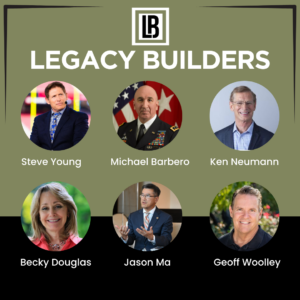
Steve Young on Building an Epic Family Legacy
Retired 49r Steve Young Discusses Building a Family Legacy at the Legacy Builders Event on May 15, 2024 As GROCO celebrates three decades of excellence in family office tax and advisory services, we have developed the Legacy Builders to stands as a testament to the firm’s enduring vision: to transform wealth into a powerful tool…
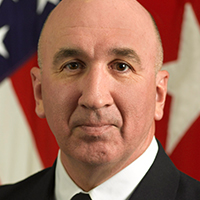
Leadership, Duty, Honor & Country With Lt. Gen. Mike Barbero
Retired US Army Lieutenant General, Michael D. Barbero, discusses leadership, service, duty, honor, and country on Alan Olsen‘s American Dreams Show. Transcript: Alan Olsen Hi, this is Alan Olsen and welcome to American Dreams. My guest today is General Michael Barbero. General, welcome to today’s show. Mike Barbero Thanks, Alan, how are you? Thanks for having me. It’s…