
Revocable Living Trust: Family Financial Security

Revocable Living Trust: Family Financial Security
The times in which we live have brought new uncertainty and increased anxiety to our front doors. With the threat of terrorism and the reality of war, our safety and that of our loved ones are at the forefront of our concerns. For many a continually disappointing investment environment has reduced personal savings and eroded retirement resources.
Of course, there is still reason for optimism. On the world scene, the conflict in Iraq is ending—although the difficult job of rebuilding and providing aid will continue, perhaps for a long time to come. On the national front, although the economic and investment climate remains uncertain, the postwar environment may, possibly, augur for better days ahead.
On the home front, there’s the best news of all. There are ways that you can act to protect your family, helping to ensure their continued financial security. Surprisingly enough, one of those ways is by means of a financial management tool that is not new at all, but has existed since the time of the Crusades—the revocable living trust.
Comprehensive and flexible
A revocable living trust can serve a wide variety of purposes. It is flexible enough to fit an individual’s or family’s specific needs or circumstances like a glove. It can serve for the near term, as well as for the distant future. Best of all, it can be updated, modified, even cancelled, at any time.
A revocable living trust is an ideal arrangement for people of substantial means, both those who wish to retain control over their investments and those who seek professional advice. At the same time, the knowledge that you are providing long-term financial security for your loved ones can do much to bring you peace of mind, at a time when that feeling may be in short supply.
Below is just a short list of some of the specific financial planning needs that a revocable living trust can offer you and your family:
1. A choice of investment management styles
People have different perspectives, especially when it comes to the degree of control that they wish to maintain over their investments. Some people seek someone who can ably handle all the chores associated with investing but wish to keep complete autonomy over the actual investing process itself. Some would like having an advisor near at hand, to offer guidance but leave the ultimate decision making for themselves. Still others recognize that they lack the necessary skills to maneuver through the intricacies of investing in today’s world, and they seek skilled professional asset management.
A living trust agreement can be structured to permit whichever style suits your needs. A typical arrangement—but only one of many possible—might provide that you, the grantor of the trust, direct us, the trustee, to manage your investments and the income that they produce; invest new funds as they are added to the trust; and pay out sums of principal as the occasion warrants. If you wish, you can direct that the trust continue after you’re gone, paying out the income from the trust’s investments to your family, providing an uninterrupted source of financial support.
2. An emergency contingency plan
As a result of recent events, many more people are expressing concern about the management of their investments and other finances in the event that something unexpected occurs. For instance, what can a head of household do to protect his or her family if disability or major illness strikes? A living trust (often, in these circumstances, referred to as a “standby,” or “convertible,” trust) may offer the best solution. Here, the trust remains inactive, coming to life only in the event that the disability strikes, becoming inactive again if and when the disability abates.
In addition to taking over all investment responsibilities, the trustee can be directed to pay routine monthly bills, taxes and medical expenses—even arrange for nursing care or household help, removing those burdens from a spouse or family member.
3. An action plan for special family circumstances
A revocable living trust can be a practical, flexible way to set aside significant funds to be invested for a young child or grandchild as a means of providing for a college education. It can be established to provide a life income for an older relative, such as a parent, aunt or uncle. A trust can be drafted to assist a child with special needs, offering parents the peace of mind of knowing that financial support will continue after they are no longer able to help their child.
4. Privacy and economy in managing assets
A will offers no degree of privacy; it is a matter of public record. A trust is a private document in most states, thus allowing your finances to escape public scrutiny. Assets in a trust are not subject to the potential delays and costs associated with probate proceedings. The privacy aspect of a living trust is especially comforting when an individual becomes incapable of managing his or her financial affairs. The publicity, time and expense of a formal conservatorship proceeding is avoided when a living trust has been put in place.
5. An estate planning assist
A will alone is usually insufficient to arrange for the disposition of a lifetime’s accumulation of wealth. A living trust can operate as a highly efficient organizational tool, offering a unified management of your estate. For example, your will can provide that assets such as life insurance or retirement benefits be paid to a preestablished living trust that becomes irrevocable at your death.
Such an arrangement accomplishes several key goals. It can provide for the continuous, uninterrupted flow of income for family members and for an orderly distribution of family assets over the years, according to your wishes. And although a living trust itself offers no inherent tax advantage, if the trust become irrevocable at your death, it can be structured to shelter part of the trust’s assets from later tax at the death of a spouse.
Naming a trustee
There are literally dozens of planning approaches and problem-solving opportunities available with a living trust. But for whatever purposes your revocable living trust is established, it’s extremely important to choose a trustee with the knowledge and experience to make certain that your wishes are carried out. Call upon us. We can work with you and your legal advisor to structure a living trust arrangement that suits your own particular needs and circumstances—and build a solid foundation for your family’s financial security for today and tomorrow.
—————————————————————————————————————————————————————————————————————
We hope you found this article about “Revocable Living Trust: Family Financial Security” helpful. If you have questions or need expert tax or family office advice that’s refreshingly objective (we never sell investments), please contact us or visit our Family office page or our website at www.GROCO.com. Unfortunately, we no longer give advice to other tax professionals gratis.
To receive our free newsletter, contact us here.
Subscribe our YouTube Channel for more updates.
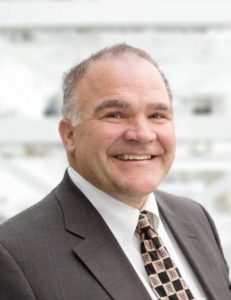
Alan Olsen, is the Host of the American Dreams Show and the Managing Partner of GROCO.com. GROCO is a premier family office and tax advisory firm located in the San Francisco Bay area serving clients all over the world.
Alan L. Olsen, CPA, Wikipedia Bio

GROCO.com is a proud sponsor of The American Dreams Show.

The American Dreams show was the brainchild of Alan Olsen, CPA, MBA. It was originally created to fill a specific need; often inexperienced entrepreneurs lacked basic information about raising capital and how to successfully start a business.
Alan sincerely wanted to respond to the many requests from aspiring entrepreneurs asking for the information and introductions they needed. But he had to find a way to help in which his venture capital clients and friends would not mind.
The American Dreams show became the solution, first as a radio show and now with YouTube videos as well. Always respectful of interview guest’s time, he’s able to give access to individuals information and inspiration previously inaccessible to the first-time entrepreneurs who need it most.
They can listen to venture capitalists and successful business people explain first-hand, how they got to where they are, how to start a company, how to overcome challenges, how they see the future evolving, opportunities, work-life balance and so much more..
American Dreams discusses many topics from some of the world’s most successful individuals about their secrets to life’s success. Topics from guest have included:
Creating purpose in life / Building a foundation for their life / Solving problems / Finding fulfillment through philanthropy and service / Becoming self-reliant / Enhancing effective leadership / Balancing family and work…

MyPaths.com (Also sponsored by GROCO) provides free access to content and world-class entrepreneurs, influencers and thought leaders’ personal success stories. To help you find your path in life to true, sustainable success & happiness. It’s mission statement:
In an increasingly complex and difficult world, we hope to help you find your personal path in life and build a strong foundation by learning how others found success and happiness. True and sustainable success and happiness are different for each one of us but possible, often despite significant challenges.
Our mission at MyPaths.com is to provide resources and firsthand accounts of how others found their paths in life, so you can do the same.
Mastering Business Growth with Howard Shore
Howard Shore, Founder and CEO of Activate Group Inc. discusses managing, even mastering, business growth and the challenges growing quickly can present on Alan Olsen‘s American Dreams Show. Transcript: Alan Olsen Welcome to American Dreams. My guest today is Howard Shore. Howard, welcome to today’s show. Howard Shore Alan, thank you for having me. Alan…
Prosperity and Self-Reliance Zealot Steve Alder
From North America to Ghana, Africa, Steve Alder, President of Ensign Global College (www.ensign.edu.gh), sits down to discuss how a professor helps to build global prosperity and self-reliance on Alan Olsen‘s American Dreams Show. Transcript: Alan Olsen Welcome to American Dreams I’m visiting here today with Steve Alder. Steve, welcome to today’s program. Steve Alder Thank…
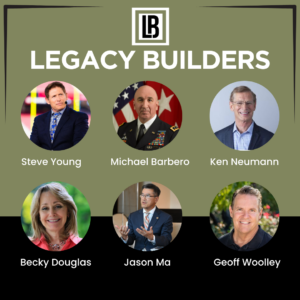
Steve Young on Building an Epic Family Legacy
Retired 49r Steve Young Discusses Building a Family Legacy at the Legacy Builders Event on May 15, 2024 As GROCO celebrates three decades of excellence in family office tax and advisory services, we have developed the Legacy Builders to stands as a testament to the firm’s enduring vision: to transform wealth into a powerful tool…
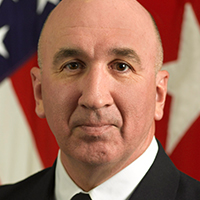
Leadership, Duty, Honor & Country With Lt. Gen. Mike Barbero
Retired US Army Lieutenant General, Michael D. Barbero, discusses leadership, service, duty, honor, and country on Alan Olsen‘s American Dreams Show. Transcript: Alan Olsen Hi, this is Alan Olsen and welcome to American Dreams. My guest today is General Michael Barbero. General, welcome to today’s show. Mike Barbero Thanks, Alan, how are you? Thanks for having me. It’s…