
Succession Planning for Business Owners

Succession Planning for Business Owners
“How can I arrange for the transfer of my business when I retire and yet be able to keep peace in the family?”
That’s a common question asked by owners of successful businesses when the time comes to turn over the reins to the next generation. And, although there are no simple solutions, formulating a succession plan prior to your exit may help you leap some hurdles.
Goals of a succession plan
Briefly stated, a succession plan is an outline of the way that you expect your business to continue when you are no longer at the helm. It serves as guidance to your successors in a way that you believe will result in effective management of your company with the least possible conflict. The plan may serve other purposes as well, for example—help secure family financial interests in the business and delineate strategies that will reduce significantly the impact of estate tax at your passing.
Ultimately, a carefully designed succession plan will increase the value of your business while protecting your financial security in retirement. It will allow you to exit gracefully from the business, having communicated accurately to your successors (and nonsuccessors) what you have done and why you have done it.
The tension of “who?”
Naming the successor(s) to your business may be fraught with emotional conflict. Sometimes the decision as to who will carry on for you is obvious—the choice of a spouse or trusted employee may be logical and agreeable to all. If there’s only one child in the family, and the child has been involved actively in the day-to-day operation of the business, your exit should be relatively stress free.
On the other hand, you may have several children, some of whom work with you and some of whom do not. The tension that could arise may come from their conflicting expectations. Children who have been integral to the company’s success may feel that they deserve more than their nonworking siblings. The nonworking siblings may believe that the business is part of an overall family inheritance in which everyone should share equally.
In Conflict and Communication in the Family Business, coauthors Joe Astrachan and Christi McMillan, state it rather bluntly: A family that’s unable or unwilling to talk openly, honestly, constructively and without fear of repercussions is much more likely to kill its business than to strengthen it. And, although conflict can be a positive catalyst among family members, it also may tear them apart.
Astrachan reports a classic example: “Few people realize inventor Thomas Edison gave his son Tom $50 a week to STOP using his family name. Edison’s company, General Electric became one of the most successful businesses in the world, yet Tom Jr. died in obscurity under an assumed name.”
An open discussion, perhaps through a family meeting, or series of meetings, should help to identify family member expectations and bring out into the open tensions that, heretofore, may have lain hidden. Addressing these expectations and tensions before the business is put into transition may avoid much unpleasantness.
Key elements of a plan
Every succession plan should be formulated according to the unique circumstances of the business and the business owner. Still, there are several issues that will need to be addressed in all cases. Recently, Grant Thornton, the accounting, tax and business advisory organization, outlined some of the major factors that a business will want to address as part of an exit strategy, including:
• the structuring of the proposed succession, including its tax consequences;
• contingency planning for unforeseen events and the drafting of the necessary documents to ensure that the business will continue uninterrupted. For instance, there should be a plan in case of the incapacity or premature death of a successor that might include the drafting of a durable power of attorney and health care proxies;
• establishing a formal time for transfer of ownership and the delineation of transitional roles in the business for family members and key employees;
• communicating the necessary aspects of the plan to family members, third parties and employees;
• drafting or revision of key documents, including shareholder agreements, corporate restructuring plans, share transfers, insurance contracts, etc.
Taking steps
Development of an effective succession plan involves addressing three areas: management of the business, ownership of the business and the potential tax consequences upon passage of ownership. The first two items aren’t the same. You may want to transfer management of the business to one child, but wish all to inherit equally, whether they are involved actively in the business or not.
A succession plan demands expertise in several professional disciplines. As a result, you may want to put together a team of advisors: lawyers, accountants, insurance specialists and trust officers—people who can provide useful planning insights.
Timing is an important issue as well. Many professionals suggest putting a plan in place at least five years ahead of the time of transition. Ten years may even be better. In fact, some business advisors are recommending that an exit strategy be built right into an initial business plan.
A final thought
Although a succession strategy may consist of several legal documents, your overall perspective should be one of planning, not legalities. The purpose of a succession plan, after all, is to keep peace and harmony in the family, not simply to serve as an instrument to be produced during a heated court dispute.
—————————————————————————————————————————————————————————————————————
We hope you found this article about “Succession Planning for Business Owners” helpful. If you have questions or need expert tax or family office advice that’s refreshingly objective (we never sell investments), please contact us or visit our Family office page or our website at www.GROCO.com. Unfortunately, we no longer give advice to other tax professionals gratis.
To receive our free newsletter, contact us here.
Subscribe our YouTube Channel for more updates.
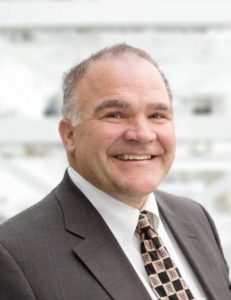
Alan Olsen, is the Host of the American Dreams Show and the Managing Partner of GROCO.com. GROCO is a premier family office and tax advisory firm located in the San Francisco Bay area serving clients all over the world.
Alan L. Olsen, CPA, Wikipedia Bio

GROCO.com is a proud sponsor of The American Dreams Show.

The American Dreams show was the brainchild of Alan Olsen, CPA, MBA. It was originally created to fill a specific need; often inexperienced entrepreneurs lacked basic information about raising capital and how to successfully start a business.
Alan sincerely wanted to respond to the many requests from aspiring entrepreneurs asking for the information and introductions they needed. But he had to find a way to help in which his venture capital clients and friends would not mind.
The American Dreams show became the solution, first as a radio show and now with YouTube videos as well. Always respectful of interview guest’s time, he’s able to give access to individuals information and inspiration previously inaccessible to the first-time entrepreneurs who need it most.
They can listen to venture capitalists and successful business people explain first-hand, how they got to where they are, how to start a company, how to overcome challenges, how they see the future evolving, opportunities, work-life balance and so much more..
American Dreams discusses many topics from some of the world’s most successful individuals about their secrets to life’s success. Topics from guest have included:
Creating purpose in life / Building a foundation for their life / Solving problems / Finding fulfillment through philanthropy and service / Becoming self-reliant / Enhancing effective leadership / Balancing family and work…

MyPaths.com (Also sponsored by GROCO) provides free access to content and world-class entrepreneurs, influencers and thought leaders’ personal success stories. To help you find your path in life to true, sustainable success & happiness. It’s mission statement:
In an increasingly complex and difficult world, we hope to help you find your personal path in life and build a strong foundation by learning how others found success and happiness. True and sustainable success and happiness are different for each one of us but possible, often despite significant challenges.
Our mission at MyPaths.com is to provide resources and firsthand accounts of how others found their paths in life, so you can do the same.

Mastering Business Growth with Howard Shore
Howard Shore, Founder and CEO of Activate Group Inc. discusses managing, even mastering, business growth and the challenges growing quickly can present on Alan Olsen‘s American Dreams Show. Transcript: Alan Olsen Welcome to American Dreams. My guest today is Howard Shore. Howard, welcome to today’s show. Howard Shore Alan, thank you for having me. Alan…
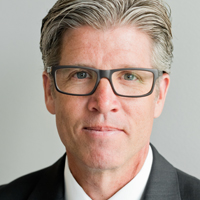
Prosperity and Self-Reliance Zealot Steve Alder
From North America to Ghana, Africa, Steve Alder, President of Ensign Global College (www.ensign.edu.gh), sits down to discuss how a professor helps to build global prosperity and self-reliance on Alan Olsen‘s American Dreams Show. Transcript: Alan Olsen Welcome to American Dreams I’m visiting here today with Steve Alder. Steve, welcome to today’s program. Steve Alder Thank…
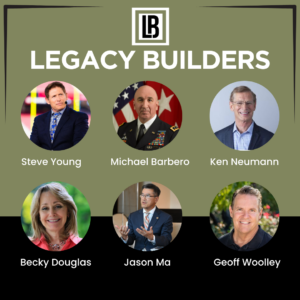
Steve Young on Building an Epic Family Legacy
Retired 49r Steve Young Discusses Building a Family Legacy at the Legacy Builders Event on May 15, 2024 As GROCO celebrates three decades of excellence in family office tax and advisory services, we have developed the Legacy Builders to stands as a testament to the firm’s enduring vision: to transform wealth into a powerful tool…
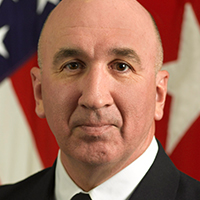
Leadership, Duty, Honor & Country With Lt. Gen. Mike Barbero
Retired US Army Lieutenant General, Michael D. Barbero, discusses leadership, service, duty, honor, and country on Alan Olsen‘s American Dreams Show. Transcript: Alan Olsen Hi, this is Alan Olsen and welcome to American Dreams. My guest today is General Michael Barbero. General, welcome to today’s show. Mike Barbero Thanks, Alan, how are you? Thanks for having me. It’s…