
Estate Planning for Highly Appreciated Stocks

Estate Planning for Highly Appreciated Stocks
Despite the market reversals of 2000-2001, large unrealized gains still reside in many longheld stock portfolios built up during the record 1982-1999 expansion. How do such assets fit into an estate plan?
Advantages over estate transfers
Many estate plans include a program of regular gifts. From a tax perspective, gifts have three advantages over estate transfers: The first $11,000 in transfers is shielded from tax by the annual gift tax exclusion; appreciation in the value of the gift after the transfer avoids taxes (effecting an “estate freeze”), and any gift tax that is assessed is computed in a manner that is more favorable to taxpayers.
However, when the gift is to be of highly appreciated stock securities, there is an important tax caveat. Such a gift comes with a potential capital gain tax attached to it. The recipient of the gift takes the donor’s basis in the gift valuation stock. When he or she later decides to sell the stock, the tax on the capital gain will erode the value of the resource severely.
In contrast, the basis of property received through an estate is generally “stepped up” to its fair market value. Capital gain taxes will be due only on appreciation in value after the decedent’s death.*
For married couples, these rules suggest a simple tax strategy. For example, at his death, a husband bequeaths the appreciated stock to his surviving wife. The marital deduction eliminates the estate tax at that time. The wife, in turn, may make a gift of the stock with a fully stepped-up basis. When gifting shares to family members receive these shares, they won’t have to be so concerned about capital gain taxes. The wife may, however, need to keep possible stock gift tax liabilities in mind and may want to spread such gifts over a number of years.
Other ideas for highly appreciated stock in the estate planner’s toolkit
Charitable trusts
Charitable trusts. For the philanthropically minded, a charitable remainder trust or a charitable lead trust can be an excellent way to obtain tax-free diversification of appreciated assets. There is no capital gains tax when the trustee sells low-basis, high-value assets and reinvests the proceeds for higher yield. A wide variety of choices is available to those designing a charitable trust, enough to meet both charitable and private financial objectives on a tax-efficient basis.
*The stepped-up basis is scheduled for partial repeal when the estate tax is repealed in 2010. Just $1.3 million of assets will then receive a stepped-up basis. Any excess will carry over the decedent’s basis. An additional $3 million basis step-up will be allowed on assets going to a surviving spouse.
Private annuities
Private annuities. A private annuity is a sale by one gifting appreciated stock to family members to another in exchange for the buyer’s unsecured promise to make specific periodic payments to the seller for life. There is no gift tax due to a properly structured sale, and the assets will be removed from the seller’s estate. A portion of each annuity payment is a return of capital (part capital gain and part nontaxable return of basis), and the balance is taxed as ordinary income. However, annuity payments by the buyer are not deductible, and so are made with after-tax dollars.
Family limited partnerships. A fairly new approach to managing family wealth is the family limited partnership. This technique provides for consolidation of assets for convenient management, segregation of assets for protection against claims of creditors, and the potential for gift tax valuation discounts. Typically, parents act as general partners, making gifts of small limited partnership interests to children over a period of years. Properly structured, such gifts generally qualify for the $11,000 annual gift tax exclusion.
We hope you found this article about “Estate Planning for Highly Appreciated Stocks” helpful. If you have questions or need expert tax or family office advice that’s refreshingly objective (we never sell investments), please contact us or visit our Family office page or our website at www.GROCO.com. Unfortunately, we no longer give advice to other tax professionals gratis.
To receive our free newsletter, contact us here.
Subscribe our YouTube Channel for more updates.
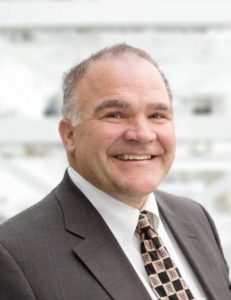
Alan Olsen, is the Host of the American Dreams Show and the Managing Partner of GROCO.com. GROCO is a premier family office and tax advisory firm located in the San Francisco Bay area serving clients all over the world.
Alan L. Olsen, CPA, Wikipedia Bio

GROCO.com is a proud sponsor of The American Dreams Show.

The American Dreams show was the brainchild of Alan Olsen, CPA, MBA. It was originally created to fill a specific need; often inexperienced entrepreneurs lacked basic information about raising capital and how to successfully start a business. Alan sincerely wanted to respond to the many requests from aspiring entrepreneurs asking for the information and introductions they needed. But he had to find a way to help in which his venture capital clients and friends would not mind.
The American Dreams show became the solution, first as a radio show and now with YouTube videos as well. Always respectful of interview guest’s time, he’s able to give access to individuals information and inspiration previously inaccessible to the first-time entrepreneurs who need it most. They can listen to venture capitalists and successful business people explain first-hand, how they got to where they are, how to start a company, how to overcome challenges, how they see the future evolving, opportunities, work-life balance and so much more..
American Dreams discusses many topics from some of the world’s most successful individuals about their secrets to life’s success. Topics from guest have included:
Creating purpose in life / Building a foundation for their life / Solving problems / Finding fulfillment through philanthropy and service / Becoming self-reliant / Enhancing effective leadership / Balancing family and work…

MyPaths.com (Also sponsored by GROCO) provides free access to content and world-class entrepreneurs, influencers and thought leaders’ personal success stories. To help you find your path in life to true, sustainable success & happiness. It’s mission statement:
In an increasingly complex and difficult world, we hope to help you find your personal path in life and build a strong foundation by learning how others found success and happiness. True and sustainable success and happiness are different for each one of us but possible, often despite significant challenges. Our mission at MyPaths.com is to provide resources and firsthand accounts of how others found their paths in life, so you can do the same.
Mastering Business Growth with Howard Shore
Howard Shore, Founder and CEO of Activate Group Inc. discusses managing, even mastering, business growth and the challenges growing quickly can present on Alan Olsen‘s American Dreams Show. Transcript: Alan Olsen Welcome to American Dreams. My guest today is Howard Shore. Howard, welcome to today’s show. Howard Shore Alan, thank you for having me. Alan…
Prosperity and Self-Reliance Zealot Steve Alder
From North America to Ghana, Africa, Steve Alder, President of Ensign Global College (www.ensign.edu.gh), sits down to discuss how a professor helps to build global prosperity and self-reliance on Alan Olsen‘s American Dreams Show. Transcript: Alan Olsen Welcome to American Dreams I’m visiting here today with Steve Alder. Steve, welcome to today’s program. Steve Alder Thank…
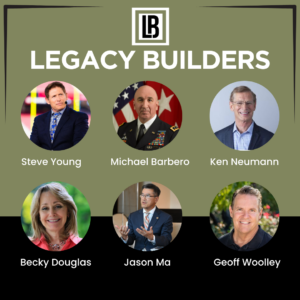
Steve Young on Building an Epic Family Legacy
Retired 49r Steve Young Discusses Building a Family Legacy at the Legacy Builders Event on May 15, 2024 As GROCO celebrates three decades of excellence in family office tax and advisory services, we have developed the Legacy Builders to stands as a testament to the firm’s enduring vision: to transform wealth into a powerful tool…
Leadership, Duty, Honor & Country With Lt. Gen. Mike Barbero
Retired US Army Lieutenant General, Michael D. Barbero, discusses leadership, service, duty, honor, and country on Alan Olsen‘s American Dreams Show. Transcript: Alan Olsen Hi, this is Alan Olsen and welcome to American Dreams. My guest today is General Michael Barbero. General, welcome to today’s show. Mike Barbero Thanks, Alan, how are you? Thanks for having me. It’s…