
The Language of Trusts
The Language of Trusts
Many professions and disciplines have their own vocabulary. As an example, think about the terminology used in medicine and law. Often this vocabulary defines complex ideas, yet just as often “terms of art” can be defined with relative ease to a layperson.
Such is the case with much of the language of trust associated with trusts. Below we provide a few of the key terms that you are likely to come across, defined in a way that should aid in your understanding of the estate planning process.
Elements of a trust
Think of a trust as a container, a place to hold assets (for instance, cash or securities). More formally stated, it is an arrangement in which the ownership of assets is given to someone else, the trustee—usually a financial institution such as ours, but sometimes an individual. The trustee keeps possession of and control over the assets in the trust and is said to have legal title of these assets, which allows the trustee to exercise most property rights. The trustee’s responsibilities and duties with regards to the trust’s assets are delineated in the trust agreement.
The trustee manages the assets in the trust for the trust language beneficiaries, the recipients of the trust’s income and principal (sometimes referred to as the corpus of the trust). The beneficiaries are considered to have equitable title to the trust’s assets, meaning that they have the right to benefit from the assets managed by the trustee.
For whom trusts are established
The most common term to describe the person who establishes a trust is grantor. On the flip side, beneficiaries are referred to as grantees. (You also may hear the terms settlor or creator to describe the person who sets up a trust.)
An income beneficiary is someone who is entitled to receive only the income generated from the trust’s assets. A remainder beneficiary is someone who has been named
to receive the assets in the trust after the interest of a prior beneficiary has been terminated (for example, through death).
Beneficiaries also may be described as either primary or secondary. A primary beneficiary is someone who is entitled to receive immediate benefits from the trust’s assets. A secondary beneficiary’s interest in a trust is postponed or subordinated to that of the primary beneficiary.
Descriptions examples of trusts
Trusts can be described in a variety of ways, based upon when they are established, as well as the way that they operate.
For example, trusts are referred to as either inter vivos or testamentary. An inter vivos trust example trust—more commonly described as a living trust—is established during the grantor’s lifetime. A trust is testamentary when it springs into life after the grantor’s death, through his or her will.
Trust may be revocable or irrevocable. A revocable trust is the more flexible of the two. The grantor can make any changes to the trust that he or she feels are warranted, at any time, and can cancel the trust altogether, if necessary. An irrevocable trust is set in stone. The trust agreement may not be changed or canceled. It does, however, have one big plus over a living trust: tax advantages.
Sometimes trust is referred to as a grantor or nongrantor trust. The status of a trust as grantor or nongrantor affects the grantor’s federal income and estate tax liability. In a grantor trust, the grantor holds such a degree of control over the trust’s assets that he or she is considered the owner of the assets for tax purposes. An intentionally defective is a living trust a grantor trust is a trust created in a manner that allows the grantor to be treated as the owner of the trust for income tax purposes, but not for estate, gift or generation-skipping transfer tax purposes.
Grantor retained annuity trusts (GRATs) and what is a trust grantor retained unitrusts (GRUTs) provide special tax benefits. The grantor transfers highly appreciated assets to a trust at less than their full value, removing the threat of estate tax on the assets (as well as any tax on their future appreciation). With a GRAT the grantor establishes a set amount of income to be paid each year. With GRUT payments are equal to a fixed percentage of the value each year of the assets in the trust.
Kinds of trusts
Sometimes trust is defined by the purpose for which it has been established or for the kind of assets contained in the trust. We’ll mention just a few of the more common ones.
1. A charitable remainder trust
A charitable remainder trust is a trust established to allow the grantor or someone whom he or she designates to receive the income from the trust for the beneficiary’s lifetime or for a period of years? When the income beneficiary’s interest ends, the trust’s assets pass to the designated beneficiary.
2. A charitable lead trust
A charitable lead trust mirrors the charitable remainder trust. The charity receives the income from the trust and the trust assets later pass to the beneficiaries named by the grantor. In order to take advantage of the charitable deductions associated with the gifts made, charitable trusts are required to adhere rigorously to a set format.
3. A life insurance trust
A life insurance trust is an irrevocable trust in which a life insurance policy is a chief asset. At the grantor’s death, the policy’s proceeds pass to the trust for distribution to the beneficiaries according to the directions outlined in the trust agreement. The key advantage: As long as the grantor has given up all of his or her “incidents of ownership” in the policy, the proceeds are not considered part of his or her estate for federal tax purposes.
4. A qualified principal residence trust (QPRT)
A qualified principal residence trust is an irrevocable trust in which the grantor’s principal residence or a vacation home is the chief asset. The grantor retains the right to live in the residence for a fixed number of years. Although a taxable gift is made when the property is transferred to the QPRT, if the taxpayer survives until the end of the trust term, the residence will go to the beneficiaries that the grantor has named, often his children, with no further tax consequences.
—————————————————————————————————————————————————————————————————————
We hope you found this article about “The Language of Trusts” helpful. If you have questions or need expert tax or family office advice that’s refreshingly objective (we never sell investments), please contact us or visit our Family office page or our website at www.GROCO.com. Unfortunately, we no longer give advice to other tax professionals gratis.
To receive our free newsletter, contact us here.
Subscribe our YouTube Channel for more updates.
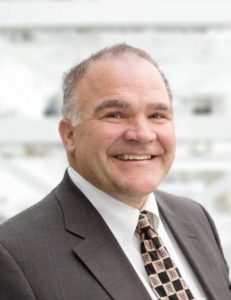
Alan Olsen, is the Host of the American Dreams Show and the Managing Partner of GROCO.com. GROCO is a premier family office and tax advisory firm located in the San Francisco Bay area serving clients all over the world.
Alan L. Olsen, CPA, Wikipedia Bio

GROCO.com is a proud sponsor of The American Dreams Show.

The American Dreams show was the brainchild of Alan Olsen, CPA, MBA. It was originally created to fill a specific need; often inexperienced entrepreneurs lacked basic information about raising capital and how to successfully start a business.
Alan sincerely wanted to respond to the many requests from aspiring entrepreneurs asking for the information and introductions they needed. But he had to find a way to help in which his venture capital clients and friends would not mind.
The American Dreams show became the solution, first as a radio show and now with YouTube videos as well. Always respectful of interview guest’s time, he’s able to give access to individuals information and inspiration previously inaccessible to the first-time entrepreneurs who need it most.
They can listen to venture capitalists and successful business people explain first-hand, how they got to where they are, how to start a company, how to overcome challenges, how they see the future evolving, opportunities, work-life balance and so much more..
American Dreams discusses many topics from some of the world’s most successful individuals about their secrets to life’s success. Topics from guest have included:
Creating purpose in life / Building a foundation for their life / Solving problems / Finding fulfillment through philanthropy and service / Becoming self-reliant / Enhancing effective leadership / Balancing family and work…

MyPaths.com (Also sponsored by GROCO) provides free access to content and world-class entrepreneurs, influencers and thought leaders’ personal success stories. To help you find your path in life to true, sustainable success & happiness. It’s mission statement:
In an increasingly complex and difficult world, we hope to help you find your personal path in life and build a strong foundation by learning how others found success and happiness. True and sustainable success and happiness are different for each one of us but possible, often despite significant challenges.
Our mission at MyPaths.com is to provide resources and firsthand accounts of how others found their paths in life, so you can do the same.
Mastering Business Growth with Howard Shore
Howard Shore, Founder and CEO of Activate Group Inc. discusses managing, even mastering, business growth and the challenges growing quickly can present on Alan Olsen‘s American Dreams Show. Transcript: Alan Olsen Welcome to American Dreams. My guest today is Howard Shore. Howard, welcome to today’s show. Howard Shore Alan, thank you for having me. Alan…
Prosperity and Self-Reliance Zealot Steve Alder
From North America to Ghana, Africa, Steve Alder, President of Ensign Global College (www.ensign.edu.gh), sits down to discuss how a professor helps to build global prosperity and self-reliance on Alan Olsen‘s American Dreams Show. Transcript: Alan Olsen Welcome to American Dreams I’m visiting here today with Steve Alder. Steve, welcome to today’s program. Steve Alder Thank…
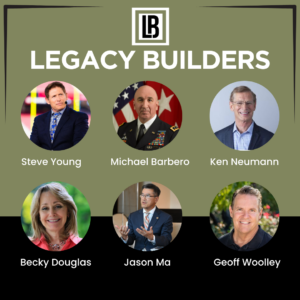
Steve Young on Building an Epic Family Legacy
Retired 49r Steve Young Discusses Building a Family Legacy at the Legacy Builders Event on May 15, 2024 As GROCO celebrates three decades of excellence in family office tax and advisory services, we have developed the Legacy Builders to stands as a testament to the firm’s enduring vision: to transform wealth into a powerful tool…
Leadership, Duty, Honor & Country With Lt. Gen. Mike Barbero
Retired US Army Lieutenant General, Michael D. Barbero, discusses leadership, service, duty, honor, and country on Alan Olsen‘s American Dreams Show. Transcript: Alan Olsen Hi, this is Alan Olsen and welcome to American Dreams. My guest today is General Michael Barbero. General, welcome to today’s show. Mike Barbero Thanks, Alan, how are you? Thanks for having me. It’s…