
ESOP Valuation Issues
ESOP Valuation Issues Q&A (Employee Stock Ownership Plan)
Valuation Services
Valuation Process
Valuation Experience
Sample Report
Glossary of Terms
ESOPs have become an effective tool in corporate finance and tax planning. Not only do they provide retirement benefits and incentives to employees but an ESOP can provide unique ways to transition company management in tax favored environments. An ESOP can even be used to increase cash flow or convert debt to a pre-tax environment.
Why do we need to engage an outside party to value our ESOP shares?
From a strictly regulatory standpoint, a valuation of ESOP shares by an independent third party is required by the Department of Labor (DOL) and the Internal Revenue Service (IRS). The regulatory requirement stems from the practical need to insure that the value is determined by a party who does not have a personal or financial interest in the valuation result. The valuation, moreover, should be performed on behalf of the ESOP trustee since it is the duty of the trustee to insure that transactions with the ESOP are consummated at “fair market value.”
What is meant by “fair market value”?
Fair Market Value (FMV) is a concept and not a price that emerges from application of determined standard formula. In simple terms, FMV is the price for which property would sell under the existing market conditions for such property as established in arms-length negotiations between knowledgeable and independent parties. The “market” implied in definitions of FMV encompasses all potential buyers and sellers of the property involved.
How is “fair market value” determined?
There are many method used in the determination of FMV. The nature of the property being evaluated determines what methods are appropriate. For example, the FMV of a single family home is determined by the price similar property selling in the area. The FMV of business interests that is generating earnings, however, is determined to a large degree on the basis of what a knowledgeable buyer would be willing to pay for the earnings stream. Considering available rates of return on relatively risk-free investments and the risks associated with the investment being appraised. Although not the only method that might be considered, the present value of future earnings using a risk adjusted market rate is one of the most common approaches, referred to in business valuations as Discounted Future Earnings (DFE).
Reference to the results of mathematical formulas is not the sole determinant of FMV. The judgment and experience of the valuation analyst is also a critical element since there can be many factors that can not be quantified by reference to the underlying financial information alone.
What is meant by a “control premium”?
A control premium is the amount a buyer may be willing to pay to acquire a controlling interest in a business over and above the value of the interest based solely on the underlying financial factors. The element of control, in this case, has a value which is added to the value that can otherwise be ascribed to the assets and earnings of the business. The payment of a control premium in the purchase of a business does not necessarily add any value to the business. Synergy value, unlike control, is susceptible to being measured in more concrete terms of increased financial benefits to the buyer over and above those being enjoyed by the selling parties. Examples are the prospects of increased sales of the buyer’s products to the seller’s customer base or lower overall materials costs due to volume purchase discounts, etc. Whether or not a control premium is appropriate in the purchase of shares by an ESOP must be determined on the facts in the individual case. Moreover, since the ESOP generally doesn’t control a company itself, there is much debate as to whether or not an ESOP can pay a control premium for shares purchased, even if purchasing a controlling percentage.
How do ESOP valuations differ from valuations for other purposes?
Because of the regulatory requirement established in the Employee Retirement & Income Security Act of 1974 (ERISA). That an ESOP pay no more than “adequate consideration” in the purchase of employer securities, ESOP valuations must support the decisions of the trustees and must also withstand review by DOL and the IRS. Valuations that are subject to being reviewed by third parties, whether for ESOP or other purposes, must include considerable discussions on the methods and factors employed. As well as explanatory information on the sponsoring company’s financial and operating history and the industry in which it competes. For similar reasons, valuations supporting tax related values for gift and estate or charitable deduction purposes must also include considerable background detail. So that potential third party reviewers will have a clear understanding of the process leading up to the value conclusion. In addition, ESOP regulations place various obligations on the sponsoring employer and allow for limitation of the voting rights of ESOP shares. These, and other features specific to the ESOP require special consideration in the determination of the fair market value of ESOP owned securities of privately held companies. It is strongly recommended that an ESOP trustee utilize an appraiser who is knowledgeable in the design and use of ESOPs since they are extremely unique in their different applications.
What is the cost of an ESOP valuation?
The fees charged for ESOP valuations vary considerably from one valuation firm to the next. There is no set industry standard or prescribed range. This is due to the wide variation in the amount of work that may be involved between one engagement and another. As a general rule, the cost of an initial valuation for a newly formed ESOP will be higher than the subsequent annual update valuations. This is because of the amount of time and work involved in gathering and analyzing all of the financial, industry and other pertinent information for the initial report.
Are there different types of ESOP valuations?
Because few companies are willing to adopt an ESOP before determining whether or not the value of company stock will support management objectives, Greenstein, Rogoff, Olsen & Co., LLP offers limited valuations for feasibility purposes. To reduce the initial costs of implementing an ESOP. Since this valuation is for company management purposes, all of the time consuming company and industry background report writing can be eliminated. The company’s management is fully aware of these matters and need not pay for the privilege of reading about them in a valuation report prepared exclusively for management use only. All pertinent factors are considered in the analysis leading to the value conclusion and all requisite financial data and valuation methods used for a full report are outlined in the limited report as well.
Is Greenstein, Rogoff, Olsen & Co., LLP (GROCO) considered an independent party for ESOP valuation purposes?
It is common knowledge in the valuation industry that “independence” means that the appraiser is not affiliated with nor has any present or intended future financial interest in the company for which the ESOP valuation is being provided. However, in a recent court case (Santa Monica Pictures et al v Commissioner, T.C. Memo 2005-105, May 11, 2005) the Court expressed concerns that portions of an expert’s report “have the distinct quality of advocacy.” Although this case does not involve ESOPs or an ESOP valuation, the case points out the importance that valuation conclusions be relevant, reliable and unbiased. Although an appraiser may not have any present financial interest in the company being appraised, if their firm provides ESOP installation and administration services and the decision to install an ESOP rests largely on the results of the valuation, can the appraiser in that situation truly provide an unbiased opinion of value, given their obvious financial benefit from the installation of the ESOP? GROCO does not derive income from the drafting of plan documents, plan submissions to the IRS, and other activity involved in the adoption of an ESOP by the client. In addition, GROCO does not offer annual ESOP administrative services. Accordingly, we have no pecuniary interest in the client’s decision to adopt the ESOP or the continued operation of the ESOP and therefore can truly give an unbiased opinion of value in feasibility situations. Therefore, GROCO is truly an independent party for ESOP valuation purposes.
To read a recent article about employee ownership, click here.
To view charts of ESOP Structure Alternatives, click here.
To receive our free newsletter, contact us here.
Subscribe our YouTube Channel for more updates.
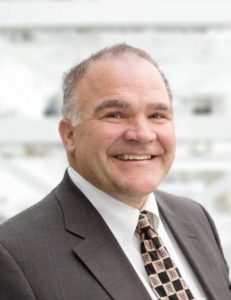
Alan Olsen, is the Host of the American Dreams Show and the Managing Partner of GROCO.com. GROCO is a premier family office and tax advisory firm located in the San Francisco Bay area serving clients all over the world.
Alan L. Olsen, CPA, Wikipedia Bio

GROCO.com is a proud sponsor of The American Dreams Show.
The American Dreams show was the brainchild of Alan Olsen, CPA, MBA. It was originally created to fill a specific need; often inexperienced entrepreneurs lacked basic information about raising capital and how to successfully start a business.
Alan sincerely wanted to respond to the many requests from aspiring entrepreneurs asking for the information and introductions they needed. But he had to find a way to help in which his venture capital clients and friends would not mind.
The American Dreams show became the solution, first as a radio show and now with YouTube videos as well. Always respectful of interview guest’s time, he’s able to give access to individuals information and inspiration previously inaccessible to the first-time entrepreneurs who need it most.
They can listen to venture capitalists and successful business people explain first-hand, how they got to where they are, how to start a company, how to overcome challenges, how they see the future evolving, opportunities, work-life balance and so much more..
American Dreams discusses many topics from some of the world’s most successful individuals about their secrets to life’s success. Topics from guest have included:
Creating purpose in life / Building a foundation for their life / Solving problems / Finding fulfillment through philanthropy and service / Becoming self-reliant / Enhancing effective leadership / Balancing family and work…

MyPaths.com (Also sponsored by GROCO) provides free access to content and world-class entrepreneurs, influencers and thought leaders’ personal success stories. To help you find your path in life to true, sustainable success & happiness. It’s mission statement:
In an increasingly complex and difficult world, we hope to help you find your personal path in life and build a strong foundation by learning how others found success and happiness. True and sustainable success and happiness are different for each one of us but possible, often despite significant challenges.
Our mission at MyPaths.com is to provide resources and firsthand accounts of how others found their paths in life, so you can do the same.
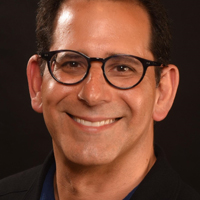
Mastering Business Growth with Howard Shore
Howard Shore, Founder and CEO of Activate Group Inc. discusses managing, even mastering, business growth and the challenges growing quickly can present on Alan Olsen‘s American Dreams Show. Transcript: Alan Olsen Welcome to American Dreams. My guest today is Howard Shore. Howard, welcome to today’s show. Howard Shore Alan, thank you for having me. Alan…
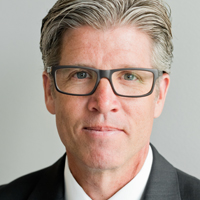
Prosperity and Self-Reliance Zealot Steve Alder
From North America to Ghana, Africa, Steve Alder, President of Ensign Global College (www.ensign.edu.gh), sits down to discuss how a professor helps to build global prosperity and self-reliance on Alan Olsen‘s American Dreams Show. Transcript: Alan Olsen Welcome to American Dreams I’m visiting here today with Steve Alder. Steve, welcome to today’s program. Steve Alder Thank…
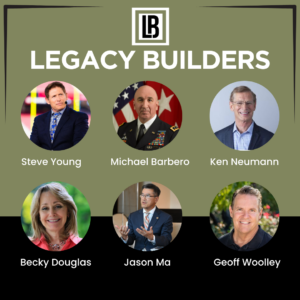
Steve Young on Building an Epic Family Legacy
Retired 49r Steve Young Discusses Building a Family Legacy at the Legacy Builders Event on May 15, 2024 As GROCO celebrates three decades of excellence in family office tax and advisory services, we have developed the Legacy Builders to stands as a testament to the firm’s enduring vision: to transform wealth into a powerful tool…
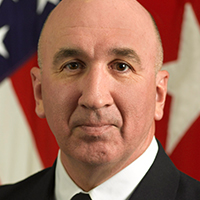
Leadership, Duty, Honor & Country With Lt. Gen. Mike Barbero
Retired US Army Lieutenant General, Michael D. Barbero, discusses leadership, service, duty, honor, and country on Alan Olsen‘s American Dreams Show. Transcript: Alan Olsen Hi, this is Alan Olsen and welcome to American Dreams. My guest today is General Michael Barbero. General, welcome to today’s show. Mike Barbero Thanks, Alan, how are you? Thanks for having me. It’s…