
Using Warrants in Your Private Placement Offering

Using Warrants in Your Private Placement Offering
By Nick Jevic
If you’re in the market raising junior capital, you’ll need to understand how warrants are used in structuring your offering. If you are floating a Private Placement of preferred stock or subordinated debt, your investors will expect to have warrants attached to their security.
What is a warrant?
A warrant is a security that gives the warrant holder the right to purchase equity at a specific price, within a certain time frame. Without the warrants, the investor or lender would only receive the dividend yield or interest rate on his shares or loan, hardly compensating him for the risk of making the investment. This equity-kicker is what gets investors excited.
What is a “stock warrant”?
Warrants are usually expressed as a percentage of the “fully-diluted” common stock of the company, which then equates to a certain number of common equity shares.
Fully-diluted refers to the total number of shares that would be outstanding if all conversions take place; e.g. convertible securities, employee stock options, and warrants, including the warrants which are part of your offering.
What is a Penny Warrant?
Warrants will usually have a “nominal” exercise price, also known as “penny warrants”. In the context of a buyout where the majority of the equity capital is in the form of preferred, the common equity will only have a nominal value. In other situations, the common equity may be valued at a higher number in which case i) the warrants will have an exercise price at the market value of the common equity, or ii) the warrants will have a nominal price, but the number warrant shares will be less.
As you structure your transaction and write your Private Placement Memorandum, you should become familiar with some terms that you’ll need to include in your term sheet:
Anti-dilution rights protect the warrant holder from equity dilution from a subsequent issuance of shares at a price lower than what the investor originally paid.
A simple example – suppose an investor received warrants for 20% of the equity for a preferred investment $1 million. If the Issuer subsequently issued another $1 million of preferred with warrants for 30% of the equity, the first investor would be diluted from 20% equity to 14% equity if there were not any anti-dilution protection language.
There are a number of ways to address anti-dilution, but that discussion is beyond the scope of this article.
Demand and piggyback registration rights refer to the right of the warrant holder to register his warrant shares for public issuance. The difference between the two types of registration rights is that Demand registration allows the holder to initiate the registration of warrant shares for public issuance. Demand registration is usually reserved for majority warrant holders, or warrant holders who have a significant ownership. Piggyback registration means that the warrant holder may have his warrant shares registered along with another holder or the company if there is a registering of the company’s shares. Piggyback rights are for the benefit of minority investors, as only the majority investors will have Demand registration rights.
Tag-along rights give a shareholder the right to join in a transaction to sell his shares if another shareholder is selling his stake.
Preemptive rights give shareholders the right to purchase new securities being issued by the company prior to them being issued to new, outside investors. In the dilution example above, a preemptive right would have given the first investor the right to purchase a proportional amount of the new issuance to preserve their equity ownership.
Note: since there would be an anti-dilution provision in the shareholders agreement, the anti-dilution provision would require waiver by the shareholders to proceed with the new issuance.
What is Put Option?
A Put Option allows the warrant holder to “put” the warrant back to the company. When the warrant is put to the company, the company has an obligation to purchase the warrant back from the investor. It is a way for the investor to monetize the value of his equity stake. The price that the company pays for the warrant is the product of the equity value of the company and the percent of the fully-diluted equity represented by the warrant shares.
What is Call Option?
A Call Option is a way for the company to “call” in the claims on its common equity. A company may call its equity back from investors if it anticipates an increase in the value of its equity down the road. It is also a way for the company to consolidate ownership back to, say the sponsors of the transaction.
I had a situation once where an investor requested that we eliminate the Call Option. His rationale was that he wanted to ride the value and did not the equity value get called away from him.
There are no rules for the number of years for the investor to have its Put right, or the Issuer to have its Call right, except that typically the advantage is to the investor with the Put right occurring before the Call right. My experience is that Put/Call rights will usually occur in years 4/5 or 5/6.
The issue you will face will be determining the value of the equity if and when the Put or Call gets exercised (except if there is a sale of the company to an unrelated third party).
I have been in transactions where the equity value for the purposes of the warrant was negotiated upfront as the greater of i) a liquidity event (such as a sale) or ii) a formula.
For example, if the original transaction was valued at 5x EBITDA, then the valuation for the Put/Call was also 5x EBITDA. Keep in mind that the product of a multiple and EBITDA gets you to an Enterprise Value, which is not the same thing as the equity value. To get to equity value, you’ll need to subtract debt and add cash (unrestricted cash).
My experience is that if there is no predetermined formula, the value of the warrant is usually negotiated. The “fair market value as determined by a …” language is for when you can’t agree; however, you should always have this language even if you have a formula.
As the Issuer you may find that the formula is based on the just-ended fiscal year, but by the time the audit gets completed, there might have been a material adverse change in the business such that the agree-upon formula overstates the value of the equity. Conversely, if you are the investor, events subsequent to the audit may point to a significantly higher equity value than what would be indicated following a formula using the year-end numbers.
Warrants are just another tool that help you raise the capital you need. The trickiest part of the whole warrant conversation will be anti-protection. As the Issuer you will want to run through a variety of scenarios to make sure you understand how your value will be impacted when anti-dilution triggers kick in.
Are you a Corporate, Estate and Trust, Individual, Limited Liability Company, Not for Profit, Partnership, and S Corporation income tax areas,
Looking for WEALTH & TAX PLANNING & PREPARATION SERVICES?
We hope you found this article about “Using Warrants in Your Private Placement Offering” helpful. If you have questions or need expert tax or family office advice that’s refreshingly objective (we never sell investments), please contact us or visit our Family office page or our website at www.GROCO.com. Unfortunately, we no longer give advice to other tax professionals gratis.
To receive our free newsletter, contact us here.
Subscribe our YouTube Channel for more updates.

Alan Olsen, is the Host of the American Dreams Show and the Managing Partner of GROCO.com. GROCO is a premier family office and tax advisory firm located in the San Francisco Bay area serving clients all over the world.
Alan L. Olsen, CPA, Wikipedia Bio

GROCO.com is a proud sponsor of The American Dreams Show.
The American Dreams show was the brainchild of Alan Olsen, CPA, MBA. It was originally created to fill a specific need; often inexperienced entrepreneurs lacked basic information about raising capital and how to successfully start a business.
Alan sincerely wanted to respond to the many requests from aspiring entrepreneurs asking for the information and introductions they needed. But he had to find a way to help in which his venture capital clients and friends would not mind.
The American Dreams show became the solution, first as a radio show and now with YouTube videos as well. Always respectful of interview guest’s time, he’s able to give access to individuals information and inspiration previously inaccessible to the first-time entrepreneurs who need it most.
They can listen to venture capitalists and successful business people explain first-hand, how they got to where they are, how to start a company, how to overcome challenges, how they see the future evolving, opportunities, work-life balance and so much more..
American Dreams discusses many topics from some of the world’s most successful individuals about their secrets to life’s success. Topics from guest have included:
Creating purpose in life / Building a foundation for their life / Solving problems / Finding fulfillment through philanthropy and service / Becoming self-reliant / Enhancing effective leadership / Balancing family and work…

MyPaths.com (Also sponsored by GROCO) provides free access to content and world-class entrepreneurs, influencers and thought leaders’ personal success stories. To help you find your path in life to true, sustainable success & happiness. It’s mission statement:
In an increasingly complex and difficult world, we hope to help you find your personal path in life and build a strong foundation by learning how others found success and happiness. True and sustainable success and happiness are different for each one of us but possible, often despite significant challenges.
Our mission at MyPaths.com is to provide resources and firsthand accounts of how others found their paths in life, so you can do the same.
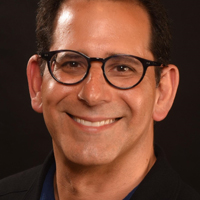
Mastering Business Growth with Howard Shore
Howard Shore, Founder and CEO of Activate Group Inc. discusses managing, even mastering, business growth and the challenges growing quickly can present on Alan Olsen‘s American Dreams Show. Transcript: Alan Olsen Welcome to American Dreams. My guest today is Howard Shore. Howard, welcome to today’s show. Howard Shore Alan, thank you for having me. Alan…

Prosperity and Self-Reliance Zealot Steve Alder
From North America to Ghana, Africa, Steve Alder, President of Ensign Global College (www.ensign.edu.gh), sits down to discuss how a professor helps to build global prosperity and self-reliance on Alan Olsen‘s American Dreams Show. Transcript: Alan Olsen Welcome to American Dreams I’m visiting here today with Steve Alder. Steve, welcome to today’s program. Steve Alder Thank…

Steve Young on Building an Epic Family Legacy
Retired 49r Steve Young Discusses Building a Family Legacy at the Legacy Builders Event on May 15, 2024 As GROCO celebrates three decades of excellence in family office tax and advisory services, we have developed the Legacy Builders to stands as a testament to the firm’s enduring vision: to transform wealth into a powerful tool…
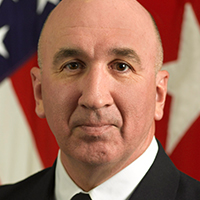
Leadership, Duty, Honor & Country With Lt. Gen. Mike Barbero
Retired US Army Lieutenant General, Michael D. Barbero, discusses leadership, service, duty, honor, and country on Alan Olsen‘s American Dreams Show. Transcript: Alan Olsen Hi, this is Alan Olsen and welcome to American Dreams. My guest today is General Michael Barbero. General, welcome to today’s show. Mike Barbero Thanks, Alan, how are you? Thanks for having me. It’s…