
Ten Ways Start-ups Use Venture Leases And Loans To Generate Millions

Ten Ways Start-ups Use Venture Leases And Loans To Generate Millions
By George A. Parker
The rise of venture leasing and lending has created an opportunity for sophisticated entrepreneurs to gain a competitive advantage. Savvy entrepreneurs are using venture leases and loans to generate millions of dollars for shareholders by leveraging existing venture capital. They have discovered ways to use this flexible financing as a tool to build enterprise value between equity rounds and to leapfrog less sophisticated competitors.
Venture leases and loans are usually asset-based, financing arrangements. These financings are available to qualify pre-profit, early-stage companies funded by venture capital investors. Start-ups need equipment and working capital to help them execute their business plans and to reach profitability. Venture lenders and lessors provide financing to these firms to help them acquire computers, lab and test equipment, production equipment, phone systems and other needed business equipment. These specialty financing firms may also provide financing for working capital in the form of accounts receivable and/or inventory loans. Start-ups that qualify usually have promising business prospects, well-defined business plans and have raised more than $ 5 million in venture capital from reputable venture capitalists.
How are these savvy entrepreneurs using venture leases and loans to boost shareholder value and to gain an edge on the competition? Here are some of the ways:
1. To stretch equity capital and to increase shareholder value between equity rounds. By using venture leases and loans, entrepreneurs can forestall going out for more equity while they continue to build and increase the value of their companies.
2.Use of loans and leases instead of internal cash helps to stem negative cash flow. Most start-ups are faced with negative cash flow until revenues build sufficiently to cover costs. Using limited internal cash for equipment purchases, to invest in inventory or for accounts receivable is not wise, if there are better options.
3.To protect working capital. Purchases of intermediate-term assets with internal cash will remove those funds from working capital. Use of venture leases and loans helps to keep the pressure off of working capital as the cost of these assets gets spread over an extended period.
4.To supplement other capital sources. Venture leases and loans supplement equity capital, mortgage financing and other financings available to start-ups.
5.To liberate cash from equipment, accounts receivable and inventory already financed internally. By doing a sale-leaseback, the start-up can liberate cash from equipment already owned. Likewise, the start-up can finance inventory and accounts receivable that have been funded internally by using a venture loan.
6.To bridge-finance equity transactions. Occasionally, start-ups are able to obtain short-term loans to bridge upcoming equity transactions. These loans are usually well secured by all-asset liens against these companies and are generally available for short time frames. Most venture lenders who provide this type of financing require equity kickers in the form of warrants to purchase stock in the start-ups or stock issued directly to them by the start-ups.
7. To hedge against rapidly depreciating equipment. Venture leases can be structured as fair-market-value leases. These leases usually allow the lessees to renew the leases at fair-market-value renewal rates, to purchase the equipment at fair-market-value purchase prices, or to return the equipment to the lessors at the end of the leases. The return option allows the start-ups to conveniently dispose of obsolete or unneeded equipment.
8.To replace venture capital. Start-ups are using loans in the form of subordinated debt as a substitute for additional equity rounds. These loans can be collateralized or unsecured and can be used for many of the same purposes as equity funding – to continue product development, to add key personnel, to expand marketing and to support sales efforts. Venture lenders generally charge a premium rate for these loans and require sizeable equity kickers in the form of warrants or ownership shares in the start-ups. These loans are generally cheaper than equity financing and may amortize faster.
9.To spread equipment cost over the productive life of the equipment. By being able to spread the cost of the equipment over an extended period, start-ups can get productivity out of these assets while they pay. Paying for the assets out of internal cash has just the opposite effect.
10.To quickly build out infrastructure to allow all employees to be more productive sooner. Venture leasing and lending allow start-ups to add computers, phone systems, networking equipment, software and other business essentials quickly. Employees can be more productive sooner and benchmarks can be reached faster.
Using venture leases and loans is a smart choice for savvy entrepreneurs. It allows them to build substantial equity value with minimal dilution. These arrangements usually do not require board representation or loss of management control. Start-ups are able to add needed equipment and finance working capital with lots of flexibility. Additionally, these forms of financing are significantly cheaper than the likely alternative, more venture capital financing. Savvy entrepreneurs have discovered these advantages and are using them to put their firms ahead of the pack.
George Parker is a Director and Executive Vice President of Leasing Technologies International, Inc. (“LTI”). Headquartered in Wilton, CT. LTI is a leasing firm specializing nationally in equipment financing programs for emerging growth and later-stage, venture capital backed companies.
We hope you found this article about “Ten Ways Start-ups Use Venture Leases And Loans To Generate Millions” helpful. If you have questions or need expert tax or family office advice that’s refreshingly objective (we never sell investments), please contact us or visit our Family office page or our website at www.GROCO.com. Unfortunately, we no longer give advice to other tax professionals gratis.
To receive our free newsletter, contact us here.
Subscribe to our YouTube Channel for more updates.
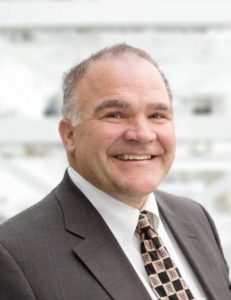
Alan Olsen, is the Host of the American Dreams Show and the Managing Partner of GROCO.com. GROCO is a premier family office and tax advisory firm located in the San Francisco Bay area serving clients all over the world.
Alan L. Olsen, CPA, Wikipedia Bio

GROCO.com is a proud sponsor of The American Dreams Show.
The American Dreams show was the brainchild of Alan Olsen, CPA, MBA. It was originally created to fill a specific need; often inexperienced entrepreneurs lacked basic information about raising capital and how to successfully start a business.
Alan sincerely wanted to respond to the many requests from aspiring entrepreneurs asking for the information and introductions they needed. But he had to find a way to help in which his venture capital clients and friends would not mind.
The American Dreams show became the solution, first as a radio show and now with YouTube videos as well. Always respectful of interview guest’s time, he’s able to give access to individuals information and inspiration previously inaccessible to the first-time entrepreneurs who need it most.
They can listen to venture capitalists and successful business people explain first-hand, how they got to where they are, how to start a company, how to overcome challenges, how they see the future evolving, opportunities, work-life balance and so much more..
American Dreams discusses many topics from some of the world’s most successful individuals about their secrets to life’s success. Topics from guest have included:
Creating purpose in life / Building a foundation for their life / Solving problems / Finding fulfillment through philanthropy and service / Becoming self-reliant / Enhancing effective leadership / Balancing family and work…

MyPaths.com (Also sponsored by GROCO) provides free access to content and world-class entrepreneurs, influencers and thought leaders’ personal success stories. To help you find your path in life to true, sustainable success & happiness. It’s mission statement:
In an increasingly complex and difficult world, we hope to help you find your personal path in life and build a strong foundation by learning how others found success and happiness. True and sustainable success and happiness are different for each one of us but possible, often despite significant challenges.
Our mission at MyPaths.com is to provide resources and firsthand accounts of how others found their paths in life, so you can do the same.
Mastering Business Growth with Howard Shore
Howard Shore, Founder and CEO of Activate Group Inc. discusses managing, even mastering, business growth and the challenges growing quickly can present on Alan Olsen‘s American Dreams Show. Transcript: Alan Olsen Welcome to American Dreams. My guest today is Howard Shore. Howard, welcome to today’s show. Howard Shore Alan, thank you for having me. Alan…
Prosperity and Self-Reliance Zealot Steve Alder
From North America to Ghana, Africa, Steve Alder, President of Ensign Global College (www.ensign.edu.gh), sits down to discuss how a professor helps to build global prosperity and self-reliance on Alan Olsen‘s American Dreams Show. Transcript: Alan Olsen Welcome to American Dreams I’m visiting here today with Steve Alder. Steve, welcome to today’s program. Steve Alder Thank…

Steve Young on Building an Epic Family Legacy
Retired 49r Steve Young Discusses Building a Family Legacy at the Legacy Builders Event on May 15, 2024 As GROCO celebrates three decades of excellence in family office tax and advisory services, we have developed the Legacy Builders to stands as a testament to the firm’s enduring vision: to transform wealth into a powerful tool…

Leadership, Duty, Honor & Country With Lt. Gen. Mike Barbero
Retired US Army Lieutenant General, Michael D. Barbero, discusses leadership, service, duty, honor, and country on Alan Olsen‘s American Dreams Show. Transcript: Alan Olsen Hi, this is Alan Olsen and welcome to American Dreams. My guest today is General Michael Barbero. General, welcome to today’s show. Mike Barbero Thanks, Alan, how are you? Thanks for having me. It’s…