
Simple rules for successful software technology outsourcing

Simple rules for successful software technology outsourcing
By Ramesh Manian
The current economic climate, opportunities and round the clock service necessity requires most companies to outsource many technology projects to countries like India, China and eastern European countries. If you are a small software company, successful outsourcing is crucial to your development. For all the complexity this notion has, success in outsourcing is quite easily achievable as long as it is viewed as a core process in an organization. The list below features a simple set of rules for achieving effective outsourcing.
1. Selecting a partner
Outsourcing service companies vary dramatically in size, infrastructure, capital, language, and talent. Even large well managed companies choose the outsourcing partner based on only one or two factors and face failure. While factors like size and name recognition are important, the winning partner will have the right combination of the factors that suits you and your project needs. Infrastructure, language and talent are much more important factors than size and capital, if you are a software startup or a small software company. I have seen several software projects fail because the partner does not have the right communication infrastructure, like high speed connectivity or easy land line access. Reworks tend to be common place in a project if your partner does not understand phone conversations or email conversations well. Lastly, there is no substitute for talent. Interview every member of the project team and identify the strengths and weaknesses and select based on the project requirement. I have found that many projects suffer due to a lack of depth in a technology. For example, while many programmers may be familiar with Java or .Net, your project might need a specialized understanding of that technology. Don’t compromise on talent.
2. Identifying the right project
This becomes critical especially if it is the first project to be outsourced. Matching the project with the right talent in team members is central to the success of the project. It is best to start simple, baby steps. A lot of companies have found success by starting with QA, internal technical support and documentation projects. This provides you with a viable back-up plan should you encounter irreconcilable differences in your first project. All too often, companies tend to easily accept that the first project is likely to fail. Don’t. You should take extra care that this is set up to succeed. Mind you, not all projects are suited for outsourcing. Choose the ones for which face to face communication is not essential. Lastly, ensure that the project is not more than 2 or 3 months in duration.
3. Managing the project
Clichéd as this might be, but, plan the work and work the plan. This is the most important aspect of the project. Have extra clear steps and outline them in a written manner. Perhaps the most important factors that will help you succeed are communication and use of tools. Do not assume anything and ensure that all team members are working on a common communication platform, be it email or any other special tool. Insist on daily or weekly written progress depending upon the project duration. A little bit of patience and attention to details will go a long way in making the project successful. Lastly, fund the project well; cutting corners does not work in Silicon valley, nor will it in Bangalore.
4. Measure the success
Identifying metrics and measuring them in outsourced projects often will determine if the project is going to succeed or fail. Get a list of simple, but comprehensive metrics. For instance, if it is a support project, measure the number of support queries, time it took to respond and whether the response was satisfactory or not. Seems simple, but most project managers take a very casual approach to this. Don’t make that mistake. Insist on the measurement. It helps make a case for the next set of projects.
5. Build on the success
Lastly, it never pays to do the outsourcing just once. It is with repeated success that you gain the needed efficiency. Remember, that is why you started outsourcing in the first place. Create a good document on what succeeded and what failed. Correct the mistakes and do it again for a different project. Adding complexity to succeeding projects will help hone the process.
Ramesh Manian is the founder and CEO of eSelf Inc., a software company that provides a layer of intelligence that provides relevance to information and one that learns from user behavior. Ramesh is also an advisor to GROCO Technology. He served as an executive at TIBCO software prior to founding eSelf. He can be reached at ramesh@groco.com.
We hope you found this article about “Simple rules for successful software technology outsourcing” helpful. If you have questions or need expert tax or family office advice that’s refreshingly objective (we never sell investments), please contact us or visit our Family office page or our website at www.GROCO.com. Unfortunately, we no longer give advice to other tax professionals gratis.
To receive our free newsletter, contact us here.
Subscribe to our YouTube Channel for more updates.
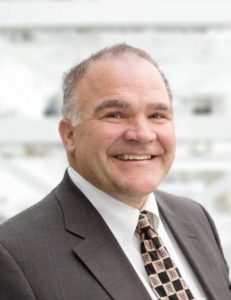
Alan Olsen, is the Host of the American Dreams Show and the Managing Partner of GROCO.com. GROCO is a premier family office and tax advisory firm located in the San Francisco Bay area serving clients all over the world.
Alan L. Olsen, CPA, Wikipedia Bio

GROCO.com is a proud sponsor of The American Dreams Show.

The American Dreams show was the brainchild of Alan Olsen, CPA, MBA. It was originally created to fill a specific need; often inexperienced entrepreneurs lacked basic information about raising capital and how to successfully start a business.
Alan sincerely wanted to respond to the many requests from aspiring entrepreneurs asking for the information and introductions they needed. But he had to find a way to help in which his venture capital clients and friends would not mind.
The American Dreams show became the solution, first as a radio show and now with YouTube videos as well. Always respectful of interview guest’s time, he’s able to give access to individuals information and inspiration previously inaccessible to the first-time entrepreneurs who need it most.
They can listen to venture capitalists and successful business people explain first-hand, how they got to where they are, how to start a company, how to overcome challenges, how they see the future evolving, opportunities, work-life balance and so much more..
American Dreams discusses many topics from some of the world’s most successful individuals about their secrets to life’s success. Topics from guest have included:
Creating purpose in life / Building a foundation for their life / Solving problems / Finding fulfillment through philanthropy and service / Becoming self-reliant / Enhancing effective leadership / Balancing family and work…

MyPaths.com (Also sponsored by GROCO) provides free access to content and world-class entrepreneurs, influencers and thought leaders’ personal success stories. To help you find your path in life to true, sustainable success & happiness. It’s mission statement:
In an increasingly complex and difficult world, we hope to help you find your personal path in life and build a strong foundation by learning how others found success and happiness. True and sustainable success and happiness are different for each one of us but possible, often despite significant challenges.
Our mission at MyPaths.com is to provide resources and firsthand accounts of how others found their paths in life, so you can do the same.
Mastering Business Growth with Howard Shore
Howard Shore, Founder and CEO of Activate Group Inc. discusses managing, even mastering, business growth and the challenges growing quickly can present on Alan Olsen‘s American Dreams Show. Transcript: Alan Olsen Welcome to American Dreams. My guest today is Howard Shore. Howard, welcome to today’s show. Howard Shore Alan, thank you for having me. Alan…
Prosperity and Self-Reliance Zealot Steve Alder
From North America to Ghana, Africa, Steve Alder, President of Ensign Global College (www.ensign.edu.gh), sits down to discuss how a professor helps to build global prosperity and self-reliance on Alan Olsen‘s American Dreams Show. Transcript: Alan Olsen Welcome to American Dreams I’m visiting here today with Steve Alder. Steve, welcome to today’s program. Steve Alder Thank…
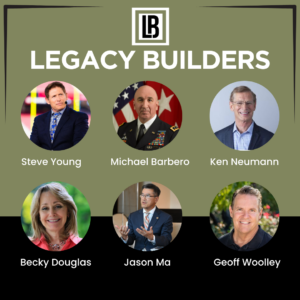
Steve Young on Building an Epic Family Legacy
Retired 49r Steve Young Discusses Building a Family Legacy at the Legacy Builders Event on May 15, 2024 As GROCO celebrates three decades of excellence in family office tax and advisory services, we have developed the Legacy Builders to stands as a testament to the firm’s enduring vision: to transform wealth into a powerful tool…
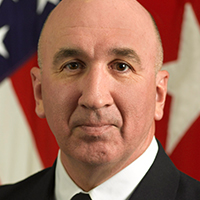
Leadership, Duty, Honor & Country With Lt. Gen. Mike Barbero
Retired US Army Lieutenant General, Michael D. Barbero, discusses leadership, service, duty, honor, and country on Alan Olsen‘s American Dreams Show. Transcript: Alan Olsen Hi, this is Alan Olsen and welcome to American Dreams. My guest today is General Michael Barbero. General, welcome to today’s show. Mike Barbero Thanks, Alan, how are you? Thanks for having me. It’s…