
More Work for Accountants! President Obama’s Corporate Tax Proposal
More Work for Accountants! President Obama’s Corporate Tax Proposal
By Ron Cohen, CPA, MST
Partner
Greenstein, Rogoff, Olsen & Co., LLP
In the White House summary of corporate tax proposals:
http://media.npr.org/documents/2009/may/whitehouse_taxhavens.pdf
At “Backgrounder” Article I. Sec. 1, it states:
“Current Law
Companies Can Defer Paying Taxes on Overseas Profits Until Later, While Taking Tax Deductions on Their Foreign Expenses Now: Currently, a company that invests in America has to pay immediate U.S. taxes on its profits from that investment. But if the company instead invests and creates jobs overseas through a foreign subsidiary, it does not have to pay U.S. taxes on its overseas profits until those profits are brought back to the United States, if they ever are. Yet even though companies do not have to pay U.S. taxes on their overseas profits today, they still get to take deductions today on their U.S. tax returns for all of the expenses that support their overseas investment.
The Administration’s Proposal
Level the Playing Field: The Administration’s commonsense proposal, similar to an earlier measure proposed by House Ways and Means Chairman Charles Rangel, would level the playing field by requiring a company to defer any deductions – such as for interest expenses associated with untaxed overseas investment – until the company repatriates its earnings back home. In other words, companies would only be able to take a deduction on their U.S. taxes for foreign expenses when they also pay taxes on their foreign profits in the United States. This proposal makes an exception for deductions for research and experimentation because of the positive spillover impacts of those investments on the U.S. economy.”
Comment: The proposal lacks specifics. Chairman Rangel made a proposal in 2007 (HR 3970) which died in committee. (Here’s a link to the text: http://www.govtrack.us/congress/billtext.xpd?bill=h110-3970.) See Sec. 3201 of the bill.
(c) Definitions and Special Rule- For purposes of this section–
(1) FOREIGN-RELATED DEDUCTIONS- The term `foreign-related deductions’ means the total amount of deductions and expenses which would be allocated or apportioned to gross income from sources without the United States for the taxable year if both the currently-taxed foreign income and deferred foreign income were taken into account.
This language is similar (“allocated and apportioned”) to the Regulations under IRC Reg. 1.861-8, used to determine foreign “source” income and expenses for purposes of computing foreign tax credits.
Above it states that an exception will be made for research and development, implying that all other types of expenses on the taxpayer’s tax return will be subject to some type of U.S. versus foreign source allocation.
Those who work with these types of computations know the time, effort and mind-numbing spreadsheets and/or computer programs required to do proper “sourcing” under the foreign tax credit rules. Foreign tax credits don’t come into play until an actual dividend (or deemed dividend under Subpart F or other sections) occurs.
In contrast, the allocation and apportionment the President proposes would be required every year, for a company with foreign subsidiaries, for purposes of determining the allowable U.S. tax deductions, even if no actual or deemed dividend was received by the U.S. company.
As a result, and if history is any guide (e.g., the 1986 so called “simplification” tax act) we can only expect – by the time Congress has drafted the actual legislation — another complex layer of computations to be imposed on taxpayers.
I often wish the Members of the House Ways and Means Committee and the Senate Finance Committee were required to calculate a company’s taxes – trapped in a room until they get the right answer — using a 10-Key calculator, a pencil and paper, before they are allowed to impose rules and regulations on the rest of us. That would sensitize them to the compliance burden their rules create.
While large public companies will “staff-up” to handle the extra burden, small and mid-sized companies are forced to outsource the computations to CPAs and others with the expertise, software and knowledge to do the work.
Therefore, at this point, holding back further comments until we see more of the details of the proposal, it appears the President’s proposals will create more work for CPAs. Whether the proposal achieves the goals of fairness and raising revenue, we will only know in the fullness of time. Often, like Clinton’s Sec. 956A that he repealed in his second term, these proposals back-fire, raise little revenue, and result in taxpayers finding other legal workarounds.
Here’s an editorial from the Wall Street Journal of 5/6/09 which explores the President’s Proposal deeper: Obama Tax Proposal
I can always be reached for questions of comments at (510) 797-8661 x237.
We hope you found this article about “More Work for Accountants! President Obama’s Corporate Tax Proposal” helpful. If you have questions or need expert tax or family office advice that’s refreshingly objective (we never sell investments), please contact us or visit our Family office page or our website at www.GROCO.com. Unfortunately, we no longer give advice to other tax professionals gratis.
To receive our free newsletter, contact us here.
Subscribe our YouTube Channel for more updates.
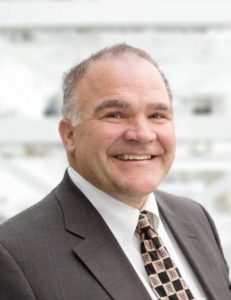
Alan Olsen, is the Host of the American Dreams Show and the Managing Partner of GROCO.com. GROCO is a premier family office and tax advisory firm located in the San Francisco Bay area serving clients all over the world.
Alan L. Olsen, CPA, Wikipedia Bio

GROCO.com is a proud sponsor of The American Dreams Show.
The American Dreams show was the brainchild of Alan Olsen, CPA, MBA. It was originally created to fill a specific need; often inexperienced entrepreneurs lacked basic information about raising capital and how to successfully start a business.
Alan sincerely wanted to respond to the many requests from aspiring entrepreneurs asking for the information and introductions they needed. But he had to find a way to help in which his venture capital clients and friends would not mind.
The American Dreams show became the solution, first as a radio show and now with YouTube videos as well. Always respectful of interview guest’s time, he’s able to give access to individuals information and inspiration previously inaccessible to the first-time entrepreneurs who need it most.
They can listen to venture capitalists and successful business people explain first-hand, how they got to where they are, how to start a company, how to overcome challenges, how they see the future evolving, opportunities, work-life balance and so much more..
American Dreams discusses many topics from some of the world’s most successful individuals about their secrets to life’s success. Topics from guest have included:
Creating purpose in life / Building a foundation for their life / Solving problems / Finding fulfillment through philanthropy and service / Becoming self-reliant / Enhancing effective leadership / Balancing family and work…

MyPaths.com (Also sponsored by GROCO) provides free access to content and world-class entrepreneurs, influencers and thought leaders’ personal success stories. To help you find your path in life to true, sustainable success & happiness. It’s mission statement:
In an increasingly complex and difficult world, we hope to help you find your personal path in life and build a strong foundation by learning how others found success and happiness. True and sustainable success and happiness are different for each one of us but possible, often despite significant challenges.
Our mission at MyPaths.com is to provide resources and firsthand accounts of how others found their paths in life, so you can do the same.
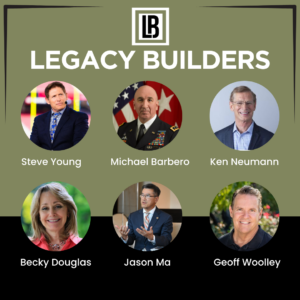
Steve Young on Building an Epic Family Legacy
Retired 49r Steve Young Discusses Building a Family Legacy at the Legacy Builders Event on May 15, 2024 As GROCO celebrates three decades of excellence in family office tax and advisory services, we have developed the Legacy Builders to stands as a testament to the firm’s enduring vision: to transform wealth into a powerful tool…
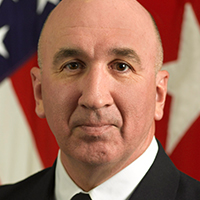
Leadership, Duty, Honor & Country With Lt. Gen. Mike Barbero
Retired US Army Lieutenant General, Michael D. Barbero, discusses leadership, service, duty, honor, and country on Alan Olsen‘s American Dreams Show. Transcript: Alan Olsen Hi, this is Alan Olsen and welcome to American Dreams. My guest today is General Michael Barbero. General, welcome to today’s show. Mike Barbero Thanks, Alan, how are you? Thanks for having me. It’s…
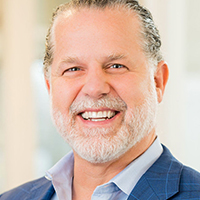
Regenerative Medicine and Creating Health with Dr. David Haase
Dr. David Haase, Founder of the MaxWell Clinic discusses regenerative medicine and creating health on Alan Olsen‘s American Dreams Show. Transcript: Alan Olsen Welcome to American Dreams. My guest today is David Haase. David, welcome to the show. David Haase Thanks, Alan. Alan Olsen So do you have a remarkable background and career obviously that…
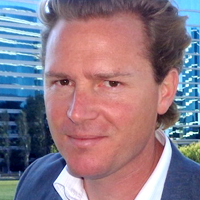
VC Success With Silicon Valley Veteran Andrew Romans
Andrew Romans, General Partner of 7BC Venture Capital, Author, and University Professor discusses navigating Silicon Valley, venture capital (VC), startup success, and the future of tech investment on Alan Olsen‘s American Dreams Show. Transcript: Alan Olsen Welcome to American Dreams. My guest today is Andrew Romans. Andrew, welcome to today’s show. Andrew Romans Thank you so…