
Dealing with IRS Collections

Dealing with IRS Collections
There are times when taxpayers are unable to pay amounts owed the IRS on a tax return or as a result of an audit. Presuming there is no disagreement about the tax liability, just a lack of funds to pay, the taxpayer is best served by avoiding the collection process. There are several strategies for avoiding formal collection process including the following:
- Pay as much as you can with the return and on each of the notices that follow. Communicating with the IRS along with frequent payments can forestall additional steps.
- Borrow from a bank, finance company, friend or family. Before the IRS will accept an installment agreement or offer in compromise, they may require you to show that you have attempted to borrow the money elsewhere.
- Apply to pay installments. If the amount is less than $10,000 and you are current on all other payments and filings, you can complete a Form 9465, Installment Payment Request, and set your own payment. For amounts greater than $10,000, financial disclosures need to be made on form 433.
- Offer in Compromise (form 656). You may be able to settle the debt for less than full amount. This requires a showing that your net assets and your cash flow for 5 years are less than the debt owed. This also requires exhaustive disclosures on form 433. Read the conditions on form 656 before making the offer. There are some down sides.
Federal Tax Liens & Collections
If the opportunity to voluntarily comply using the methods above have been missed, Section 6303 directs the IRS to give the taxpayer notice of the assessed amount and demand for payment within 60 days. If timely notice and demand is made by the IRS and not followed by the taxpayer’s payment in full, a federal tax lien arises. The federal tax lien attaches to all of the taxpayer’s property or rights to property either owned or acquired after the date of assessment.
Most interests of third parties in the taxpayer’s property have priority over the tax lien if the interest is perfected under local law before the creation of the federal tax lien (FTL). If the IRS perfects the FTL by filing a Notice of Federal Tax Lien (NTFL) with the state, the district court where property is located, or with the DMV for vehicles, the tax lien will take priority against other lien holders through the general rule of first in time, first in right.
Federal Tax Levy
While a federal tax lien encumbers the taxpayer’s property, a federal tax levy is the exercise of the IRS’s power to seize the property. The IRS must serve 1) notice and demand 10 days prior to levy, 2)notice of intent to levy 30 days prior to levy, and 3) collection due process notice before levy (CDP). Without all 3 notices and the proper waiting periods, the levy is invalid. The IRS must also give written notice of seizure immediately afterward. Residences may not be seized unless the tax liability exceeds $5,000. Seizure of residences and property used in a trade or business require either court order or Area Director approval.
Defensive Measures
Assert Impropriety or Expiration of Statute of Limitations. If the taxpayer can show that 10 years have passed since the original assessment or that the assessment was made while a case was pending in the Tax Court then the IRS is precluded from collecting.
Assert Innocent Spouse Relief. The “innocent” spouse can be used in several ways to relieve liability on a joint return tax. In all cases the innocent spouse must not have had knowledge of the item giving rise to the liability. Since 1998 the IRS has wider latitude in granting relief if “facts and circumstances” indicate in “inequity” would result if liability attaches.
Taxpayer Assistance Order. If the taxpayer can show that the IRS’s collection activities result in “significant hardship,” a form 911 can be used to apply for a Taxpayer Assistance Order (TAO). The order can require release of levied property or cessation of collection activities. Mere economic or personal inconvenience does not constitute “significant hardship.” A TAO cannot be used to contest the merits of a tax liability. A TAO does suspend the running of the statute of limitations.
Request for New Audit. If the taxpayer never received notice of an audit, the taxpayer moved or for good reason never had the opportunity to substantiate tax positions and is now able to do so, a new audit may be requested through the local Taxpayer Advocate’s office.
Administrative Appeals. Since 1998, administrative appeals are available concerning collection actions. Collection Due Process appeal (CDP) is available after a receiving a Notice of Federal Tax Lien, Notice of Intent to Levy and other collection notices. The taxpayer has a right to judicial review of the CDP determination. Collection Appeals Program (CAP) can be filed before or after notices of tax lien or levy to forestall such filings on procedural issues. Unlike the CDP, an unfavorable decision in CAP may not be contested in Tax Court or U.S. district court.
Injunctive Relief. Once administrative appeals are exhausted, collection proceedings can be restrained by petitioning in Tax Court or District Court but only under specific provisions of the code. They include when the IRS takes action during one of the statutory waiting periods such as before the period for the taxpayer to petition the Tax Court for redetermination has expired.
If the IRS collection action cannot be stopped, the three principal means of resolving the account are installment agreements, offers in compromise and bankruptcy. If the taxpayer has sufficient income to pay the full tax liability and interest over a period but has no equity in assets against which to borrow, the taxpayer should be able to obtain an installment agreement. If the taxpayer is not able to fully pay the liability, the taxpayer should consider an offer in compromise. Finally, if administrative resolution of the liability is unlikely, bankruptcy should be considered as a last resort.
Installment Agreements. If the tax is less than $10,000 and the proposed payment schedule is less than 3 years, the taxpayer can use form 9465 to apply for installment agreement and approval is automatic. Even if the taxpayer does not get automatic approval, a taxpayer with substantial income and no assets is a likely candidate for installment agreement. Extensive financial information is provided using form 433 which the IRS considers in approving the installment agreement. In limited cases the IRS may approve an installment agreement for less than the full amount, a Partial Payment Installment Agreement. The taxpayer must agree to stay current on filings and other tax payments or the agreement may be terminated.
Offers In Compromise. The offer in compromise can be submitted by the taxpayer to cover all taxes, interest and penalties using form 656. The IRS will accept an offer in compromise when it is unlikely that the tax liability can be collected in full and the amount offered reasonably reflects the collection potential. The taxpayer again uses for 433 to provide financial information considered by the IRS. The taxpayer may also introduce doubt as to the tax assessed by submitting factual and legal support for that position. The IRS may also enter into a compromise to promote effective tax administration when payment in full would create an economic hardship.
Dealing with IRS Collections Conclusion
The strategies presented here can be used to avoid or delay federal tax liens and levies. They have been presented in the general order they should be considered by the taxpayer and/or the taxpayers representative. They are presented only in summary form as the requirements of this article dictate. There are, however, multitudes of requirements, time limits and other considerations that brevity precludes from this article. In short, these strategies are best undertaken by your trusted advisors at GROCO. We are professionals, don’t try this at home.
We hope you found this article about “Dealing with IRS Collections” helpful. If you have questions or need expert tax or family office advice that’s refreshingly objective (we never sell investments), please contact us or visit our Family office page or our website at www.GROCO.com. Unfortunately, we no longer give advice to other tax professionals gratis.
To receive our free newsletter, contact us here.
Subscribe our YouTube Channel for more updates.

Alan Olsen, is the Host of the American Dreams Show and the Managing Partner of GROCO.com. GROCO is a premier family office and tax advisory firm located in the San Francisco Bay area serving clients all over the world.
Alan L. Olsen, CPA, Wikipedia Bio

GROCO.com is a proud sponsor of The American Dreams Show.

The American Dreams show was the brainchild of Alan Olsen, CPA, MBA. It was originally created to fill a specific need; often inexperienced entrepreneurs lacked basic information about raising capital and how to successfully start a business.
Alan sincerely wanted to respond to the many requests from aspiring entrepreneurs asking for the information and introductions they needed. But he had to find a way to help in which his venture capital clients and friends would not mind.
The American Dreams show became the solution, first as a radio show and now with YouTube videos as well. Always respectful of interview guest’s time, he’s able to give access to individuals information and inspiration previously inaccessible to the first-time entrepreneurs who need it most.
They can listen to venture capitalists and successful business people explain first-hand, how they got to where they are, how to start a company, how to overcome challenges, how they see the future evolving, opportunities, work-life balance and so much more..
American Dreams discusses many topics from some of the world’s most successful individuals about their secrets to life’s success. Topics from guest have included:
Creating purpose in life / Building a foundation for their life / Solving problems / Finding fulfillment through philanthropy and service / Becoming self-reliant / Enhancing effective leadership / Balancing family and work…

MyPaths.com (Also sponsored by GROCO) provides free access to content and world-class entrepreneurs, influencers and thought leaders’ personal success stories. To help you find your path in life to true, sustainable success & happiness. It’s mission statement:
In an increasingly complex and difficult world, we hope to help you find your personal path in life and build a strong foundation by learning how others found success and happiness. True and sustainable success and happiness are different for each one of us but possible, often despite significant challenges.
Our mission at MyPaths.com is to provide resources and firsthand accounts of how others found their paths in life, so you can do the same.
[vc_row][vc_column][vc_column_text]
[/vc_column_text][/vc_column][/vc_row]
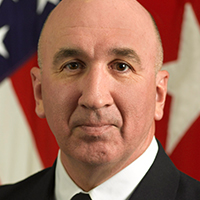
Leadership, Duty, Honor & Country With Lt. Gen. Mike Barbero
Retired US Army Lieutenant General, Michael D. Barbero, discusses leadership, service, duty, honor, and country on Alan Olsen‘s American Dreams Show. Transcript: Alan Olsen Hi, this is Alan Olsen and welcome to American Dreams. My guest today is General Michael Barbero. General, welcome to today’s show. Mike Barbero Thanks, Alan, how are you? Thanks for having me. It’s…

Regenerative Medicine and Creating Health with Dr. David Haase
Dr. David Haase, Founder of the MaxWell Clinic discusses regenerative medicine and creating health on Alan Olsen‘s American Dreams Show. Transcript: Alan Olsen Welcome to American Dreams. My guest today is David Haase. David, welcome to the show. David Haase Thanks, Alan. Alan Olsen So do you have a remarkable background and career obviously that…

VC Success With Silicon Valley Veteran Andrew Romans
Andrew Romans, General Partner of 7BC Venture Capital, Author, and University Professor discusses navigating Silicon Valley, venture capital (VC), startup success, and the future of tech investment on Alan Olsen‘s American Dreams Show. Transcript: Alan Olsen Welcome to American Dreams. My guest today is Andrew Romans. Andrew, welcome to today’s show. Andrew Romans Thank you so…

How Entrepreneurs Shine With Gino Wickman
Gino Wickman, Founder of EOS Worldwide and author of “Shine” and “Traction: Get a Grip on Your Business” discusses How to shine as an Entrepreneur on Alan Olsen‘s American Dreams Show. Transcript: Alan Olsen Hi, this is Alan Olsen and welcome to American Dreams. My guest today is Gino Wickman. To welcome to today’s show. Gino…