
Credit Default Swaps – Impose A Tax On Bogus Insurance

[vc_row][vc_column][vc_column_text]
Credit Default Swaps – Impose A Tax On Bogus Insurance
 By Ron Cohen, CPA, MST
Partner
Greenstein, Rogoff, Olsen & Co., LLP
Proposal to amend the U.S. Internal Revenue Code: Any Seller, Buyer or Insured Party who enters into a Credit Default Swap (“CDS”) contract insuring U.S. source risks will be subject to an excise tax of 10% of the face amount of such CDS. Exception: If the CDS parties provide evidence the Seller of the CDS maintains directly related and segregated liquid assets as insurance reserves equal to 30% of the face value of the CDS, no excise tax will apply.
Well, that should do it. A complete end to high-tech gambling with CDSs.
Congress can debate what the percentages should be, but you get the general idea.
Background:
In my opinion, there are good and bad Credit Default Swaps.
A GOOD CDS helps spread reasonable risk, provides credit to worthy borrowers and assists economic growth.
However, a BAD CDS is an exercise in financial terrorism. Unworthy borrowers get credit they do not deserve followed by a cascade of bubble and bust events. These consequences include an exponential growth in the national debt…so large, that many argue (not this author, but some I respect) federal debt defaults are sure to come resulting in a dissolution of the U.S. central government…resulting in the dissolution of the Republic, as states and cities desperately re-group to avoid chaos.
All from bad CDS — an insurance product that barely existed 10 years ago.
So what is the difference between a GOOD and BAD CDS? Let’s go back to basic principles:
Basic Principal of Insurance: Insurance spreads risk from the “few” to the “many.” Everyone benefits. In order to successfully spread risk, the insurance must be able to pay claims for actual losses. The ability of a company to pay claims is dependent on highly-liquid asset reserves the insurance company holds (obtained by charging premiums over time). If the reserves are inadequate to pay claims, the insurance is bogus. The Seller of the insurance is simply gambling the claims will never arrive.
Confirmation of this basic principal was proven by three letters: A.I.G. They lost the gamble.
WHY NOT TURN TO REGULATORS versus the Tax Law?
Fair question. Let’s look at the Regulators and their history of ineptness.
Federal Reserve: Alan Greenspan was, until the bust, a cheerleader for BAD CDSs as a form of self-insurance and self-regulation for the banking system. Yikes!
Securities & Exchange Commission: Good at editing financial statements. Otherwise, they missed Enron, Worldcom and Madoff. Let’s not even discuss the Sarbanes-Oxley. Note that Madoff received various “clean opinions” under Sarbanes-Oxley audits.
Bank Regulators: Good at taking action after disaster has struck.
CPA, GAAP Financial Auditors: We don’t detect fraud. We can’t tell a client how to run their business. We can only complain and comment and/or quit. BAD CDS transactions are completely legal.
The Internal Revenue Service: Looking to this organization is useful. But not as a direct regulator, but as a beneficiary of the “self-assessment” tax system in the U.S.
Economic parties truly focus and obsess over tax liabilities and exposure to I.R.S. penalties and interest. Corporate behavior does change and adapt to tax laws.
Tax returns are internally and externally reviewed by various auditors and management. They verify the returns are correctly filed and the accounting impact of current and future taxes are appropriately recorded on the books.
Board of Director’s meetings include large amounts of time on tax compliance and planning. Directors and Officers understand the personal liability they may have for errors in tax reporting. Lastly, everyone understands the cash impact of sending money to the I.R.S. and other tax authorities. Taxes are very REAL.
That’s why I propose we cut-through the confusion and efforts of the inept, under-trained, under-resourced do-gooders at most agencies, and use the tax system to change behavior to eliminate BAD CGS.
Impose an excise tax, and the BAD CGS will largely disappear out of a natural desire to avoid incremental taxes. An army of auditors can’t do that. A good excise tax is much more efficient and effective.
While I usually complain about added laws, regulations and taxes, BAD CDS are a new and modern form of evil. We’d all happily accept a bit more tax law if it could avoid the foreclosure wastelands we now find within Stockton, California and Cleveland, Ohio…and all the related human suffering.
So that’s it. Have we saved the Republic? The whole idea is about two pages. You folks have to take it from here.[/vc_column_text][/vc_column][/vc_row]
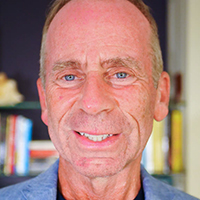
Mark Sadovnick Talks Leadership, Authenticity, and Making an Impact
Mark Sadovnick, Managing Partner at 5th Element Group discusses leadership, authenticity, and making an Impact on Alan Olsen‘s American Dreams Show. Transcript: Alan Olsen Welcome to American Dreams. My guest today is Mark Sadovnick. Nick, Mark, welcome to today’s show. Mark Sadovnick It’s great to be here. Alan, thanks for inviting me. Alan Olsen So, Mark,…
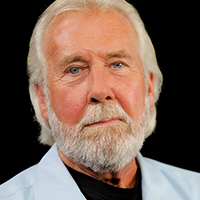
Preserving My Family’s Life’s Work & Legacy
Tom Chatham, Chairman of Chatham Created Gems & Diamonds, Inc., discusses preserving his family’s legacy and life’s work on Alan Olsen‘s American Dreams Show. Transcript: Alan Olsen Welcome to America dreams. My guest today is Tom Chatham. Welcome to today’s show. Tom Chatham Thank you glad to be here. Alan Olsen So, Tom, we’ve had…
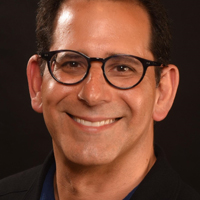
Mastering Business Growth with Howard Shore
Howard Shore, Founder and CEO of Activate Group Inc. discusses managing, even mastering, business growth and the challenges growing quickly can present on Alan Olsen‘s American Dreams Show. Transcript: Alan Olsen Welcome to American Dreams. My guest today is Howard Shore. Howard, welcome to today’s show. Howard Shore Alan, thank you for having me. Alan…
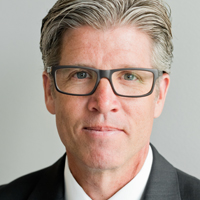
Prosperity and Self-Reliance Zealot Steve Alder
From North America to Ghana, Africa, Steve Alder, President of Ensign Global College (www.ensign.edu.gh), sits down to discuss how a professor helps to build global prosperity and self-reliance on Alan Olsen‘s American Dreams Show. Transcript: Alan Olsen Welcome to American Dreams I’m visiting here today with Steve Alder. Steve, welcome to today’s program. Steve Alder Thank…