
Steps to Prepare for Retirement

Steps to Prepare for Retirement
U.S. Companies Can’t Continue Offering Adequate Pensions, AICPA Survey Reveals
by Joel Allegretti
April 27, 2006
The vast majority of CPAs serving as corporate CEOs, CFOs, Controllers and in other executive positions believe American companies can’t continue providing pensions that adequately cover their employees’ retirement years, according to the results of a new survey by the American Institute of Certified Public Accountants (AICPA).
Moreover, many CPA executives believe reductions in pension benefits pose a threat to a company’s ability to attract and retain the talent they need to compete.
“These findings are a wake-up call,” said John Morrow, Vice President of the AICPA’s division for CPAs in business and industry. “The traditional system of rewarding employees with pensions after long years of service is on its way out, because companies simply cannot bear the cost. Therefore, employees will have to find alternate methods of funding their retirement.”
The AICPA surveyed more than 3,100 of its members in business and industry during the month of April. Of them, 59.5 percent work for private companies, and 21.4 percent are employed in public corporations. The remaining respondents are in the not-for-profit and government arenas.
When asked if U.S. companies could continue providing employees with pensions that adequately cover their retirement years, nearly three in four (74 percent) of the respondents said no. More than half (54 percent) indicated that the erosion of these benefits would hurt recruiting and retention efforts. A slightly higher number (57 percent) believe rising healthcare costs are the biggest barrier to a company’s ability to offer pension benefits; nearly a third (30 percent) said the pressures to compete in the marketplace outweighed the pressures to provide retirement benefits.
Virtually all the respondents said their companies offer some type of retirement benefit today, with the majority offering a 401(k) plan with matching contributions (65.6 percent). Less than 5 percent said their companies offer no retirement plan at all.
Interestingly, well over half the respondents (59 percent) believe Americans have to educate themselves about retirement savings strategies.
“American workers have to understand the pension safety net will probably not be there for them and that planning for retirement is their personal responsibility” said Carl George, Chair of the AICPA’s National CPA Financial Literacy Commission. “Americans must recognize that unless they take a more active role in their own retirement planning, they may find themselves working far longer than they had intended.”
Steps to Prepare for Retirement
The AICPA’s “360 Degrees of Financial Literacy” program has set up a consumer Web site, www.360FinancialLiteracy.org, with hundreds of “free” tools and resources to help educate consumers about personal finance matters, including retirement.
The basic retirement planning steps recommended on the site include the following:
1.) Know Your Retirement Needs
Experts estimate that you’ll need about 70 percent of your pre-retirement income — lower earners, 90 percent or more — to maintain your standard of living when you stop working.
2.) Find Out About Your Social Security Benefits
Social Security pays the average retiree about 40 percent of pre-retirement earnings. Call the Social Security Administration at 1-800-772-1213 for a free Social Security Statement and find out more about your benefits at www.socialsecurity.gov.
3.) Learn About Your Employer’s Pension or Profit-Sharing Plan
If your employer offers a plan, check to see what your benefit is worth. Most employers will provide an individual benefit statement if you request one. Before you change jobs, find out what will happen to your pension. Learn what benefits you may have from previous employment. Find out if you will be entitled to benefits from your spouse’s plan.
4.) Contribute to a Tax-Deferred Savings Plan
If your employer offers a tax-deferred savings plan, such as a 401(k), sign up and contribute all you can. Your taxes will be lower, your company may kick in more, and automatic deductions make it easy. Over time, compound interest and tax deferrals make a big difference in the amount you will accumulate.
5.) Put Your Money in an Individual Retirement Account
You can put up to $3,000 a year into an Individual Retirement Account (IRA) and gain tax advantages. When you open an IRA, you have two options — a traditional IRA or the newer Roth IRA. The tax treatment of your contributions and withdrawals will depend on which option you select. Also, you should know that the after-tax value of your withdrawal will depend on inflation and the type of IRA you choose.
6.) Don’t Touch Your Savings
Don’t dip into your retirement savings unless it’s an absolute necessity. You’ll lose principal and interest, and you may lose tax benefits. If you change jobs, roll over your savings directly into an IRA or your new employer’s retirement plan.
7.) Start Now, Set Goals and Stick to Them
Start early. The sooner you start saving, the more time your money has to grow. Put time on your side. Make retirement savings a high priority. Devise a plan, stick to it, and set goals for yourself.
8.) Consider Basic Investment Principles
How you save can be as important as how much you save. Inflation and the type of investments you make play important roles in how much you’ll have saved at retirement. Know how your pension or savings plan is invested. Financial security and knowledge go hand in hand.
9.) Ask Questions. Check Out Free Resources
Talk to your employer, your bank, your union, or your CPA. Ask questions and make sure the answers make sense to you.
The American Institute of Certified Public Accountants (www.aicpa.org) is the national, professional association of CPAs, with approximately 330,000 members, including CPAs in business and industry, public practice, government, and education. It sets ethical standards for the profession and U.S. auditing standards for audits of private companies; federal, state and local governments; and non-profit organizations. It also develops and grades the Uniform CPA Examination.
—————————————————————————————————————————————————————————————————————
We hope you found this article about “Steps to Prepare for Retirement” helpful. If you have questions or need expert tax or family office advice that’s refreshingly objective (we never sell investments), please contact us or visit our Family office page or our website at www.GROCO.com. Unfortunately, we no longer give advice to other tax professionals gratis.
To receive our free newsletter, contact us here.
Subscribe our YouTube Channel for more updates.
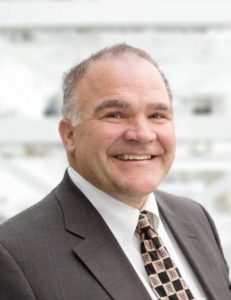
Alan Olsen, is the Host of the American Dreams Show and the Managing Partner of GROCO.com. GROCO is a premier family office and tax advisory firm located in the San Francisco Bay area serving clients all over the world.
Alan L. Olsen, CPA, Wikipedia Bio

GROCO.com is a proud sponsor of The American Dreams Show.

The American Dreams show was the brainchild of Alan Olsen, CPA, MBA. It was originally created to fill a specific need; often inexperienced entrepreneurs lacked basic information about raising capital and how to successfully start a business.
Alan sincerely wanted to respond to the many requests from aspiring entrepreneurs asking for the information and introductions they needed. But he had to find a way to help in which his venture capital clients and friends would not mind.
The American Dreams show became the solution, first as a radio show and now with YouTube videos as well. Always respectful of interview guest’s time, he’s able to give access to individuals information and inspiration previously inaccessible to the first-time entrepreneurs who need it most.
They can listen to venture capitalists and successful business people explain first-hand, how they got to where they are, how to start a company, how to overcome challenges, how they see the future evolving, opportunities, work-life balance and so much more..
American Dreams discusses many topics from some of the world’s most successful individuals about their secrets to life’s success. Topics from guest have included:
Creating purpose in life / Building a foundation for their life / Solving problems / Finding fulfillment through philanthropy and service / Becoming self-reliant / Enhancing effective leadership / Balancing family and work…

MyPaths.com (Also sponsored by GROCO) provides free access to content and world-class entrepreneurs, influencers and thought leaders’ personal success stories. To help you find your path in life to true, sustainable success & happiness. It’s mission statement:
In an increasingly complex and difficult world, we hope to help you find your personal path in life and build a strong foundation by learning how others found success and happiness. True and sustainable success and happiness are different for each one of us but possible, often despite significant challenges.
Our mission at MyPaths.com is to provide resources and firsthand accounts of how others found their paths in life, so you can do the same.
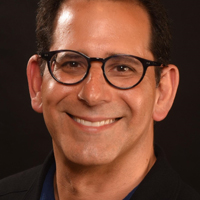
Mastering Business Growth with Howard Shore
Howard Shore, Founder and CEO of Activate Group Inc. discusses managing, even mastering, business growth and the challenges growing quickly can present on Alan Olsen‘s American Dreams Show. Transcript: Alan Olsen Welcome to American Dreams. My guest today is Howard Shore. Howard, welcome to today’s show. Howard Shore Alan, thank you for having me. Alan…
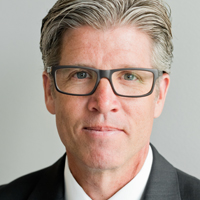
Prosperity and Self-Reliance Zealot Steve Alder
From North America to Ghana, Africa, Steve Alder, President of Ensign Global College (www.ensign.edu.gh), sits down to discuss how a professor helps to build global prosperity and self-reliance on Alan Olsen‘s American Dreams Show. Transcript: Alan Olsen Welcome to American Dreams I’m visiting here today with Steve Alder. Steve, welcome to today’s program. Steve Alder Thank…

Steve Young on Building an Epic Family Legacy
Retired 49r Steve Young Discusses Building a Family Legacy at the Legacy Builders Event on May 15, 2024 As GROCO celebrates three decades of excellence in family office tax and advisory services, we have developed the Legacy Builders to stands as a testament to the firm’s enduring vision: to transform wealth into a powerful tool…
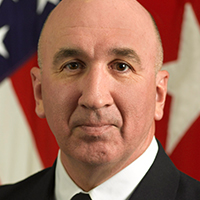
Leadership, Duty, Honor & Country With Lt. Gen. Mike Barbero
Retired US Army Lieutenant General, Michael D. Barbero, discusses leadership, service, duty, honor, and country on Alan Olsen‘s American Dreams Show. Transcript: Alan Olsen Hi, this is Alan Olsen and welcome to American Dreams. My guest today is General Michael Barbero. General, welcome to today’s show. Mike Barbero Thanks, Alan, how are you? Thanks for having me. It’s…