
Profit From Foreclosures by Preventing Them

Profit From Foreclosures by Preventing Them
What makes foreclosures so appealing to many real estate investors is that it’s not one-size-fits-all strategy. You have three basic choices when it comes to c investing: pre-foreclosure, at the auction, and after the auction.
Let’s take a look at what’s involved in preforeclosure investing.
Preforeclosure refers to the period when the homeowner is in default and the lender has begun the foreclosure process. Most homeowners in this situation are facing a financial crisis of some sort: divorce, death, job loss, high medical bills, or some other circumstance that has made them unable to make their mortgage payments. Increasingly, we are seeing people facing foreclosure because they bought their home with a “teaser” mortgage that started out with low payments. When the introductory period was over and the payments adjusted to the market rate, the homeowners couldn’t manage the higher amount.
These people are in distress and are usually confused and frightened. Lenders typically don’t bother explaining borrowers’ rights and options; they just want to collect their money. You have the opportunity to help homeowners avoid foreclosure, salvage their credit rating, and get on with their lives—and you can make money by doing it.
Build your business by helping others
Preforeclosure investing makes everyone involved a winner. The homeowner is able to avoid foreclosure and get out from under the burden of a house he can’t afford; the lender doesn’t have to go to the expense and trouble of foreclosing and then getting rid of the property; and you get a profitable investment.
In many cases, you’ll be able to work with the homeowner to negotiate a discounted price for the property. To make this happen, there needs to be sufficient equity in the property for you to buy it below market value, pay off the mortgage, and if possible, let the seller walk away with some cash. Then you can keep the house and rent it, sell it to another homeowner at market price, or quick-turn it to another investor at a discount.
If there is not enough equity in the property or if the house needs too much fix-up work to allow you to make a profit if you pay what’s owed, consider a short sale. This is when the lender is willing to take less than what is owed on the property. Lenders will consider short sales to avoid foreclosure because it makes sense for them. In a foreclosure, the lender has substantial legal costs, as well as expenses to sell the property once the foreclosure is complete. It makes good business sense for lenders to consider accepting less than the balance due on the loan to avoid the time, expense, and hassle of a foreclosure.
Of course, while it makes sense, don’t expect lenders to make the short sale process easy. You’re going to have to prove to the lender that this route is best and that it will likely be the only way to stop the foreclosure. Most lenders will provide you with a package that lets you know what you need to do to complete the short sale process. It’s important that you follow the instructions carefully and move quickly. Remember, the foreclosure process will continue until you reach an agreement with the lender, and you don’t want to lose a great deal because you didn’t do the paperwork fast enough.
Another issue to consider in the preforeclosure phase is that of junior liens. It’s very common for homeowners in financial trouble to have second mortgages, home equity lines of credit, and other junior liens that total the market value of the property or more. When a property is foreclosed, lenders are paid in order of their ranking in the loan documents. If the first mortgagee (lender) forecloses, there may or may not be any money left over for junior lien holders. But what if you have a $190,000 property with a first mortgage of $140,000 and junior liens of $60,000? That first mortgagee may not be receptive to a short sale offer, but the junior lien holders may be happy to agree to a discount to help you put together a deal that means they will get something rather than nothing.
A key to successful preforeclosure investing is to build trust with the homeowner so that you can gather the information you need and move quickly to put together a deal that everyone will agree to. Though it takes patience and perseverance, the payoff can be substantial.
We hope you found this article about “Profit From Foreclosures by Preventing Them” helpful. If you have questions or need expert tax or family office advice that’s refreshingly objective (we never sell investments), please contact us or visit our Family office page or our website at www.GROCO.com. Unfortunately, we no longer give advice to other tax professionals gratis.
To receive our free newsletter, contact us here.
Subscribe our YouTube Channel for more updates.
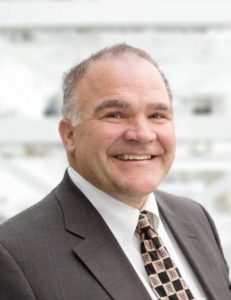
Alan Olsen, is the Host of the American Dreams Show and the Managing Partner of GROCO.com. GROCO is a premier family office and tax advisory firm located in the San Francisco Bay area serving clients all over the world.
Alan L. Olsen, CPA, Wikipedia Bio

GROCO.com is a proud sponsor of The American Dreams Show.

The American Dreams show was the brainchild of Alan Olsen, CPA, MBA. It was originally created to fill a specific need; often inexperienced entrepreneurs lacked basic information about raising capital and how to successfully start a business.
Alan sincerely wanted to respond to the many requests from aspiring entrepreneurs asking for the information and introductions they needed. But he had to find a way to help in which his venture capital clients and friends would not mind.
The American Dreams show became the solution, first as a radio show and now with YouTube videos as well. Always respectful of interview guest’s time, he’s able to give access to individuals information and inspiration previously inaccessible to the first-time entrepreneurs who need it most.
They can listen to venture capitalists and successful business people explain first-hand, how they got to where they are, how to start a company, how to overcome challenges, how they see the future evolving, opportunities, work-life balance and so much more..
American Dreams discusses many topics from some of the world’s most successful individuals about their secrets to life’s success. Topics from guest have included:
Creating purpose in life / Building a foundation for their life / Solving problems / Finding fulfillment through philanthropy and service / Becoming self-reliant / Enhancing effective leadership / Balancing family and work…

MyPaths.com (Also sponsored by GROCO) provides free access to content and world-class entrepreneurs, influencers and thought leaders’ personal success stories. To help you find your path in life to true, sustainable success & happiness. It’s mission statement:
In an increasingly complex and difficult world, we hope to help you find your personal path in life and build a strong foundation by learning how others found success and happiness. True and sustainable success and happiness are different for each one of us but possible, often despite significant challenges.
Our mission at MyPaths.com is to provide resources and firsthand accounts of how others found their paths in life, so you can do the same.
Mastering Business Growth with Howard Shore
Howard Shore, Founder and CEO of Activate Group Inc. discusses managing, even mastering, business growth and the challenges growing quickly can present on Alan Olsen‘s American Dreams Show. Transcript: Alan Olsen Welcome to American Dreams. My guest today is Howard Shore. Howard, welcome to today’s show. Howard Shore Alan, thank you for having me. Alan…
Prosperity and Self-Reliance Zealot Steve Alder
From North America to Ghana, Africa, Steve Alder, President of Ensign Global College (www.ensign.edu.gh), sits down to discuss how a professor helps to build global prosperity and self-reliance on Alan Olsen‘s American Dreams Show. Transcript: Alan Olsen Welcome to American Dreams I’m visiting here today with Steve Alder. Steve, welcome to today’s program. Steve Alder Thank…
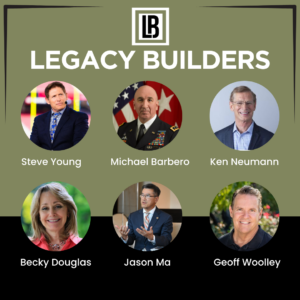
Steve Young on Building an Epic Family Legacy
Retired 49r Steve Young Discusses Building a Family Legacy at the Legacy Builders Event on May 15, 2024 As GROCO celebrates three decades of excellence in family office tax and advisory services, we have developed the Legacy Builders to stands as a testament to the firm’s enduring vision: to transform wealth into a powerful tool…
Leadership, Duty, Honor & Country With Lt. Gen. Mike Barbero
Retired US Army Lieutenant General, Michael D. Barbero, discusses leadership, service, duty, honor, and country on Alan Olsen‘s American Dreams Show. Transcript: Alan Olsen Hi, this is Alan Olsen and welcome to American Dreams. My guest today is General Michael Barbero. General, welcome to today’s show. Mike Barbero Thanks, Alan, how are you? Thanks for having me. It’s…