
IRS Says Its Auditors May Routinely Ask for Effective Tax Rate Reconciliation Workpapers

IRS Says Its Auditors May Routinely Ask for Effective Tax Rate Reconciliation Workpapers
Chief Counsel Notice 2007-015
A Chief Counsel Notice concludes that effective tax rate reconciliation workpapers are neither tax accrual workpapers nor audit workpapers. As such, they aren’t included in the documents the IRS will not routinely request during an audit.
Effective tax rate reconciliation workpapers. Financial Accounting Standards Board (FASB) Statement 109 (Accounting for Income Taxes, effective ’92) established financial accounting and reporting standards for the effects of income taxes that result from an enterprise’s activities during the current and preceding years. FASB 109 requires several types of financial statement disclosures, including the disclosure of a reconciliation of “(a) the reported amount of income tax expense attributable to continuing operations for the year to (b) the amount of income tax expense that would result from applying the domestic federal statutory tax rates to pretax income from continuing operations.” The specific details that make up the numbers reported in the broad categories are contained in the underlying workpapers maintained by companies.
In a recently released Chief Counsel Memorandum, the IRS concluded that documents produced by a taxpayer and/or its auditors to substantiate uncertain tax positions in compliance with FIN 48 (Accounting for Uncertainty in Income Taxes)–which clarifies the application of Statement No. 109–are treated as tax accrual workpapers.
IRS’s treatment of workpapers in audits. IRS has broad summons authority to review a taxpayer’s books and records or other data relevant to determining its tax liability. Despite this broad scope of authority, the IRS has historically limited its power to request tax accrual workpapers and audit workpapers as a routine examination technique. In Ann. 2002-63, 2002-2 CB 72, the IRS explained when it will request tax accrual workpapers. For returns filed after June 31, 2002, it will routinely request tax accrual workpapers on a listed transaction if one was disclosed on the tax return. It will routinely request all tax accrual workpapers if there is an undisclosed listed transaction. Otherwise, examiners normally request audit and tax accrual workpapers only in unusual circumstances and where factual data needed to support the return is not in the taxpayer’s records.
On the other hand, tax reconciliation workpapers may be routinely requested during an audit. These are defined as workpapers that are used in assembling and compiling financial data preparatory to placement on a tax return. These papers typically include final trial balances for each entity, a schedule of consolidating and adjusting entries, and information used to trace financial information to the tax return. Any tax return preparation documents that reconcile net income per books or financial statements to taxable income are also tax reconciliation workpapers.
Tax accrual and audit workpapers. The Internal Revenue Manual (“IRM”) defines audit workpapers as workpapers created by or for the independent auditor, which are retained by him and may be shared with the taxpayer. They include information about the procedures followed, tests performed, the information obtained, and conclusions reached pertinent to the independent auditor’s review of a taxpayer’s financial statements. Audit workpapers may include work programs, analyses, memoranda, letters of confirmation and representation, abstracts of company documents, and schedules or commentaries prepared or obtained by the auditor.
The IRM defines tax accrual workpapers as “those audit workpapers, whether prepared by the taxpayer, the taxpayer’s accountant or the independent auditor, that relate to the tax reserve for the current, deferred and potential or contingent tax liabilities, however classified or reported on audited financial statements, and to footnotes disclosing those tax reserves on audited financial statements.”
IRS says documents aren’t subject to IRS audit restraint. In the Chief Counsel Notice, the IRS concludes that effective tax rate reconciliation workpapers aren’t tax accrual workpapers. They aren’t prepared to determine the proper amount of the reserve for contingent tax liabilities. Nor are the workpapers audit workpapers in the sense of workpapers retained by the auditor to document the performance of the audit. They are prepared by the taxpayer, not the auditor, and don’t reflect procedures followed or tests performed by the auditor in reviewing the taxpayer’s financial statements.
In the Chief Counsel Notice, the IRS comments on the fact that the IRM’s language may mistakenly lead taxpayers to conclude that audit workpapers include all documents prepared by the taxpayer for review by an auditor in the course of auditing the financials. That’s because the IRM (as revised in 2002) states that this category of audit workpapers contained within it all tax accrual workpapers, as well as workpapers prepared for the auditor that are maintained by the taxpayer. While a taxpayer might reason that everything going into the creation of the financial statements–including effective tax rate reconciliation workpapers–could be considered created for the auditor in the sense that they are reviewed by the auditor in the course of auditing and certifying the financials, this conclusion would be incorrect. The Chief Counsel Notice concludes that effective tax rate reconciliation workpapers do not fall within the definition of audit workpapers for purposes of IRS’s audit restraint policy.
We hope you found this article about “IRS Says Its Auditors May Routinely Ask for Effective Tax Rate Reconciliation Workpapers” helpful. If you have questions or need expert tax or family office advice that’s refreshingly objective (we never sell investments), please contact us or visit our Family office page or our website at www.GROCO.com. Unfortunately, we no longer give advice to other tax professionals gratis.
To receive our free newsletter, contact us here.
Subscribe our YouTube Channel for more updates.
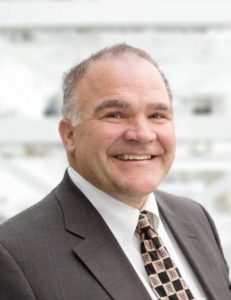
Alan Olsen, is the Host of the American Dreams Show and the Managing Partner of GROCO.com. GROCO is a premier family office and tax advisory firm located in the San Francisco Bay area serving clients all over the world.
Alan L. Olsen, CPA, Wikipedia Bio

GROCO.com is a proud sponsor of The American Dreams Show.

The American Dreams show was the brainchild of Alan Olsen, CPA, MBA. It was originally created to fill a specific need; often inexperienced entrepreneurs lacked basic information about raising capital and how to successfully start a business.
Alan sincerely wanted to respond to the many requests from aspiring entrepreneurs asking for the information and introductions they needed. But he had to find a way to help in which his venture capital clients and friends would not mind.
The American Dreams show became the solution, first as a radio show and now with YouTube videos as well. Always respectful of interview guest’s time, he’s able to give access to individuals information and inspiration previously inaccessible to the first-time entrepreneurs who need it most.
They can listen to venture capitalists and successful business people explain first-hand, how they got to where they are, how to start a company, how to overcome challenges, how they see the future evolving, opportunities, work-life balance and so much more..
American Dreams discusses many topics from some of the world’s most successful individuals about their secrets to life’s success. Topics from guest have included:
Creating purpose in life / Building a foundation for their life / Solving problems / Finding fulfillment through philanthropy and service / Becoming self-reliant / Enhancing effective leadership / Balancing family and work…

MyPaths.com (Also sponsored by GROCO) provides free access to content and world-class entrepreneurs, influencers and thought leaders’ personal success stories. To help you find your path in life to true, sustainable success & happiness. It’s mission statement:
In an increasingly complex and difficult world, we hope to help you find your personal path in life and build a strong foundation by learning how others found success and happiness. True and sustainable success and happiness are different for each one of us but possible, often despite significant challenges.
Our mission at MyPaths.com is to provide resources and firsthand accounts of how others found their paths in life, so you can do the same.
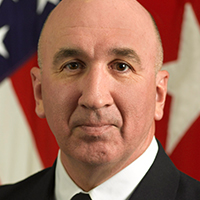
Leadership, Duty, Honor & Country With Lt. Gen. Mike Barbero
Retired US Army Lieutenant General, Michael D. Barbero, discusses leadership, service, duty, honor, and country on Alan Olsen‘s American Dreams Show. Transcript: Alan Olsen Hi, this is Alan Olsen and welcome to American Dreams. My guest today is General Michael Barbero. General, welcome to today’s show. Mike Barbero Thanks, Alan, how are you? Thanks for having me. It’s…
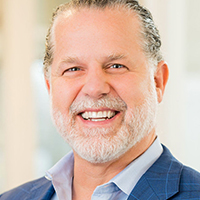
Regenerative Medicine and Creating Health with Dr. David Haase
Dr. David Haase, Founder of the MaxWell Clinic discusses regenerative medicine and creating health on Alan Olsen‘s American Dreams Show. Transcript: Alan Olsen Welcome to American Dreams. My guest today is David Haase. David, welcome to the show. David Haase Thanks, Alan. Alan Olsen So do you have a remarkable background and career obviously that…
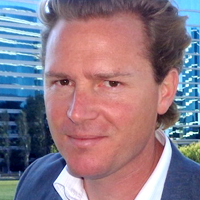
VC Success With Silicon Valley Veteran Andrew Romans
Andrew Romans, General Partner of 7BC Venture Capital, Author, and University Professor discusses navigating Silicon Valley, venture capital (VC), startup success, and the future of tech investment on Alan Olsen‘s American Dreams Show. Transcript: Alan Olsen Welcome to American Dreams. My guest today is Andrew Romans. Andrew, welcome to today’s show. Andrew Romans Thank you so…

How Entrepreneurs Shine With Gino Wickman
Gino Wickman, Founder of EOS Worldwide and author of “Shine” and “Traction: Get a Grip on Your Business” discusses How to shine as an Entrepreneur on Alan Olsen‘s American Dreams Show. Transcript: Alan Olsen Hi, this is Alan Olsen and welcome to American Dreams. My guest today is Gino Wickman. To welcome to today’s show. Gino…