
IRS Eases Reporting Burden on Corporations and Shareholders

IRS Eases Reporting Burden on Corporations and Shareholders
WASHINGTON — The Internal Revenue Service today announced new regulatory revisions that will reduce the reporting burden on corporations and shareholders while also making it easier for them to file their tax returns electronically.
The announcement is part of an on-going effort by the IRS to remove impediments to e-file from its regulations. In addition, the agency took the opportunity to review a number of regulations to simplify, clarify and eliminate a number of reporting requirements that unnecessarily added to the burden of corporations and shareholders.
“This is a win-win situation for businesses, shareholders and the IRS,” said Commissioner Mark W. Everson. “Businesses and shareholders will be relieved of excessive reporting obligations that really no longer made sense while the IRS will still receive the information it needs for compliance. As a bonus, a number of roadblocks to IRS e-file also will be removed.”
The changes apply to more than 20 regulations involving corporate and shareholder reporting requirements. A number of the revisions apply to rules governing corporate transactions, such as transfers to a corporation, mergers, spin-offs or liquidations.
For example, Internal Revenue Code Section 351 covers transfers of property to corporations. The code section applies not only to transfers of property to large multi-national corporations but also to transfers of property to small corporations, such as those formed when a partnership or sole proprietorship opts to become a corporation.
The regulations for Section 351 imposed reporting requirements on anyone who owned a share of a company involved in a Section 351 transfer and on the company itself. Those reporting requirements involved 18 information items from shareholders and 20 information items from corporations.
The revised regulations will limit the Section 351 reporting requirement to only those stockholders who own either 5 percent or more of a public company or 1 percent or more of a privately held company – drastically reducing the number of stockholders who must file a report. Also, the revised regulations will reduce the reportable information to four items: The name and employer identification of the company, the date of the asset transfer, the fair market value and basis of the assets transferred, and the date of any IRS private letter ruling.
In this example, the IRS still would receive information to help determine compliance, but the amount of information, and burden on taxpayers, would be greatly reduced. It also would provide a more realistic reporting requirement for shareholders. Indeed, many shareholders will have no reporting requirement at all.
The revised regulations also eliminate several requirements for taxpayers to provide their signatures, allowing more taxpayers to file their returns electronically.r>
Most large corporations and tax-exempt organizations are now required to file their tax returns electronically.
The popularity of IRS e-file is increasing, particularly among individual taxpayers. So far this year, more than 70 million out of 124 million taxpayers have filed their Form 1040 electronically, a new record for the 20-year-old electronic filing program.
We hope you found this article about “IRS Eases Reporting Burden on Corporations and Shareholders” helpful. If you have questions or need expert tax or family office advice that’s refreshingly objective (we never sell investments), please contact us or visit our Family office page or our website at www.GROCO.com. Unfortunately, we no longer give advice to other tax professionals gratis.
To receive our free newsletter, contact us here.
Subscribe our YouTube Channel for more updates.
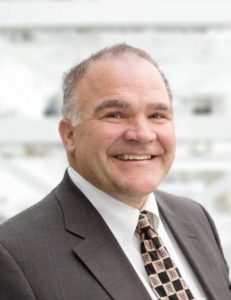
Alan Olsen, is the Host of the American Dreams Show and the Managing Partner of GROCO.com. GROCO is a premier family office and tax advisory firm located in the San Francisco Bay area serving clients all over the world.
Alan L. Olsen, CPA, Wikipedia Bio

GROCO.com is a proud sponsor of The American Dreams Show.
The American Dreams show was the brainchild of Alan Olsen, CPA, MBA. It was originally created to fill a specific need; often inexperienced entrepreneurs lacked basic information about raising capital and how to successfully start a business. Alan sincerely wanted to respond to the many requests from aspiring entrepreneurs asking for the information and introductions they needed. But he had to find a way to help in which his venture capital clients and friends would not mind.
The American Dreams show became the solution, first as a radio show and now with YouTube videos as well. Always respectful of interview guest’s time, he’s able to give access to individuals information and inspiration previously inaccessible to the first-time entrepreneurs who need it most. They can listen to venture capitalists and successful business people explain first-hand, how they got to where they are, how to start a company, how to overcome challenges, how they see the future evolving, opportunities, work-life balance and so much more..
American Dreams discusses many topics from some of the world’s most successful individuals about their secrets to life’s success. Topics from guest have included:
Creating purpose in life / Building a foundation for their life / Solving problems / Finding fulfillment through philanthropy and service / Becoming self-reliant / Enhancing effective leadership / Balancing family and work…

MyPaths.com (Also sponsored by GROCO) provides free access to content and world-class entrepreneurs, influencers and thought leaders’ personal success stories. To help you find your path in life to true, sustainable success & happiness. It’s mission statement:
In an increasingly complex and difficult world, we hope to help you find your personal path in life and build a strong foundation by learning how others found success and happiness. True and sustainable success and happiness are different for each one of us but possible, often despite significant challenges. Our mission at MyPaths.com is to provide resources and firsthand accounts of how others found their paths in life, so you can do the same.
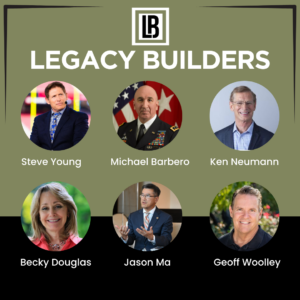
Steve Young on Building an Epic Family Legacy
Retired 49r Steve Young Discusses Building a Family Legacy at the Legacy Builders Event on May 15, 2024 As GROCO celebrates three decades of excellence in family office tax and advisory services, we have developed the Legacy Builders to stands as a testament to the firm’s enduring vision: to transform wealth into a powerful tool…
Leadership, Duty, Honor & Country With Lt. Gen. Mike Barbero
Retired US Army Lieutenant General, Michael D. Barbero, discusses leadership, service, duty, honor, and country on Alan Olsen‘s American Dreams Show. Transcript: Alan Olsen Hi, this is Alan Olsen and welcome to American Dreams. My guest today is General Michael Barbero. General, welcome to today’s show. Mike Barbero Thanks, Alan, how are you? Thanks for having me. It’s…
Regenerative Medicine and Creating Health with Dr. David Haase
Dr. David Haase, Founder of the MaxWell Clinic discusses regenerative medicine and creating health on Alan Olsen‘s American Dreams Show. Transcript: Alan Olsen Welcome to American Dreams. My guest today is David Haase. David, welcome to the show. David Haase Thanks, Alan. Alan Olsen So do you have a remarkable background and career obviously that…
VC Success With Silicon Valley Veteran Andrew Romans
Andrew Romans, General Partner of 7BC Venture Capital, Author, and University Professor discusses navigating Silicon Valley, venture capital (VC), startup success, and the future of tech investment on Alan Olsen‘s American Dreams Show. Transcript: Alan Olsen Welcome to American Dreams. My guest today is Andrew Romans. Andrew, welcome to today’s show. Andrew Romans Thank you so…