
IRS Guidance for SEC Disclosure of Listed Transaction Penalties
IRS Guidance for SEC Disclosure of Listed Transaction Penalties
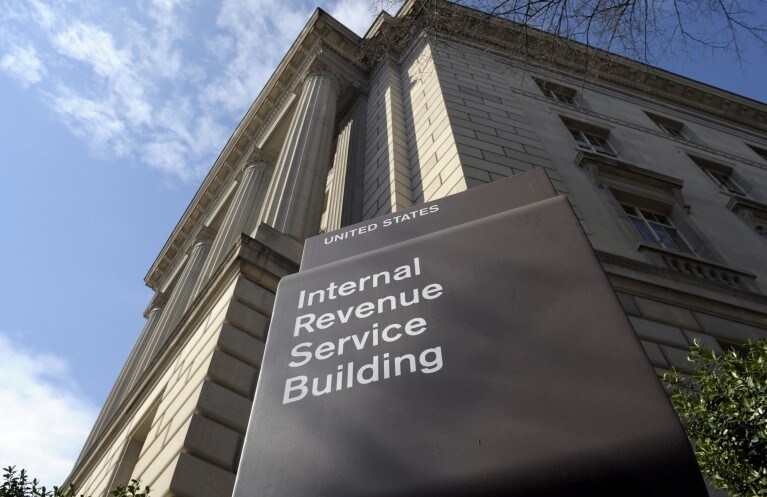
On August 15, 2005, the IRS issued guidance to taxpayers who are required to disclose listed transaction penalties to the SEC. Rev. Proc. 2005-51 sets forth the form, content, and timing of SEC disclosures for certain reportable transaction penalties that taxpayers are required to make pursuant to section 6707A(e) of the Internal Revenue Code (“Code”).
Background
The reportable transaction disclosure regulations set forth in Treas. Reg. §1.6011-4 require taxpayers to disclosure their participation in six types of transactions described in the regulations. When the final reportable transaction disclosure regulations became effective on February 28, 2003 (taxpayers can elect to apply the rules retroactively to January 1, 2003), the IRS had limited means available to enforce the regulations. This changed dramatically when the current reportable transaction penalty structure was implemented on October 22, 2004, pursuant to the enactment of the American Jobs Creation Act of 2004.
Code section 6707A provides a monetary penalty for the failure to disclose reportable transactions on Form 8886. The amount of the monetary penalty depends on the type of taxpayer and the type of reportable transaction that the taxpayer fails to disclose. Specifically, Code section 6707A(b)(1) provides that the penalty for failing to disclose reportable transactions, other than listed transactions, is $10,000 in the case of a natural person and $50,000 for all other taxpayers. Code section 6707A(b)(2) provides that for listed transactions the penalty increases to $100,000 for natural persons and $200,000 for all other taxpayers.
Code section 6662A imposes an accuracy-related penalty on any “reportable transaction understatement,” as defined in section 6662A(b). Code section 6662A(b)(2) provides that the penalty applies to listed transactions and significant avoidance reportable transactions, that is, a transaction where a significant purpose of the transaction was avoidance or evasion of federal income tax.
One of the provisions set forth in the reportable transaction penalty structure that has received substantial attention from corporate taxpayers is the SEC disclosure requirements. Code section 6707A(e) provides that SEC reporting taxpayers must disclose the imposition of the Code section 6707A, the section 6662A, and the section 6662(h) ( in the event the section 6662A penalty might otherwise apply) penalties. Additionally, if a taxpayer fails to make the required SEC disclosure, the nondisclosure will be treated as a failure to disclose a listed transaction. In this situation a corporate taxpayer would be subject to a $200,000 penalty pursuant 6707A(b)(2) and, as with the original transaction, the taxpayer could be required to disclose the penalty.
The common thread between these penalties is that they require that the taxpayer participate in either a listed transaction or a significant avoidance transaction. Therefore, unless the IRS can otherwise establish a significant avoidance or evasion purpose, a taxpayer will not be required to disclose to the SEC the imposition of reportable transaction penalties associated with, for example, large loss transactions and transactions with significant book-tax differences.
Pursuant to Code section 6707A(e), the Secretary has the authority to determine the form and timing of SEC disclosures. Prior to Rev. Proc. 2005-51, it was not clear if the SEC disclosure would be made in a form 10-K, 8-K, or some other form. Additionally, it was not clear when the taxpayer would be required to disclose the penalty. These and several other related issues are addressed in Rev. Proc. 2005-51.
Form of Disclosure
According to Rev. Proc. 2005-51, a taxpayer must disclose the imposition of any penalty described above in Item 3 (Legal Proceedings) of the Form 10-K.
Content of Disclosure
The SEC disclosure must include the following:
The amount of the penalty;
Whether the penalty has been paid in full;
The Code section and subsection under which the penalty was determined; and
A description of the penalty. For example:
Penalty for failure to include listed transaction information with return.
Accuracy-related penalty on an understatement attributable to a nondisclosed listed or other avoidance transaction.
Accuracy-related penalty for gross valuation misstatement.
Failure to disclose imposition of penalty in report filed with SEC.
Limitation on Disclosure of the 40% Gross Valuation Misstatement Penalty
A taxpayer is required to disclose the imposition of a 40% gross valuation misstatement under Code section 6662(h) only if any one of the following factual situations is applicable:
The IRS issues a 30-day letter in which it proposes the 30% reportable transaction understatement penalty as an alternative to the 40% gross valuation misstatement and the taxpayer consents to the 40% penalty without notice of deficiency.
The Services includes the 30% reportable transaction understatement penalty as an alternative to the 40% gross valuation misstatement penalty in a statutory notice of deficiency and the taxpayer consents or does not timely petition the Tax Court.
In a judicial proceeding the government asserts the 30% reportable transaction understatement penalty as an alternative to the 40% penalty and the court determines that the 30% penalty is applicable.
The taxpayer acknowledges in a written settlement agreement with the government the applicability of the 30% reportable transaction understatement penalty in the alternative to the 40% gross valuation misstatement penalty.
When the IRS asserts alternative penalties that include both the reportable transaction understatement penalty and the gross valuation misstatement, the taxpayer should fully consider all their settlement and administrative options to ensure that they do not inadvertently expose themselves to SEC disclosure. For example, it maybe more advantageous from a monetary perspective to accept the 30% reportable transaction understatement penalty rather than the 40% gross valuation misstatement penalty. However, the taxpayer would be required to disclose the penalty in its next filed 10-K. A potential alternative for the taxpayer is to agree to the 40% gross valuation penalty, not agree to the applicability of the 30% reportable transaction penalty in the alternative and thereby avoid SEC disclosure.
Timing of Disclosure
If a taxpayer is required to make a SEC disclosure pursuant to Code section 6707A(e), the taxpayer must make the disclosure in its 10-K that relates to the fiscal year in which the IRS sends the taxpayer a notice and demand for payment of the penalty. For purposes of Rev. Proc. 2005-51 “fiscal year” is defined as “the annual accounting period or, if no closing date has been adopted, the calendar year ending on December 31.” (17 C.F.R. §240.12b-2). If the taxpayer pays the penalty prior to notice and demand from the IRS, the penalty must be disclosed in the taxpayer’s 10-K for the fiscal year in which the penalty was paid.
Successive Penalties
Rev. Proc. 2005-51 specifically provides that in the event a taxpayer fails to properly disclose a penalty on its form 10-K, the taxpayer’s obligation to disclose the penalty will roll forward to the taxpayer’s next filed 10-K and will continue to do so until the taxpayer makes an appropriate disclosure. The IRS also makes it clear that for each year that a taxpayer fails to disclose a penalty on its form 10-K, the taxpayer will be subject to a new and separate penalty for failure to make an appropriate disclosure. For example, assume that a taxpayer is required to disclose the imposition of a penalty for failure to disclose a listed transaction on its 2005 10-K and the taxpayer fails to disclose the penalty and finally does so in its 2007 10-K. In this case, the taxpayer, in addition to the original penalty of $200,000 for failure to disclose, would be subject to additional penalties in the amount of $400,000 for its failure to make a disclosure on its 2005 and 2006 10-K (the taxpayer would be required to pay a total of $600,000 in penalties). Additionally, when the IRS makes notice and demand for the additional $400,000 penalty in 2007, the taxpayer would also have to disclose the additional penalties on its 2007 10 K.
Administrative Appeal Rights
Rev. Proc. 2005-51 also addresses a taxpayer’s administrative appeal rights with respect to those penalties that must be disclosed to the SEC pursuant to Code Section 6707A(e). With respect to reportable transaction understatement penalties, taxpayers will be afforded the same administrative appeal rights available with respect to the deficiency giving rise to the penalty. However, no administrative appeals rights will be available with respect to penalties imposed for failure to disclose the imposition of penalties in the taxpayer’s 10-K. Finally, guidance will be issued at a later date with respect to preassessment administrative appeal rights for taxpayers who fail to disclose a listed transaction on Form 8886.
In summary, Rev. Proc. 2005-51 not only provides important information on the mechanics of disclosing certain reportable transaction penalties to the SEC, it also highlights the fact that taxpayers need to ensure that they make timely disclosures in their 10-K in order to protect against the stacking of additional penalties that will likewise be subject to disclosure in the taxpayer’s 10-K.
We hope you found this article about “IRS Guidance for SEC Disclosure of Listed Transaction Penalties” helpful. If you have questions or need expert tax or family office advice that’s refreshingly objective (we never sell investments), please contact us or visit our Family office page or our website at www.GROCO.com. Unfortunately, we no longer give advice to other tax professionals gratis.
To receive our free newsletter, contact us here.
Subscribe our YouTube Channel for more updates.

Alan Olsen, is the Host of the American Dreams Show and the Managing Partner of GROCO.com. GROCO is a premier family office and tax advisory firm located in the San Francisco Bay area serving clients all over the world.
Alan L. Olsen, CPA, Wikipedia Bio

GROCO.com is a proud sponsor of The American Dreams Show.

The American Dreams show was the brainchild of Alan Olsen, CPA, MBA. It was originally created to fill a specific need; often inexperienced entrepreneurs lacked basic information about raising capital and how to successfully start a business.
Alan sincerely wanted to respond to the many requests from aspiring entrepreneurs asking for the information and introductions they needed. But he had to find a way to help in which his venture capital clients and friends would not mind.
The American Dreams show became the solution, first as a radio show and now with YouTube videos as well. Always respectful of interview guest’s time, he’s able to give access to individuals information and inspiration previously inaccessible to the first-time entrepreneurs who need it most.
They can listen to venture capitalists and successful business people explain first-hand, how they got to where they are, how to start a company, how to overcome challenges, how they see the future evolving, opportunities, work-life balance and so much more..
American Dreams discusses many topics from some of the world’s most successful individuals about their secrets to life’s success. Topics from guest have included:
Creating purpose in life / Building a foundation for their life / Solving problems / Finding fulfillment through philanthropy and service / Becoming self-reliant / Enhancing effective leadership / Balancing family and work…

MyPaths.com (Also sponsored by GROCO) provides free access to content and world-class entrepreneurs, influencers and thought leaders’ personal success stories. To help you find your path in life to true, sustainable success & happiness. It’s mission statement:
In an increasingly complex and difficult world, we hope to help you find your personal path in life and build a strong foundation by learning how others found success and happiness. True and sustainable success and happiness are different for each one of us but possible, often despite significant challenges.
Our mission at MyPaths.com is to provide resources and firsthand accounts of how others found their paths in life, so you can do the same.

Mastering Business Growth with Howard Shore
Howard Shore, Founder and CEO of Activate Group Inc. discusses managing, even mastering, business growth and the challenges growing quickly can present on Alan Olsen‘s American Dreams Show. Transcript: Alan Olsen Welcome to American Dreams. My guest today is Howard Shore. Howard, welcome to today’s show. Howard Shore Alan, thank you for having me. Alan…

Prosperity and Self-Reliance Zealot Steve Alder
From North America to Ghana, Africa, Steve Alder, President of Ensign Global College (www.ensign.edu.gh), sits down to discuss how a professor helps to build global prosperity and self-reliance on Alan Olsen‘s American Dreams Show. Transcript: Alan Olsen Welcome to American Dreams I’m visiting here today with Steve Alder. Steve, welcome to today’s program. Steve Alder Thank…

Steve Young on Building an Epic Family Legacy
Retired 49r Steve Young Discusses Building a Family Legacy at the Legacy Builders Event on May 15, 2024 As GROCO celebrates three decades of excellence in family office tax and advisory services, we have developed the Legacy Builders to stands as a testament to the firm’s enduring vision: to transform wealth into a powerful tool…

Leadership, Duty, Honor & Country With Lt. Gen. Mike Barbero
Retired US Army Lieutenant General, Michael D. Barbero, discusses leadership, service, duty, honor, and country on Alan Olsen‘s American Dreams Show. Transcript: Alan Olsen Hi, this is Alan Olsen and welcome to American Dreams. My guest today is General Michael Barbero. General, welcome to today’s show. Mike Barbero Thanks, Alan, how are you? Thanks for having me. It’s…