
Investing for Growth

Investing for Growth
When investing your money for long-term growth, it’s total return (change in market value plus reinvested dividends and interest) that counts.
Since 1926 the compound annual return on stocks has been a bit better than 11% a year.
The return on bonds has been about half as much, or 5% to 6% annually.
The compound annual return from “risk-free” investments, such as Treasury bills, has been even lower, about 3.8%. That was barely enough to keep ahead of the inflation rate, which over the last 75 years has averaged about 3.1%.
Clearly, investors need to make a substantial commitment to stocks if they seek substantial long-term growth.
For the thoughtful investor, the dramatic rise in stock prices in the late 1990s and the subsequent retreats raise number of questions:
• What portion of your nest egg should be in stocks now?
• Should you wait for a market bottom before adding to your portfolio?
• In short, when is the best time to buy stocks?
The best time to buy stocks
Many investors try to “time the market” to some degree. They sell stocks, directly or through mutual funds, when they think the market has gotten too high. They then intend to switch back into stocks after the market hits bottom.
Market timing sounds easy, but it’s not. Market bottoms are difficult to recognize except by hindsight, and hindsight doesn’t work quickly enough.
Telling statistic: According to a University of Michigan study, most of the stock market’s gains from 1963 through 1993 were recorded in just 90 trading days. Investors who were “out of stocks” for those 90 days would have missed out on 95% of the market’s gains!
If you are a long-term investor, the best time to buy stocks is whenever you have the money available.
Allocating your assets
How much to invest in stocks and how much in bonds? In part, your answer is determined by your tolerance for risk. Mainly, however, the answer depends on your time frame. Jeremy J. Siegel of the Wharton School has surveyed returns on stocks and bonds for periods going all the way back to 1802. He finds that both stocks and bonds are quite risky for investors who intend to cash in their holdings within ten years. Over longer periods, however, returns on both stocks and bonds are far less uncertain. Actually, Siegel reports, stocks have proved to be less risky than bonds for investors with holding periods of more than ten years.
“Choosing the Best Portfolio Mix” below shows the asset allocations that might be appropriate for investors at three different levels of risk.
• Minimum means that the investor chooses the least risky mix of stocks and bonds for the given period. With a ten-year holding period, for example, putting more or less than 40% into stocks would result in greater risk.
• Conservative means that the investor is cautious but willing to accept small additional risk in exchange for the prospect of extra return.
• Moderate means that the investor has average tolerance for risk.
Other authorities might recommend slightly different portfolio mixes. But most agree about the overriding significance of your investment time frame.
Because assessing your investment time frame and tolerance for risk is so vital to longterm success, you may find it helpful to ask an asset-management professional for an
informed opinion.
Choosing the best portfolio mix
How long before you’ll want to cash in your investments? Are you willing to take a moderate amount of risk, a conservative level of risk, or no more than the minimum possible risk?
| Risk Tolerance | Portfolio Assets |
Holding Periods |
||
| 1 Year | 10 Years | 30 Years | ||
| Minimum | Stocks Bonds |
6% 94% |
40% 60% |
72% 28% |
| Conservative | Stocks Bonds |
25% 75% |
62% 38% |
92% 8% |
| Moderate | Stocks Bonds |
50% 50% |
88% 12% |
100% — |
| Source: Jeremy J. Siegel, Stocks for the Long Run (Irwin, 1994) | ||||
We hope you found this article about “Investing for Growth” helpful. If you have questions or need expert tax or family office advice that’s refreshingly objective (we never sell investments), please contact us or visit our Family office page or our website at www.GROCO.com. Unfortunately, we no longer give advice to other tax professionals gratis.
To receive our free newsletter, contact us here.
Subscribe our YouTube Channel for more updates.
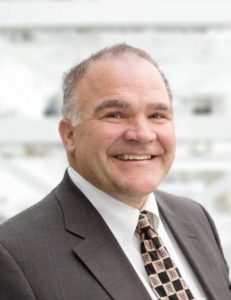
Alan Olsen, is the Host of the American Dreams Show and the Managing Partner of GROCO.com. GROCO is a premier family office and tax advisory firm located in the San Francisco Bay area serving clients all over the world.
Alan L. Olsen, CPA, Wikipedia Bio

GROCO.com is a proud sponsor of The American Dreams Show.

The American Dreams show was the brainchild of Alan Olsen, CPA, MBA. It was originally created to fill a specific need; often inexperienced entrepreneurs lacked basic information about raising capital and how to successfully start a business.
Alan sincerely wanted to respond to the many requests from aspiring entrepreneurs asking for the information and introductions they needed. But he had to find a way to help in which his venture capital clients and friends would not mind.
The American Dreams show became the solution, first as a radio show and now with YouTube videos as well. Always respectful of interview guest’s time, he’s able to give access to individuals information and inspiration previously inaccessible to the first-time entrepreneurs who need it most.
They can listen to venture capitalists and successful business people explain first-hand, how they got to where they are, how to start a company, how to overcome challenges, how they see the future evolving, opportunities, work-life balance and so much more..
American Dreams discusses many topics from some of the world’s most successful individuals about their secrets to life’s success. Topics from guest have included:
Creating purpose in life / Building a foundation for their life / Solving problems / Finding fulfillment through philanthropy and service / Becoming self-reliant / Enhancing effective leadership / Balancing family and work…

MyPaths.com (Also sponsored by GROCO) provides free access to content and world-class entrepreneurs, influencers and thought leaders’ personal success stories. To help you find your path in life to true, sustainable success & happiness. It’s mission statement:
In an increasingly complex and difficult world, we hope to help you find your personal path in life and build a strong foundation by learning how others found success and happiness. True and sustainable success and happiness are different for each one of us but possible, often despite significant challenges.
Our mission at MyPaths.com is to provide resources and firsthand accounts of how others found their paths in life, so you can do the same.
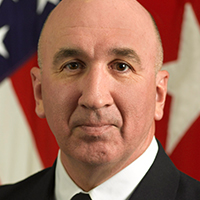
Leadership, Duty, Honor & Country With Lt. Gen. Mike Barbero
Retired US Army Lieutenant General, Michael D. Barbero, discusses leadership, service, duty, honor, and country on Alan Olsen‘s American Dreams Show. Transcript: Alan Olsen Hi, this is Alan Olsen and welcome to American Dreams. My guest today is General Michael Barbero. General, welcome to today’s show. Mike Barbero Thanks, Alan, how are you? Thanks for having me. It’s…
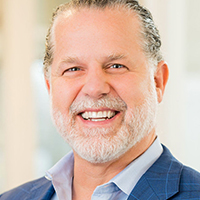
Regenerative Medicine and Creating Health with Dr. David Haase
Dr. David Haase, Founder of the MaxWell Clinic discusses regenerative medicine and creating health on Alan Olsen‘s American Dreams Show. Transcript: Alan Olsen Welcome to American Dreams. My guest today is David Haase. David, welcome to the show. David Haase Thanks, Alan. Alan Olsen So do you have a remarkable background and career obviously that…
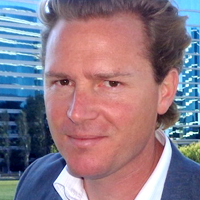
VC Success With Silicon Valley Veteran Andrew Romans
Andrew Romans, General Partner of 7BC Venture Capital, Author, and University Professor discusses navigating Silicon Valley, venture capital (VC), startup success, and the future of tech investment on Alan Olsen‘s American Dreams Show. Transcript: Alan Olsen Welcome to American Dreams. My guest today is Andrew Romans. Andrew, welcome to today’s show. Andrew Romans Thank you so…
How Entrepreneurs Shine With Gino Wickman
Gino Wickman, Founder of EOS Worldwide and author of “Shine” and “Traction: Get a Grip on Your Business” discusses How to shine as an Entrepreneur on Alan Olsen‘s American Dreams Show. Transcript: Alan Olsen Hi, this is Alan Olsen and welcome to American Dreams. My guest today is Gino Wickman. To welcome to today’s show. Gino…