
Cyclical Stocks: Ins and Outs, Ups and Downs

Cyclical Stocks: Ins and Outs, Ups and Downs
A company can provide outstanding goods or stellar services. It can be well run by a board of directors and officers who choose the best and the brightest of employees, who, in turn, manage day-to-day business operations with skill and finesse.
Seems as if purchasing shares of this business would provide a good investment opportunity, right? It might. Then, again, it might not.
As everyone knows, even a successful company’s earnings and, ultimately, the value of its shares are influenced by a variety of external, economic factors, some companies more than others. The latter are especially sensitive to the business cycle and are categorized as cyclical stocks.
Identification and prediction
In a nutshell, a business cycle is defined as a predictable, long-term pattern of alternating periods of economic growth and decline. The cycle involves among other things, interest, inflation and unemployment rates. A rise in any of these factors usually depresses profits. A drop usually spells good news.
It’s relatively easy to identify cyclical company stocks. They are the stocks of businesses that depend heavily for their success on the condition of the economy as a whole. Often, these businesses produce luxury and big-ticket items (think new cars, expensive vacations). Or they offer goods and services for home construction and leisure-time activities. Or they serve markets that are tied to capital-equipment spending.
The stocks of automobile manufacturers are cyclical stocks because buying a car is very often discretionary. The purchase may be accelerated or delayed based upon one’s personal finances—which, very often, are a reflection of how the economy is doing. Shares in companies in food industries—the staples of one’s diet, that is—are not. Everyone has to eat.
Predicting a business cycle, however, is not as simple. What’s more, the rise in the value of cyclical stocks usually leads the business cycle by six to ten months. In essence, many of the prices of cyclical stocks may start dropping while the economy is still seemingly healthy or start rising several months before the country comes out of a recession.
Value and timing
How can investors determine which cyclical stocks are deserving of being added to their portfolios?
Benjamin Graham, author of the 1934 classic Security Analysis and widely considered the father of value investing, maintained that an investor should consider purchasing a cyclical stock based upon its average earnings over the previous ten years, the length of a typical business cycle. Although not a guarantee of success, using this time frame would, at least, give the investor a rough idea of how the value of a company’s shares has tracked the business cycle.
Looking back at the early 1990s from the early years of the 21st century, we could see, at first, an economy in poor shape (partially a result of an uneven recovery from recession around the time of the Gulf War). Then came the bull market and a robust economy, followed by economic instability in the latter phase of that ten-year time period. According to Graham’s theory, then, an investor who considered an investment in a cyclical stock, say in 1999, and calculated average earnings before making a decision, was likely to have made the better choice, rather than one who looked just at current earnings.
An invitation
Buying shares of cyclical companies can be profitable for the investor willing to do the research and then make an educated guess about the future of the economy. For the investor who is willing to jump in and out of cyclical, as he or she anticipates a surge or a drop in the economy.
Purchasing shares in cyclical companies is probably not for the neophyte or part-time investor. Cyclicals are more likely to be prospects for a place in the portfolio of investors who are in the markets for the long term and who feel relatively comfortable assuming some degree of risk.
We have the professionals on board and the tools at hand to assist investors in cyclical businesses in making their choices. If you are one of those investors or someone who would like to know more about investing in cyclical companies, let us know. We will be glad to set up an appointment to speak with you.
—————————————————————————————————————————————————————————————————————
We hope you found this article about “Cyclical Stocks: Ins and Outs, Ups and Downs” helpful. If you have questions or need expert tax or family office advice that’s refreshingly objective (we never sell investments), please contact us or visit our Family office page or our website at www.GROCO.com. Unfortunately, we no longer give advice to other tax professionals gratis.
To receive our free newsletter, contact us here.
Subscribe our YouTube Channel for more updates.
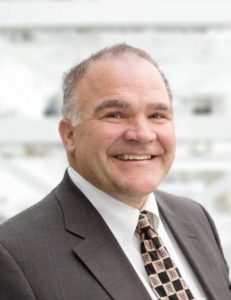
Alan Olsen, is the Host of the American Dreams Show and the Managing Partner of GROCO.com. GROCO is a premier family office and tax advisory firm located in the San Francisco Bay area serving clients all over the world.
Alan L. Olsen, CPA, Wikipedia Bio

GROCO.com is a proud sponsor of The American Dreams Show.

The American Dreams show was the brainchild of Alan Olsen, CPA, MBA. It was originally created to fill a specific need; often inexperienced entrepreneurs lacked basic information about raising capital and how to successfully start a business.
Alan sincerely wanted to respond to the many requests from aspiring entrepreneurs asking for the information and introductions they needed. But he had to find a way to help in which his venture capital clients and friends would not mind.
The American Dreams show became the solution, first as a radio show and now with YouTube videos as well. Always respectful of interview guest’s time, he’s able to give access to individuals information and inspiration previously inaccessible to the first-time entrepreneurs who need it most.
They can listen to venture capitalists and successful business people explain first-hand, how they got to where they are, how to start a company, how to overcome challenges, how they see the future evolving, opportunities, work-life balance and so much more..
American Dreams discusses many topics from some of the world’s most successful individuals about their secrets to life’s success. Topics from guest have included:
Creating purpose in life / Building a foundation for their life / Solving problems / Finding fulfillment through philanthropy and service / Becoming self-reliant / Enhancing effective leadership / Balancing family and work…

MyPaths.com (Also sponsored by GROCO) provides free access to content and world-class entrepreneurs, influencers and thought leaders’ personal success stories. To help you find your path in life to true, sustainable success & happiness. It’s mission statement:
In an increasingly complex and difficult world, we hope to help you find your personal path in life and build a strong foundation by learning how others found success and happiness. True and sustainable success and happiness are different for each one of us but possible, often despite significant challenges.
Our mission at MyPaths.com is to provide resources and firsthand accounts of how others found their paths in life, so you can do the same.
Mastering Business Growth with Howard Shore
Howard Shore, Founder and CEO of Activate Group Inc. discusses managing, even mastering, business growth and the challenges growing quickly can present on Alan Olsen‘s American Dreams Show. Transcript: Alan Olsen Welcome to American Dreams. My guest today is Howard Shore. Howard, welcome to today’s show. Howard Shore Alan, thank you for having me. Alan…
Prosperity and Self-Reliance Zealot Steve Alder
From North America to Ghana, Africa, Steve Alder, President of Ensign Global College (www.ensign.edu.gh), sits down to discuss how a professor helps to build global prosperity and self-reliance on Alan Olsen‘s American Dreams Show. Transcript: Alan Olsen Welcome to American Dreams I’m visiting here today with Steve Alder. Steve, welcome to today’s program. Steve Alder Thank…
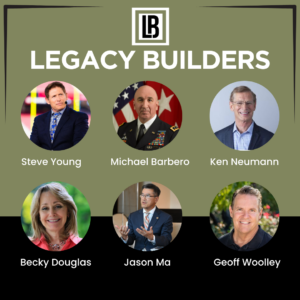
Steve Young on Building an Epic Family Legacy
Retired 49r Steve Young Discusses Building a Family Legacy at the Legacy Builders Event on May 15, 2024 As GROCO celebrates three decades of excellence in family office tax and advisory services, we have developed the Legacy Builders to stands as a testament to the firm’s enduring vision: to transform wealth into a powerful tool…
Leadership, Duty, Honor & Country With Lt. Gen. Mike Barbero
Retired US Army Lieutenant General, Michael D. Barbero, discusses leadership, service, duty, honor, and country on Alan Olsen‘s American Dreams Show. Transcript: Alan Olsen Hi, this is Alan Olsen and welcome to American Dreams. My guest today is General Michael Barbero. General, welcome to today’s show. Mike Barbero Thanks, Alan, how are you? Thanks for having me. It’s…