
Introducing the “Total Return” Trust
Introducing the “Total Return” Trust
The fundamental purpose of most trusts is to create a plan of financial protection for more than one beneficiary, often beneficiaries in different generations. “All the trust income to my surviving spouse, with the balance to be divided among our children at her death” might be used in a marital deduction trust, for example (provided the necessary “QTIP” election is made). This would give the surviving spouse cash to live on during the life of the trust, and the substantial resource of the trust principal would be available to the younger generation in the future.
But what is “income” in a trust? Under traditional, what is trust accounting income formula includes interest and dividend payments. Capital gains and losses, in contrast, would be charged to trust principal and so would affect what the future beneficiaries receive.
An implicit conflict
These trust accounting rules mean that the interests of the current and future beneficiaries may be at odds when it comes to investment management decisions. The future beneficiaries will favor investments with the highest potential for capital growth, usually stocks.
Some stock market investments are advisable for trust so that the value of the principal is not eroded by inflation. The future beneficiaries may want to give the stock portion of the trust’s investment portfolio even greater weight.
The trouble is, stocks don’t yield much annual dividend income these days. In recent years, a $1 million portfolio invested in the S&P 500-stock index would have provided less than $20,000 in dividend income to distribute to the income beneficiary! What’s more, a growing number of companies have been reducing or eliminating their dividends, in part because many investors prefer to receive lightly taxed capital gains to dividends, which are taxed at federal rates of up to 39.6%.
To boost trust income, and to make that income more reliable and predictable, the trustee needs to invest a portion of the trust assets in bonds to generate interest payments. That same $1 million portfolios invested in safe, long-term government bonds would have generated more than $50,000 annually for the income beneficiary in recent years. Still, excessive reliance on bonds in the portfolio exposes the trust principal to inflation risk.
Possible solutions
Several strategies have been advanced in recent years to resolve the potential conflict among beneficiaries that investment strategies may pose.
Inflation-indexed income. The income beneficiary can be protected by establishing a base dollar amount of income, then providing for inflation adjustments each year. This frees the calculation of the distribution from the traditional definition of income earned by the trust. One potential problem is that, if stock prices don’t keep up with inflation (as has occurred at times in the past), the trust could be depleted by adhering to this formula.
The “total return unitrust ” trust. In the world of charitable trusts, there is something called a “unitrust.” In this trust “income” is defined as a fixed percentage of the value of the trust, recalculated each year. If the value of stocks held by the trust goes up, the income payments rise, regardless of changes in dividend payouts. Should the trust assets fall in value, the income falls also.
Thus, this approach does present some variability of cash flow for the income beneficiary. Estate planners have begun exploring using the unitrust for noncharitable situations. When trust income is defined as a percentage of trust assets, the trustee is free to invest for what is a total return trust instead of a given income target—hence the name “total return” trust.
If a trust will play a role in implementing your estate plans, it may be wise to take a closer look at how the investments will be managed to balance the interests of all beneficiaries.
Follow our Facebook page for more updates.
We hope you found this article about “Introducing the “Total Return” Trust” helpful. If you have questions or need expert tax or family office advice that’s refreshingly objective (we never sell investments), please contact us or visit our Family office page or our website at www.GROCO.com. Unfortunately, we no longer give advice to other tax professionals gratis.
To receive our free newsletter, contact us here.
Subscribe our YouTube Channel for more updates.
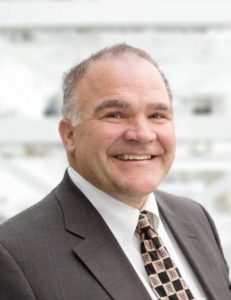
Alan Olsen, is the Host of the American Dreams Show and the Managing Partner of GROCO.com. GROCO is a premier family office and tax advisory firm located in the San Francisco Bay area serving clients all over the world.
Alan L. Olsen, CPA, Wikipedia Bio

GROCO.com is a proud sponsor of The American Dreams Show.
The American Dreams show was the brainchild of Alan Olsen, CPA, MBA. It was originally created to fill a specific need; often inexperienced entrepreneurs lacked basic information about raising capital and how to successfully start a business.
Alan sincerely wanted to respond to the many requests from aspiring entrepreneurs asking for the information and introductions they needed. But he had to find a way to help in which his venture capital clients and friends would not mind.
The American Dreams show became the solution, first as a radio show and now with YouTube videos as well. Always respectful of interview guest’s time, he’s able to give access to individuals information and inspiration previously inaccessible to the first-time entrepreneurs who need it most.
They can listen to venture capitalists and successful business people explain first-hand, how they got to where they are, how to start a company, how to overcome challenges, how they see the future evolving, opportunities, work-life balance and so much more..
American Dreams discusses many topics from some of the world’s most successful individuals about their secrets to life’s success. Topics from guest have included:
Creating purpose in life / Building a foundation for their life / Solving problems / Finding fulfillment through philanthropy and service / Becoming self-reliant / Enhancing effective leadership / Balancing family and work…

MyPaths.com (Also sponsored by GROCO) provides free access to content and world-class entrepreneurs, influencers and thought leaders’ personal success stories. To help you find your path in life to true, sustainable success & happiness. It’s mission statement:
In an increasingly complex and difficult world, we hope to help you find your personal path in life and build a strong foundation by learning how others found success and happiness. True and sustainable success and happiness are different for each one of us but possible, often despite significant challenges.
Our mission at MyPaths.com is to provide resources and firsthand accounts of how others found their paths in life, so you can do the same.
Mastering Business Growth with Howard Shore
Howard Shore, Founder and CEO of Activate Group Inc. discusses managing, even mastering, business growth and the challenges growing quickly can present on Alan Olsen‘s American Dreams Show. Transcript: Alan Olsen Welcome to American Dreams. My guest today is Howard Shore. Howard, welcome to today’s show. Howard Shore Alan, thank you for having me. Alan…
Prosperity and Self-Reliance Zealot Steve Alder
From North America to Ghana, Africa, Steve Alder, President of Ensign Global College (www.ensign.edu.gh), sits down to discuss how a professor helps to build global prosperity and self-reliance on Alan Olsen‘s American Dreams Show. Transcript: Alan Olsen Welcome to American Dreams I’m visiting here today with Steve Alder. Steve, welcome to today’s program. Steve Alder Thank…
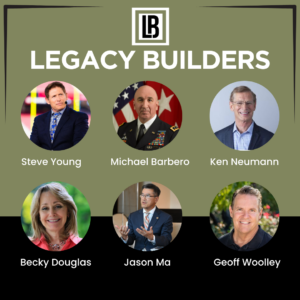
Steve Young on Building an Epic Family Legacy
Retired 49r Steve Young Discusses Building a Family Legacy at the Legacy Builders Event on May 15, 2024 As GROCO celebrates three decades of excellence in family office tax and advisory services, we have developed the Legacy Builders to stands as a testament to the firm’s enduring vision: to transform wealth into a powerful tool…
Leadership, Duty, Honor & Country With Lt. Gen. Mike Barbero
Retired US Army Lieutenant General, Michael D. Barbero, discusses leadership, service, duty, honor, and country on Alan Olsen‘s American Dreams Show. Transcript: Alan Olsen Hi, this is Alan Olsen and welcome to American Dreams. My guest today is General Michael Barbero. General, welcome to today’s show. Mike Barbero Thanks, Alan, how are you? Thanks for having me. It’s…