
Retirement Income – Will You Have Enough?

Retirement Income – Will You Have Enough?
You could spend as much time in retirement – 30 or even 40 years – as you have spent saving for it. That is why planning for your retirement savings to generate income is critical. Developing a solid plan and appropriate investments for years of income is well worth your efforts.
Retirement Income For example, switching your investing approach from growth to conservative to protect yourself against volatility on the eve of retirement may not be the most prudent financial decision anymore. After all, because of inflation and the increased odds that you could live well into your 90’s, conservative thinking may threaten your long term financial security. Preparing your portfolio for retirement is, in large part, about finding the right balance of growth and income to keep your assets working throughout retirement. It is about trying to protect against inflation and trying to make sure you will have income if you outlive the averages. Finally, it is about an appropriate asset allocation, including equity investments, to meet both your current and future income needs.
Equity investments generally involve greater risk than other investments, including the risk of possible loss of principal. However, we would like to present you with some alternative options that may keep your portfolio working hard as you enjoy retirement. It is more than just a retirement portfolio…it is your future income source. If you are concerned about income throughout retirement, it may be time to re-engineer your portfolio to generate an income stream for 30 to 40 years.
So what is a reasonable percentage to withdraw on an annual basis? One study looked at that question based on actual market returns from 1926 to 1976. The study concluded that to ensure your assets lasted for 50 years, your initial withdrawal rate should be no higher than 3% to 3.5%, with subsequent withdrawals adjusted for inflation. To ensure assets last 30 years, the initial withdrawal rate could increase to 4%. These withdrawal rates assumed a stock allocation of 50% to 75% of the total portfolio. Due to the possibility of a major market decline soon after retiring, the study did not recommend stock allocations over 75% (Source: Journal of Financial Planning, March 2004).
Another study took a different approach to this question. By adding other asset classes to the portfolio, including international equities and real estate, and establishing fixed rules for rebalancing the portfolio, this study concluded that to last 40 years, the initial withdrawal rate could be 4.4% with a 65% weighting in equities and 5% with an 80% weighting in equities. If the retiree was willing to forego increases in withdrawals in certain circumstances, such as when the portfolio’s ending balance is lower than its beginning balance, and limit inflation increases to 6%, withdrawal rates could increase to 5.1% to 5.8% (Source: Journal of Financial Planning, October 2004).
What conclusions can be drawn from these studies?
- Your withdrawal percentage should be modest to ensure you don’t deplete your assets. While the two studies reach different conclusions, they advocate initial withdrawals of modest amounts ranging from 3% to 5.8%. With a $1,000,000 portfolio, that means your initial withdrawal will range between $30,000 and $58,000. You need to carefully look at your assumptions before deciding between the high or low end of these estimates.
- Equity need to remain a significant component of your portfolio after retirement. Both studies were based on stock allocations of at least 50% and up to 80% of the total portfolio. With lower allocations to stocks, you would need to decrease your withdrawal percentage even further.
- Buy “quality” while emphasizing income and dividend growth. Focus on acquiring globally dominant businesses with high returns on invested capital and a long history of dividend growth. Examples in early 2006 would include Bank of America 4.3%, Pfizer 4.0% and Coca-Cola 3.0%. All three companies have paid increasing dividends for decades and doubled their dividends in just the last 7 years.
- Review your calculations every year. This is especially important during your early retirement years. If you’re depleting your assets too rapidly, you can make changes to your portfolio, reduce your expenses, or consider going back to work. As you age, your options become more limited.
- Work as long as you can. Supporting yourself for a retirement that could span 25 or 30 years requires huge sums of money. Consider working at least a couple of years longer than originally planned. Many skills you acquired during your career transition well into consulting or seasonal work. During those years, you can continue to build your retirement assets and delay making withdrawals from those assets. Once you do retire, consider working at least part time to reduce withdrawals from your retirement assets.
Rafael O. Velez III is the Managing Director and Registered Principal of Summit Financial Advisors, LLC, based in San Mateo, California. Additional resources and ideas are offered on their Web site, http://www.summit-advisors.com
We hope you found this article about “10 Ways to Avoid a Tax Audit” helpful. If you have questions or need expert tax or family office advice that’s refreshingly objective (we never sell investments), please contact us or visit our Family office page or our website at www.GROCO.com. Unfortunately, we no longer give advice to other tax professionals gratis.
To receive our free newsletter, contact us here.
Subscribe our YouTube Channel for more updates.
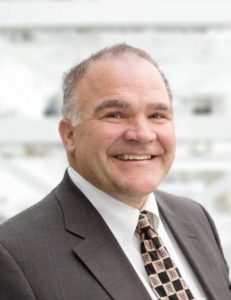
Alan Olsen, is the Host of the American Dreams Show and the Managing Partner of GROCO.com. GROCO is a premier family office and tax advisory firm located in the San Francisco Bay area serving clients all over the world.
Alan L. Olsen, CPA, Wikipedia Bio

GROCO.com is a proud sponsor of The American Dreams Show.
The American Dreams show was the brainchild of Alan Olsen, CPA, MBA. It was originally created to fill a specific need; often inexperienced entrepreneurs lacked basic information about raising capital and how to successfully start a business. Alan sincerely wanted to respond to the many requests from aspiring entrepreneurs asking for the information and introductions they needed. But he had to find a way to help in which his venture capital clients and friends would not mind.
The American Dreams show became the solution, first as a radio show and now with YouTube videos as well. Always respectful of interview guest’s time, he’s able to give access to individuals information and inspiration previously inaccessible to the first-time entrepreneurs who need it most. They can listen to venture capitalists and successful business people explain first-hand, how they got to where they are, how to start a company, how to overcome challenges, how they see the future evolving, opportunities, work-life balance and so much more..
American Dreams discusses many topics from some of the world’s most successful individuals about their secrets to life’s success. Topics from guest have included:
Creating purpose in life / Building a foundation for their life / Solving problems / Finding fulfillment through philanthropy and service / Becoming self-reliant / Enhancing effective leadership / Balancing family and work…

MyPaths.com (Also sponsored by GROCO) provides free access to content and world-class entrepreneurs, influencers and thought leaders’ personal success stories. To help you find your path in life to true, sustainable success & happiness. It’s mission statement:
In an increasingly complex and difficult world, we hope to help you find your personal path in life and build a strong foundation by learning how others found success and happiness. True and sustainable success and happiness are different for each one of us but possible, often despite significant challenges. Our mission at MyPaths.com is to provide resources and firsthand accounts of how others found their paths in life, so you can do the same.
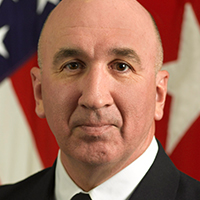
Leadership, Duty, Honor & Country With Lt. Gen. Mike Barbero
Retired US Army Lieutenant General, Michael D. Barbero, discusses leadership, service, duty, honor, and country on Alan Olsen‘s American Dreams Show. Transcript: Alan Olsen Hi, this is Alan Olsen and welcome to American Dreams. My guest today is General Michael Barbero. General, welcome to today’s show. Mike Barbero Thanks, Alan, how are you? Thanks for having me. It’s…
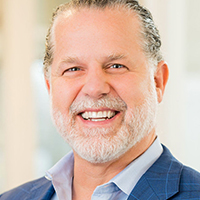
Regenerative Medicine and Creating Health with Dr. David Haase
Dr. David Haase, Founder of the MaxWell Clinic discusses regenerative medicine and creating health on Alan Olsen‘s American Dreams Show. Transcript: Alan Olsen Welcome to American Dreams. My guest today is David Haase. David, welcome to the show. David Haase Thanks, Alan. Alan Olsen So do you have a remarkable background and career obviously that…
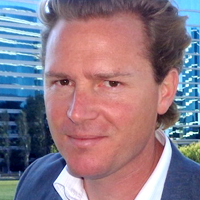
VC Success With Silicon Valley Veteran Andrew Romans
Andrew Romans, General Partner of 7BC Venture Capital, Author, and University Professor discusses navigating Silicon Valley, venture capital (VC), startup success, and the future of tech investment on Alan Olsen‘s American Dreams Show. Transcript: Alan Olsen Welcome to American Dreams. My guest today is Andrew Romans. Andrew, welcome to today’s show. Andrew Romans Thank you so…
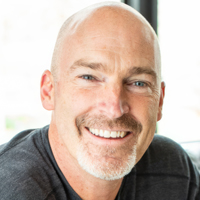
How Entrepreneurs Shine With Gino Wickman
Gino Wickman, Founder of EOS Worldwide and author of “Shine” and “Traction: Get a Grip on Your Business” discusses How to shine as an Entrepreneur on Alan Olsen‘s American Dreams Show. Transcript: Alan Olsen Hi, this is Alan Olsen and welcome to American Dreams. My guest today is Gino Wickman. To welcome to today’s show. Gino…