
Health Care For Senior Citizens – Understanding Medicare!

Health Care For Senior Citizens – Understanding Medicare!
By Dennis Wolfe
In America having health care cost protection (also known as medical insurance) is not a right. Neither is it a right to access health care services. Health care services in strict economic definitions are simply services for which we consumers pay fees. As consumers approach Age 60, some may be in for a financial shock. The cost for health care services climbs geometrically in direct proportion to the aging of our bodies.
The out of pocket cost is so high that many seniors cannot afford to purchase health cost protection coverage, while others cannot get through underwriting even if they could afford it. For those who are uninsured, the prospect of losing all of their assets looms large.
When we reach Age 65, we find out that everything we learned about medical insurance has to be redefined. Just when life is supposed to be simpler, it is time to go back to school. The Federal Law establishing Medicare was passed in July 1965 with the first recipient of benefits occurring in 1966. Medicare is a national health insurance and is separated into three major components and you must first understand this in order to understand what low cost options are now available.
MEDICARE PART A Hospital and Related Benefits
Part A pays for a portion of all Medicare-eligible expenses for care rendered in the hospital, and for convalescent care to a lesser degree. There are deductibles and co-pays and these can amount to thousands of dollars in out-of-pocket expenses when major hospitalization occurs. Part A is a safety net of sorts for hospital charges and there is no premium charge to the enrollee.
MEDICARE PART B Doctors – Out of Hospital
Part B pays for 80% of all Medicare-eligible expenses with respect to doctors, lab testing, therapy and other outpatient services, again with the potential for thousands of dollars in out-of-pocket exposure. The senior pays for this privilege and the current premium taken right out of the senior’s Social Security check is around $90 a month.
MEDICARE PART D Prescription Drugs
Part D pays for prescription medication. It has limits as well on what it pays. There are some basic plan designs but certainly the purchase of generic medications help to keep the out-of-pocket low. A decent plan will run around $25-$32 a month and it is very important that the senior understands this is product and coverage is purchased through private insurance sources. The best place to go in order to find out what plan may or may not be right for you is your pharmacist.
There is one final and extremely important note about Part D. You may only sign up for it during the annual national open enrollment from November 15-December 31. If you do not sign up for it when you turn 65, the annual open enrollment is the only other time you can do so. Additionally, if you do not sign up for it when you do turn 65 and wait for a year or two or later to do so, you can be penalized with respect to your premium cost for the rest of your life. It is a tightly controlled program and you need to understand the rules.
Just for a point of reference, Part C was established in 1997 and will be discussed later in this article.
MEDICARE SUPPLEMENTS
With the significant financial exposure of Medicare, a source is available to offset this risk and these are known as Medicare Supplements. Medicare offices provide seniors with a booklet that discusses Medicare Supplement Plans. You should stop by your local Social Security Office and get one if one was not already mailed to you.
The typical Medicare Supplement from any creditable insurance carrier (Blue Shield & Blue Cross to name two) has a monthly price tag in the $200 to $300 and you can go to just about any doctor you want to see.
When Medicare began it was marketed as a financial safety net for seniors but it has failed in accomplishing this. The costs for Part B collected by Medicare have continued to rise and Part D is not likely to be too far behind if expected trends continue. It is not uncommon to see seniors presently paying $500 a month for their Part B coverage, their Medicare Supplement and their new, separate Part D policy.
MEDICARE PART C Medicare Advantage
Something had to be done and it was. Medicare expanded through the Balanced Budget Act of 1997 in which a new product to be marketed to seniors became available. It was initially called Medicare + Choice and now it is known as Medicare Advantage. To understand it you simply need to recall what you know about HMO’s.
These new HMO-like products have been immensely helpful in relieving the financial burden on our seniors. However, like a newly designed car it is not unexpected in the early years of marketing these products that there were problems. Some of the less reputable carriers entered the market with benefits that were not properly funded by the premiums charged. The result was carrier failure and a bitter taste in the mouths of many seniors.
However, today through a few authorized and very creditable insurers (Health Net and Kaiser to name two), the individual can now have an HMO that looks exactly like the typical insurance product most seniors had prior to Medicare.
When a Medicare-approved insurer offers a Medicare Advantage HMO in the senior market, Medicare actually pays and transfers the risk to the insurance company for providing cost care protection to the enrolling senior.
This relieves Medicare of its obligations to provide benefits and puts the burden 100% square on the shoulders of the insurance company. Some may argue that this Medicare as a national health insurance program has failed and this new program was needed to shore it up. The truth is that delivering affordable health care is a task that needs constant monitoring because of the shifts in our population. Even here we see that supply equals demand and the Federal Government actually responded and got it right by addressing the issue with a workable solution.
The insurance companies now offer benefits that are better than what Medicare and a Medicare Supplement could provide. Additionally, the Medicare Advantage HMO products also provide full Part D prescription coverage.
Whereas rich Medicare Supplements with comprehensive Part D prescription drug coverage come in around $350 a month, a quality HMO can provide better coverage for around $40-$100 a month. To be fair, these premiums will rise as well, but with a lower starting point, the annual rate adjustment is not as hard to accept.
OPEN ENROLLMENT
With the good news there is bad news. It is a major decision to enroll into an HMO and to drop existing Medicare Supplement plans. The government recognizes this. Therefore, every year from November 15th through December 31st, a senior can enroll into the Part D prescription drug program if they have not already done so or switch to another Part D prescription drug program if they already have coverage somewhere else. For those who have no prior Medicare Supplement coverage, they can also enroll without evidence of insurability (there are a few restrictions) and coverage begins January 1st.
From January 1st through March 31st, the senior has the opportunity to change their mind and switch to another plan if they feel so inclined. Most do not.
All Medicare coverage, Medicare Supplements and the newer Medicare Advantage HMO products are ways to protect what you worked hard to acquire. Take the time to learn more. We will all reach Age 65 and when we do, we will all confront this.
MEDICARE vs. LONG TERM CARE
Finally, it is crucially important to understand that Medicare is NOT Long Term Care. In another article I will discuss this issue. It is arguably of equal importance to your long term financial future as is Medicare.
We hope you found this article about “Health Care For Senior Citizens – Understanding Medicare!” helpful. If you have questions or need expert tax or family office advice that’s refreshingly objective (we never sell investments), please contact us or visit our Family office page or our website at www.GROCO.com. Unfortunately, we no longer give advice to other tax professionals gratis.
To receive our free newsletter, contact us here.
Subscribe our YouTube Channel for more updates.
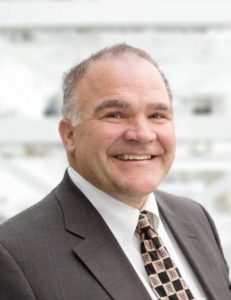
Alan Olsen, is the Host of the American Dreams Show and the Managing Partner of GROCO.com. GROCO is a premier family office and tax advisory firm located in the San Francisco Bay area serving clients all over the world.
Alan L. Olsen, CPA, Wikipedia Bio

GROCO.com is a proud sponsor of The American Dreams Show.
The American Dreams show was the brainchild of Alan Olsen, CPA, MBA. It was originally created to fill a specific need; often inexperienced entrepreneurs lacked basic information about raising capital and how to successfully start a business.
Alan sincerely wanted to respond to the many requests from aspiring entrepreneurs asking for the information and introductions they needed. But he had to find a way to help in which his venture capital clients and friends would not mind.
The American Dreams show became the solution, first as a radio show and now with YouTube videos as well. Always respectful of interview guest’s time, he’s able to give access to individuals information and inspiration previously inaccessible to the first-time entrepreneurs who need it most.
They can listen to venture capitalists and successful business people explain first-hand, how they got to where they are, how to start a company, how to overcome challenges, how they see the future evolving, opportunities, work-life balance and so much more..
American Dreams discusses many topics from some of the world’s most successful individuals about their secrets to life’s success. Topics from guest have included:
Creating purpose in life / Building a foundation for their life / Solving problems / Finding fulfillment through philanthropy and service / Becoming self-reliant / Enhancing effective leadership / Balancing family and work…

MyPaths.com (Also sponsored by GROCO) provides free access to content and world-class entrepreneurs, influencers and thought leaders’ personal success stories. To help you find your path in life to true, sustainable success & happiness. It’s mission statement:
In an increasingly complex and difficult world, we hope to help you find your personal path in life and build a strong foundation by learning how others found success and happiness. True and sustainable success and happiness are different for each one of us but possible, often despite significant challenges.
Our mission at MyPaths.com is to provide resources and firsthand accounts of how others found their paths in life, so you can do the same.
Mastering Business Growth with Howard Shore
Howard Shore, Founder and CEO of Activate Group Inc. discusses managing, even mastering, business growth and the challenges growing quickly can present on Alan Olsen‘s American Dreams Show. Transcript: Alan Olsen Welcome to American Dreams. My guest today is Howard Shore. Howard, welcome to today’s show. Howard Shore Alan, thank you for having me. Alan…
Prosperity and Self-Reliance Zealot Steve Alder
From North America to Ghana, Africa, Steve Alder, President of Ensign Global College (www.ensign.edu.gh), sits down to discuss how a professor helps to build global prosperity and self-reliance on Alan Olsen‘s American Dreams Show. Transcript: Alan Olsen Welcome to American Dreams I’m visiting here today with Steve Alder. Steve, welcome to today’s program. Steve Alder Thank…
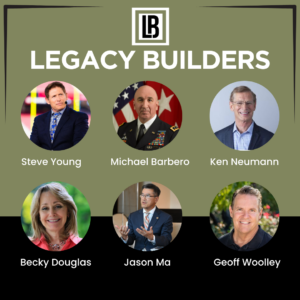
Steve Young on Building an Epic Family Legacy
Retired 49r Steve Young Discusses Building a Family Legacy at the Legacy Builders Event on May 15, 2024 As GROCO celebrates three decades of excellence in family office tax and advisory services, we have developed the Legacy Builders to stands as a testament to the firm’s enduring vision: to transform wealth into a powerful tool…
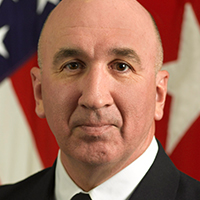
Leadership, Duty, Honor & Country With Lt. Gen. Mike Barbero
Retired US Army Lieutenant General, Michael D. Barbero, discusses leadership, service, duty, honor, and country on Alan Olsen‘s American Dreams Show. Transcript: Alan Olsen Hi, this is Alan Olsen and welcome to American Dreams. My guest today is General Michael Barbero. General, welcome to today’s show. Mike Barbero Thanks, Alan, how are you? Thanks for having me. It’s…