
Keeping Your Health Insurance Premiums Low

Keeping Your Health Insurance Premiums Low
Health Savings Accounts (HSAs) offer tax deductions for medical expenses, and the opportunity to set up an additional retirement account. But regardless of any other positive benefit of HSAs, lower premiums are the primary reason that thousands of Americans have chosen Health Savings Accounts as the best way to protect their family’s health and assets. Here are some key suggestions on how to keep your health insurance premiums low.
1. Choose an HSA-qualified plan for lower rate increases.
2. Raise your deductible as your HSA account grows.
When you fund your account you build up a financial “cushion” which allows you to raise your deductible as your account grows. Every time you raise your deductible, your premium should go down.
By the way, don’t forget that every time you fund your account you get an instant tax-deduction. When you offset the tax savings against your premiums, you’ll find your net cost for an HSA plan can be very low.
The maximum allowable contribution goes up every year with the rise of the Consumer Price Index. Currently, the individual contribution limit is $2,700, and the family limit is $5,450. So each year you can deposit greater amounts into your HSA and continue to raise your deductible, if you choose.
3. Stay healthy, so you can switch plans.
All health insurance plans have rate increases, and we’ve even seen premiums jump on some HSA plans. If a rate increase happens to you, you can switch to a different insurance company – but only if you pass their underwriting requirements. If chronic disease develops, you may be stuck with your current plan, and its accompanying rate increases, for eternity. Or at least it may seem that long…
If you pay attention to the pharmaceutical commercials, you learn lifestyle really has nothing to do with disease, and it is natural and healthy to be on many medications for the rest of your life, which will then solve your health problems.
If you pay attention to the science, you know the truth is quite different. It appears lifestyle is probably 95% of the picture, and we know the occurrence of degenerative disease can be dramatically reduced and even prevented.
Fortunately, most Health Savings Account owners are interested in health, wellness, and disease prevention. After all, they’re paying for their own doctor visits if they do get sick. HSA owners are also “forward thinking” people, and like to plan for their future – both financial and physical. You can improve your odds of excellent health with just a few key habits:
- Eat very high quantities of fresh vegetables and fruits. Shoot for 35% of your calories. This will lower your risk for diabetes, high blood pressure, heart disease, cancer, and much more.
- Limit your intake of sugar and starchy carbohydrates like bread and pasta. The majority of health problems in the U.S. are related to metabolic diseases that involve insulin resistance.
- Exercise and lift weights. Exercise guru Jack La Lanne turns 93 on September 26, and he says if you have muscles you never feel old.
4. Compare your plan to other available plans at least once a year, or whenever you get a rate increase.
Often-times people keep their plan much longer than they should, and end up paying too much. If your rates go up, you should compare a wide variety of plans to determine if you are in the right plan for your needs and budget. By using these four strategies, the typical family can save thousands of dollars in health insurance premiums and still protect themselves against unexpected major medical expenses.
Wiley P. Long is the President of HSA for America, an independent health insurance firm specializing in Health Savings Plans that works with a Health Savings Account.
—————————————————————————————————————————————————————————————————————
We hope you found this article about “Keeping Your Health Insurance Premiums Low” helpful. If you have questions or need expert tax or family office advice that’s refreshingly objective (we never sell investments), please contact us or visit our Family office page or our website at www.GROCO.com. Unfortunately, we no longer give advice to other tax professionals gratis.
To receive our free newsletter, contact us here.
Subscribe our YouTube Channel for more updates.
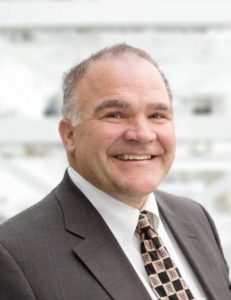
Alan Olsen, is the Host of the American Dreams Show and the Managing Partner of GROCO.com. GROCO is a premier family office and tax advisory firm located in the San Francisco Bay area serving clients all over the world.
Alan L. Olsen, CPA, Wikipedia Bio

GROCO.com is a proud sponsor of The American Dreams Show.
The American Dreams show was the brainchild of Alan Olsen, CPA, MBA. It was originally created to fill a specific need; often inexperienced entrepreneurs lacked basic information about raising capital and how to successfully start a business.
Alan sincerely wanted to respond to the many requests from aspiring entrepreneurs asking for the information and introductions they needed. But he had to find a way to help in which his venture capital clients and friends would not mind.
The American Dreams show became the solution, first as a radio show and now with YouTube videos as well. Always respectful of interview guest’s time, he’s able to give access to individuals information and inspiration previously inaccessible to the first-time entrepreneurs who need it most.
They can listen to venture capitalists and successful business people explain first-hand, how they got to where they are, how to start a company, how to overcome challenges, how they see the future evolving, opportunities, work-life balance and so much more..
American Dreams discusses many topics from some of the world’s most successful individuals about their secrets to life’s success. Topics from guest have included:
Creating purpose in life / Building a foundation for their life / Solving problems / Finding fulfillment through philanthropy and service / Becoming self-reliant / Enhancing effective leadership / Balancing family and work…

MyPaths.com (Also sponsored by GROCO) provides free access to content and world-class entrepreneurs, influencers and thought leaders’ personal success stories. To help you find your path in life to true, sustainable success & happiness. It’s mission statement:
In an increasingly complex and difficult world, we hope to help you find your personal path in life and build a strong foundation by learning how others found success and happiness. True and sustainable success and happiness are different for each one of us but possible, often despite significant challenges.
Our mission at MyPaths.com is to provide resources and firsthand accounts of how others found their paths in life, so you can do the same.
Mastering Business Growth with Howard Shore
Howard Shore, Founder and CEO of Activate Group Inc. discusses managing, even mastering, business growth and the challenges growing quickly can present on Alan Olsen‘s American Dreams Show. Transcript: Alan Olsen Welcome to American Dreams. My guest today is Howard Shore. Howard, welcome to today’s show. Howard Shore Alan, thank you for having me. Alan…
Prosperity and Self-Reliance Zealot Steve Alder
From North America to Ghana, Africa, Steve Alder, President of Ensign Global College (www.ensign.edu.gh), sits down to discuss how a professor helps to build global prosperity and self-reliance on Alan Olsen‘s American Dreams Show. Transcript: Alan Olsen Welcome to American Dreams I’m visiting here today with Steve Alder. Steve, welcome to today’s program. Steve Alder Thank…

Steve Young on Building an Epic Family Legacy
Retired 49r Steve Young Discusses Building a Family Legacy at the Legacy Builders Event on May 15, 2024 As GROCO celebrates three decades of excellence in family office tax and advisory services, we have developed the Legacy Builders to stands as a testament to the firm’s enduring vision: to transform wealth into a powerful tool…
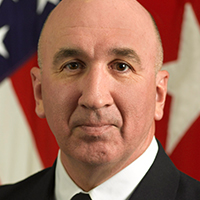
Leadership, Duty, Honor & Country With Lt. Gen. Mike Barbero
Retired US Army Lieutenant General, Michael D. Barbero, discusses leadership, service, duty, honor, and country on Alan Olsen‘s American Dreams Show. Transcript: Alan Olsen Hi, this is Alan Olsen and welcome to American Dreams. My guest today is General Michael Barbero. General, welcome to today’s show. Mike Barbero Thanks, Alan, how are you? Thanks for having me. It’s…