
IRS Clarifies Home Sales Rules

Did you know the IRS Clarifies home sales rules?
For many of us, the equity that we have built up in our homes represents a comfortable nest egg for the future. At retirement, many people sell the family primary residence defined and move to a smaller, less expensive home. The freed-up money, thereafter invested, may be a valuable source of retirement income or allow for a substantial down payment on a second home.
Help from Uncle Sam
The gain from the sale of your home is, potentially, subject to the capital gains tax. But a generous exclusion from that tax is available—$500,000 for married couples ($250,000 for singles). And this tax break is generous not only in an amount: There is no age requirement imposed for taking advantage of the exclusion, and in the right conditions, there is the opportunity to use the exclusion once every two years.
The two major conditions? The home for which you use your exclusion must be your “principal residence,” and you must have owned and occupied this principal residence for at least two of the previous five years before the sale.
Questions answered by IRS
In newly issued guidance, the Internal Revenue Service has provided answers to some questions about how the exclusion works. Here are a few of the key points from the new IRS definition of primary residence regulations:
1. The principal residence definition IRS has been clarified. Although the amount of time that you spend in your home is a good indicator of whether it is your personal residence, it is not the sole consideration. Other factors can include such items as your place of employment; where your family lives; addresses on correspondence and tax returns; where you maintain your banking relationships. Where you vote, the address on your driver’s license and the property on which you claim a property tax exemption also might help resolve the personal residence question. In sum, “facts and circumstances” will be the test applied.
2. Fulfilling ownership and use requirements. Two years of ownership and occupation is defined as 24 full months, or 730 days, but need not be concurrent, says the IRS. Short absences such as summer vacations still will be counted as periods of use, but longer breaks, such as a one-year sabbatical, will not.
3. Marital status. When taxpayers are not married and jointly own a principal residence, as long as all rules are met, each of them is entitled to a $250,000 exclusion.
4. Vacant land. The home sale exclusion may include gain from the sale of vacant land that has been used as part of a principal residence, as long as the land sale occurs within two years before or after the sale of the residence.
IRS allowed partial gain rules
What if you don’t satisfy the two-year rule? All is not lost. The IRS allows you a partial exclusion for a change in employment, for health reasons or in “unforeseen circumstances.” The new guidance offers clearer definitions of these exceptions.
Employment change. The change may be yours, your spouse’s or a person whose principal place of abode is in your home. The new workplace must be at least 50 miles farther from the old home than the old workplace was from that home.
Health. The primary residence definition IRS reason for the sale must be related to a disease, illness or injury. A physician’s recommendation of a change in residence for health reasons will satisfy this requirement. Sales relating to the necessity to care for a close relative who is sick may fall within this exception.
Unforeseen circumstances. The IRS has defined this term to include death; divorce or legal separation; becoming eligible for unemployment compensation; a change in employment that leaves you unable to pay the mortgage or reasonable basic living expenses; multiple births resulting from the same pregnancy; damage to the residence resulting from a natural or man-made disaster, or an act of war or terrorism; and condemnation, seizure or other involuntary conversion of the property.
Any of the first five items listed above must involve the taxpayer or his or her spouse, co-owner or member of the taxpayer’s household in order to qualify as “unforeseen circumstances.” The IRS has the discretion, too, to determine additional situations that will meet the definition.
Retroactivity. The IRS guidance specifically states that these new rules may be applied retroactively to principal residences that were sold in the past.
If you are selling your home and want to take advantage of the home-sale tax exclusion, we recommend that you consult your tax advisor well in advance of the sale in order to avoid any unpleasant surprises or complications.
We hope you found this article about “IRS Clarifies Home Sales Rules” helpful. If you have questions or need expert tax or family office advice that’s refreshingly objective (we never sell investments), please contact us or visit our Family office page or our website at www.GROCO.com. Unfortunately, we no longer give advice to other tax professionals gratis.
To receive our free newsletter, contact us here.
Subscribe our YouTube Channel for more updates.
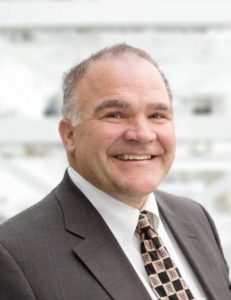
Alan Olsen, is the Host of the American Dreams Show and the Managing Partner of GROCO.com. GROCO is a premier family office and tax advisory firm located in the San Francisco Bay area serving clients all over the world.
Alan L. Olsen, CPA, Wikipedia Bio

GROCO.com is a proud sponsor of The American Dreams Show.

The American Dreams show was the brainchild of Alan Olsen, CPA, MBA. It was originally created to fill a specific need; often inexperienced entrepreneurs lacked basic information about raising capital and how to successfully start a business. Alan sincerely wanted to respond to the many requests from aspiring entrepreneurs asking for the information and introductions they needed. But he had to find a way to help in which his venture capital clients and friends would not mind.
The American Dreams show became the solution, first as a radio show and now with YouTube videos as well. Always respectful of interview guest’s time, he’s able to give access to individuals information and inspiration previously inaccessible to the first-time entrepreneurs who need it most. They can listen to venture capitalists and successful business people explain first-hand, how they got to where they are, how to start a company, how to overcome challenges, how they see the future evolving, opportunities, work-life balance and so much more..
American Dreams discusses many topics from some of the world’s most successful individuals about their secrets to life’s success. Topics from guest have included:
Creating purpose in life / Building a foundation for their life / Solving problems / Finding fulfillment through philanthropy and service / Becoming self-reliant / Enhancing effective leadership / Balancing family and work…

MyPaths.com (Also sponsored by GROCO) provides free access to content and world-class entrepreneurs, influencers and thought leaders’ personal success stories. To help you find your path in life to true, sustainable success & happiness. It’s mission statement:
In an increasingly complex and difficult world, we hope to help you find your personal path in life and build a strong foundation by learning how others found success and happiness. True and sustainable success and happiness are different for each one of us but possible, often despite significant challenges. Our mission at MyPaths.com is to provide resources and firsthand accounts of how others found their paths in life, so you can do the same.
Author – M.A. Co.: Originally Posted 2008
Leadership, Duty, Honor & Country With Lt. Gen. Mike Barbero
Retired US Army Lieutenant General, Michael D. Barbero, discusses leadership, service, duty, honor, and country on Alan Olsen‘s American Dreams Show. Transcript: Alan Olsen Hi, this is Alan Olsen and welcome to American Dreams. My guest today is General Michael Barbero. General, welcome to today’s show. Mike Barbero Thanks, Alan, how are you? Thanks for having me. It’s…
Regenerative Medicine and Creating Health with Dr. David Haase
Dr. David Haase, Founder of the MaxWell Clinic discusses regenerative medicine and creating health on Alan Olsen‘s American Dreams Show. Transcript: Alan Olsen Welcome to American Dreams. My guest today is David Haase. David, welcome to the show. David Haase Thanks, Alan. Alan Olsen So do you have a remarkable background and career obviously that…
VC Success With Silicon Valley Veteran Andrew Romans
Andrew Romans, General Partner of 7BC Venture Capital, Author, and University Professor discusses navigating Silicon Valley, venture capital (VC), startup success, and the future of tech investment on Alan Olsen‘s American Dreams Show. Transcript: Alan Olsen Welcome to American Dreams. My guest today is Andrew Romans. Andrew, welcome to today’s show. Andrew Romans Thank you so…
How Entrepreneurs Shine With Gino Wickman
Gino Wickman, Founder of EOS Worldwide and author of “Shine” and “Traction: Get a Grip on Your Business” discusses How to shine as an Entrepreneur on Alan Olsen‘s American Dreams Show. Transcript: Alan Olsen Hi, this is Alan Olsen and welcome to American Dreams. My guest today is Gino Wickman. To welcome to today’s show. Gino…