
Where Should You Keep Your Will?

Where Should You Keep Your Will?
Planning your estate takes a considerable amount of time and effort.
First, you must inventory what you own and decide how to divide your assets among your loved ones.
Then you meet with your advisers—attorney, accountant, trust officer, insurance agent—to formalize your plans.
Because you are conscientious, you review your estate plan regularly, keeping up with changes in family circumstances, your personal finances and the tax laws. When it becomes necessary, you revise your plans. Everything dotted to the “i” and crossed to the “t.”
Or so you believe.
But despite your clear intentions and your careful planning, your family could still wind up spending a great deal of time and money trying to see that your wishes are carried out—unless you take two simple, but very important, steps.
The first step is to provide for the safekeeping of your will.
Should you keep the original at home? There is always the possibility that it might be unintentionally destroyed or thrown away with other papers by mistake.
Put it in your safe deposit box? There may be some legal proceedings involved in opening the box after your death that could make immediate access difficult.
What about your attorney’s office? If he or she is a single practitioner, there are risks: The attorney could die or move away.
A law firm may be willing to hold your will, but you must remember to retrieve it if you end the relationship and go elsewhere.
If you name a trust institution to serve as an executor, you can deposit the original copy with the institution, keeping unsigned copies with your attorney and in your personal records for future reference.
The second step
Create a document locator, a detailed list that gives your family access to all the information they will need to see that your estate plan is carried out. The locator should include the names, addresses and phone numbers of all the important financial players in your life. You also will want to include information about your debts. Credit card issuers and card numbers and mortgage, auto and other loans should be noted as well.
Be sure to specify the location of your will and other important documents (tax returns, Social Security information, business agreements . . . estate deeds). Note where your safe deposit box is and who has access to it. Provide an inventory of its contents.
Give directions as to where you keep investment records, with names and addresses of all the financial institutions with which you have savings, checking or investment accounts. This kind of information should be particularly detailed. You should spell out the type of investment that you hold, the account numbers, the names on the account, and the dates on which the accounts were opened. Specify where you keep the account statements, passbooks and securities certificates.
The document locator is also the place to indicate who has spare keys to the house or car and to give other information of that kind. Be sure to remind your survivors to call your employer so that the benefits department can get the proper paperwork started.
You also may want to attach a letter to the document locator specifying your wishes as to funeral and burial arrangements.
Be sure that you have made multiple copies of your document locator. A copy should be given to your executor and appropriate family members. You may want to keep one in your safe deposit box as well.
Finally, remember to update the document locator once a year to ensure its accuracy.
We hope you found this article about “Where Should You Keep Your Will?” helpful. If you have questions or need expert tax or family office advice that’s refreshingly objective (we never sell investments), please contact us or visit our Family office page or our website at www.GROCO.com. Unfortunately, we no longer give advice to other tax professionals gratis.
To receive our free newsletter, contact us here.
Subscribe our YouTube Channel for more updates.
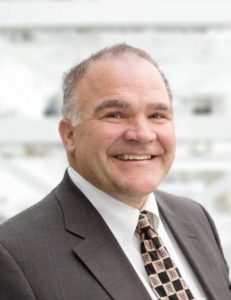
Alan Olsen, is the Host of the American Dreams Show and the Managing Partner of GROCO.com. GROCO is a premier family office and tax advisory firm located in the San Francisco Bay area serving clients all over the world.
Alan L. Olsen, CPA, Wikipedia Bio

GROCO.com is a proud sponsor of The American Dreams Show.

The American Dreams show was the brainchild of Alan Olsen, CPA, MBA. It was originally created to fill a specific need; often inexperienced entrepreneurs lacked basic information about raising capital and how to successfully start a business.
Alan sincerely wanted to respond to the many requests from aspiring entrepreneurs asking for the information and introductions they needed. But he had to find a way to help in which his venture capital clients and friends would not mind.
The American Dreams show became the solution, first as a radio show and now with YouTube videos as well. Always respectful of interview guest’s time, he’s able to give access to individuals information and inspiration previously inaccessible to the first-time entrepreneurs who need it most.
They can listen to venture capitalists and successful business people explain first-hand, how they got to where they are, how to start a company, how to overcome challenges, how they see the future evolving, opportunities, work-life balance and so much more..
American Dreams discusses many topics from some of the world’s most successful individuals about their secrets to life’s success. Topics from guest have included:
Creating purpose in life / Building a foundation for their life / Solving problems / Finding fulfillment through philanthropy and service / Becoming self-reliant / Enhancing effective leadership / Balancing family and work…

MyPaths.com (Also sponsored by GROCO) provides free access to content and world-class entrepreneurs, influencers and thought leaders’ personal success stories. To help you find your path in life to true, sustainable success & happiness. It’s mission statement:
In an increasingly complex and difficult world, we hope to help you find your personal path in life and build a strong foundation by learning how others found success and happiness. True and sustainable success and happiness are different for each one of us but possible, often despite significant challenges.
Our mission at MyPaths.com is to provide resources and firsthand accounts of how others found their paths in life, so you can do the same.
Mastering Business Growth with Howard Shore
Howard Shore, Founder and CEO of Activate Group Inc. discusses managing, even mastering, business growth and the challenges growing quickly can present on Alan Olsen‘s American Dreams Show. Transcript: Alan Olsen Welcome to American Dreams. My guest today is Howard Shore. Howard, welcome to today’s show. Howard Shore Alan, thank you for having me. Alan…
Prosperity and Self-Reliance Zealot Steve Alder
From North America to Ghana, Africa, Steve Alder, President of Ensign Global College (www.ensign.edu.gh), sits down to discuss how a professor helps to build global prosperity and self-reliance on Alan Olsen‘s American Dreams Show. Transcript: Alan Olsen Welcome to American Dreams I’m visiting here today with Steve Alder. Steve, welcome to today’s program. Steve Alder Thank…
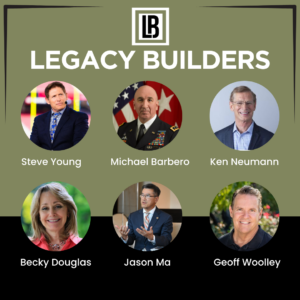
Steve Young on Building an Epic Family Legacy
Retired 49r Steve Young Discusses Building a Family Legacy at the Legacy Builders Event on May 15, 2024 As GROCO celebrates three decades of excellence in family office tax and advisory services, we have developed the Legacy Builders to stands as a testament to the firm’s enduring vision: to transform wealth into a powerful tool…
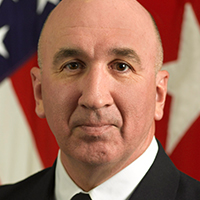
Leadership, Duty, Honor & Country With Lt. Gen. Mike Barbero
Retired US Army Lieutenant General, Michael D. Barbero, discusses leadership, service, duty, honor, and country on Alan Olsen‘s American Dreams Show. Transcript: Alan Olsen Hi, this is Alan Olsen and welcome to American Dreams. My guest today is General Michael Barbero. General, welcome to today’s show. Mike Barbero Thanks, Alan, how are you? Thanks for having me. It’s…