
Transferring Your Assets: It’s More Than a Will

[vc_row][vc_column][vc_column_text]The cornerstone of every estate plan is a will. But your will does not necessarily control how all of your assets are distributed to your beneficiaries. You are likely to have designated beneficiaries for specific assets during your lifetime. And just as you review your will, review of your beneficiary choices for these assets is extremely important. As a U.S. Supreme Court decision recently illustrated, failure to make adjustments in changing circumstances can have serious consequences.
First, a few definitions
Because your will is subject to approval by a probate court, the assets that pass by means of your will are often referred to as probate property. Simple enough. Then there are the assets for which you have designated a beneficiary in a separate document and that are not subject to the probate process. Together, for tax purposes, these two elements form your gross estate. (Just because property passes outside of your will doesn’t mean that it necessarily escapes taxation.)
This nonprobate property includes property that has been taken in joint name (the family home, bank accounts, etc.) and that passes automatically to the other individual joint owner. Similarly, if you have established a trust, you have named an income beneficiary to receive the earnings from the trust’s assets and a remainder beneficiary to receive the assets themselves at some future date.
For purposes of discussion here, we will focus on two additional nonprobate assets of particular importance in the estate planning process: your retirement plan assets (company retirement plans, Keoghs and IRAs) and life insurance. Because both are likely to be substantial, you’ll want to give special attention to integrating these assets with your will and overall estate planning goals.
Beneficiaries and retirement plan assets
Your employer or the trustee of your retirement plan will have asked you to fill out a form naming a primary beneficiary and, probably, a secondary, or contingent, beneficiary at the time that your account was created. Generally, if your spouse is not the named beneficiary of at least 50% of your vested account balance in your company retirement plan assets, he or she will have given “spousal consent,” agreeing to the designation of the beneficiary that you have chosen.
In light of the recent changes in IRS regulations, you may want to revisit the choices that you have made in your company plan and IRA beneficiary designations. The general rule for retirement plans is that you can’t keep your money in the plan forever but must, once you reach age 701/2, begin a regular series of withdrawals. The old rules were complex. The new, and liberalized, required minimum distribution rules (RMDs) have been simplified so that, instead of choosing a beneficiary and picking a particular method to compute your life expectancy, anyone who has designated a beneficiary will be treated as if that beneficiary is ten years younger. The only exception is when the beneficiary is a spouse more than ten years younger, in which case, that spouse’s actual age will be used.
The recent changes could affect your current or future retirement and tax planning. For more information, see the article “IRA news: Easier planning, longer tax deferral” or call upon us to discuss these matters with you in more detail.
Beneficiaries and life insurance
Life insurance offers a remarkable means of achieving family protection. But what many people don’t realize is that insurance coverage is only the first step toward achieving the goals that they have in mind when they purchase insurance and name a beneficiary. For instance, life insurance that becomes part of your gross estate is potentially taxable, raising the possibility that your beneficiary will receive less than you would expect. Payout arrangements pose other concerns. If based on monthly installments, they may allow no flexibility for unpredicted expenses or the long-term effects of inflation. A one-time payment places the extra burdens (and risks) of managing a large sum on the beneficiary.
Naming a life insurance trust as a beneficiary can help alleviate these problems. Taxes on the insurance itself can be avoided if you transfer the policy to the trust and maintain no incidents of ownership in the policy. (The policy must have been transferred at least three years prior to your death; otherwise, proceeds will become part of your estate.) When you name us to serve as trustee, the insurance proceeds that pass to the trust will be invested by professionals, with income and principal paid as you direct in the trust agreement.
Again, we would be glad to provide you with more details about the role of life insurance in estate planning.
Reviewing your beneficiary designations
How important is it to make adjustments to your beneficiary designations as your personal circumstances change? Consider the facts in this recent U.S. Supreme Court decision: Husband named his wife the beneficiary of both his life insurance and pension plan. The couple divorced, and two months later Husband died without having changed his beneficiary designations for either his insurance or his pension. Because state law automatically revoked beneficiary designations after a divorce (as it does in 18 states), the state’s Supreme Court said that the money from the two resources went to Husband’s children from a prior marriage.
The U.S. Supreme Court, in a 7-2 decision, disagreed with the state court. To pay benefits according to a state law, rather than the individual designated in the plan or insurance documents, would require, potentially, a plan administrator or insurance company to be familiar with 50 different state laws. That result is unacceptable, said the Court, when federal law (the Employee Retirement Income Security Act of 1974) clearly states that payments must be made to a beneficiary who is designated by a participant or by the terms of the plan. Result: The ex-wife was entitled to the insurance and the pension, and the children lost out.
What can you do to prevent this kind of result? One potential solution is to name a trust as the beneficiary of your retirement assets. The trust agreement can name your spouse as the income beneficiary and your children as the remainder beneficiaries. Again, feel free to make an appointment for a planning discussion as well as for answers to questions that you may have about this complicated, but important, area of estate planning.[/vc_column_text][/vc_column][/vc_row]
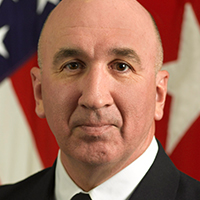
Leadership, Duty, Honor & Country With Lt. Gen. Mike Barbero
Retired US Army Lieutenant General, Michael D. Barbero, discusses leadership, service, duty, honor, and country on Alan Olsen‘s American Dreams Show. Transcript: Alan Olsen Hi, this is Alan Olsen and welcome to American Dreams. My guest today is General Michael Barbero. General, welcome to today’s show. Mike Barbero Thanks, Alan, how are you? Thanks for having me. It’s…

Regenerative Medicine and Creating Wellness with Dr. David Haasse
Dr. David Haasse, Founder of the MaxWell Clinic discusses regenerative medicine and creating wellness on Alan Olsen‘s American Dreams Show. Transcript: Alan Olsen Welcome to American Dreams. My guest today is David Haasse. David, welcome to the show. David Haasse Thanks, Alan. Alan Olsen So do you have a remarkable background and career obviously that lot…

VC Success With Silicon Valley Veteran Andrew Romans
Andrew Romans, General Partner of 7BC Venture Capital, Author, and University Professor discusses navigating Silicon Valley, venture capital (VC), startup success, and the future of tech investment on Alan Olsen‘s American Dreams Show. Transcript: Alan Olsen Welcome to American Dreams. My guest today is Andrew Romans. Andrew, welcome to today’s show. Andrew Romans Thank you so…

How Entrepreneurs Shine With Gino Wickman
Gino Wickman, Founder of EOS Worldwide and author of “Shine” and “Traction: Get a Grip on Your Business” discusses How to shine as an Entrepreneur on Alan Olsen‘s American Dreams Show. Transcript: Alan Olsen Hi, this is Alan Olsen and welcome to American Dreams. My guest today is Gino Wickman. To welcome to today’s show. Gino…