
Five Uses For Survivorship Life Insurance

Five Uses For Survivorship Life Insurance
By Robert D. Cavanaugh, CLU
Survivorship life insurance is a life insurance policy that insures two people and pays at the second death. Also referred to as second-to-die life insurance, common abbreviations are SWL for survivor whole life and SUL for survivor universal life.
Advantages
Since the insurance company does not have to pay until the second person dies, the premium is lower.
The insurance company could issue a standard policy, even if one person has health issues. In extreme cases where one person is entirely uninsurable, a policy with an acceptable premium is possible.
There are many uses for a survivorship life insurance policy. Let’s look at five.
Estate Taxes
Life insurance is the least expensive method of providing cash for the payment of estate taxes. Since 1981, the law allows one spouse to transfer all their property to the other spouse at death tax-free. This is the “unlimited marital deduction.” If there is an estate tax due, it is not due until the second spouse dies.
In response, life insurance companies designed the survivorship life insurance contract. Since the premium is lower, it is even a better solution than a policy insuring only one person.
Replacing an Asset Given Away
Charitable remainder trusts (CRTs) allow a person to sell a highly appreciated asset (stock, land, a business, etc.) without paying a capital gain tax, receive an income tax deduction and convert the asset to an income. At their death, the asset passes to the charity, not to their heirs.
An easy way to circumvent the children’s disinheritance is to ensure mom and dad with a survivorship life insurance policy for the value of the asset given to charity. Sometimes premiums can be entirely paid from the income from the charitable remainder trust, which is often found money if the original asset was illiquid. The income tax deduction can be spread over six years if the asset contributed to the CRT is large enough. This is another premium source.
Even Out an Inheritance
A couple has three children and a family business. One of the children is active in the business and the other two have careers of their own. If the bulk of the estate is the business and the plan is to leave the business to the active child, the other two children come up short.
A second-to-die policy on mom and dad can even things out. For example, let’s say the total estate is 6 million and the business represents 4 million. If the parents leave the business to the active child and the remaining 2 million to the other two children and name these children the beneficiary of a 6 million dollar survivorship life policy, everything is equal.
The child actors in the business get the business worth 4 million. The other two children inherit 1 million apiece from the balance of the estate and 3 million apiece from the survivorship life insurance policy.
PostPone a Buy Sell
If Joe and Bill were equal partners in a business, good planning would have them meet with their attorney and accountant, put a value on the business that each are happy with and has a buy-sell agreement drawn. Fund the agreement with life insurance and the funds are assured for the buy-out.
However, what if Joe’s wife, Ann, is also active in the business? If Joe dies, Ann would inherit Joe’s interest and continue to work in the business as usual. In this case, it would make sense to use a survivorship life insurance policy to ensure both Joe and Ann. The buy-sell agreement would be worded to trigger the buy-out at the second of their deaths.
To Pay the Income Tax on an Inherited Qualified Plan
This is the day of mega 401(k) plans. When a 401(k), IRA or other qualified plan is passed, for example, to the children, income tax is required upon a distribution.
Most people do not realize the large potential tax on what may be their largest asset. Let’s look at the worst case. If the qualified plan money is subject to the top estate tax bracket, which is currently 45% and the child is also in the top income tax bracket, currently, 35%, the amount left to the child is only a fraction of the total amount. Note there is a deduction against income for estate taxes paid. A good estimate of the net total percentage paid in taxes at the top brackets is 70%.
Use a survivorship life insurance policy to offset the income tax on the distributions, the estate tax or both.
There are many other uses of survivorship life insurance policies. If your situation includes any of these examples, I would recommend looking at the use of a second-to-die policy.
Robert D. Cavanaugh, CLU is a 36-year financial and estate planning veteran and author of the free newsletter, “The Estate Preservation Advisor”.
We hope you found this article about “Five Uses For Survivorship Life Insurance” helpful. If you have questions or need expert tax or family office advice that’s refreshingly objective (we never sell investments), please contact us or visit our Family office page or our website at www.GROCO.com. Unfortunately, we no longer give advice to other tax professionals gratis.
To receive our free newsletter, contact us here.
Subscribe our YouTube Channel for more updates.
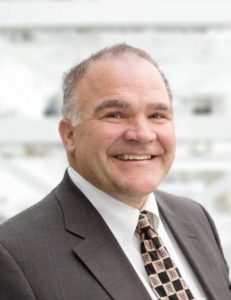
Alan Olsen, is the Host of the American Dreams Show and the Managing Partner of GROCO.com. GROCO is a premier family office and tax advisory firm located in the San Francisco Bay area serving clients all over the world.
Alan L. Olsen, CPA, Wikipedia Bio

GROCO.com is a proud sponsor of The American Dreams Show.

The American Dreams show was the brainchild of Alan Olsen, CPA, MBA. It was originally created to fill a specific need; often inexperienced entrepreneurs lacked basic information about raising capital and how to successfully start a business.
Alan sincerely wanted to respond to the many requests from aspiring entrepreneurs asking for the information and introductions they needed. But he had to find a way to help in which his venture capital clients and friends would not mind.
The American Dreams show became the solution, first as a radio show and now with YouTube videos as well. Always respectful of interview guest’s time, he’s able to give access to individuals information and inspiration previously inaccessible to the first-time entrepreneurs who need it most.
They can listen to venture capitalists and successful business people explain first-hand, how they got to where they are, how to start a company, how to overcome challenges, how they see the future evolving, opportunities, work-life balance and so much more..
American Dreams discusses many topics from some of the world’s most successful individuals about their secrets to life’s success. Topics from guest have included:
Creating purpose in life / Building a foundation for their life / Solving problems / Finding fulfillment through philanthropy and service / Becoming self-reliant / Enhancing effective leadership / Balancing family and work…

MyPaths.com (Also sponsored by GROCO) provides free access to content and world-class entrepreneurs, influencers and thought leaders’ personal success stories. To help you find your path in life to true, sustainable success & happiness. It’s mission statement:
In an increasingly complex and difficult world, we hope to help you find your personal path in life and build a strong foundation by learning how others found success and happiness. True and sustainable success and happiness are different for each one of us but possible, often despite significant challenges.
Our mission at MyPaths.com is to provide resources and firsthand accounts of how others found their paths in life, so you can do the same.
Leadership, Duty, Honor & Country With Lt. Gen. Mike Barbero
Retired US Army Lieutenant General, Michael D. Barbero, discusses leadership, service, duty, honor, and country on Alan Olsen‘s American Dreams Show. Transcript: Alan Olsen Hi, this is Alan Olsen and welcome to American Dreams. My guest today is General Michael Barbero. General, welcome to today’s show. Mike Barbero Thanks, Alan, how are you? Thanks for having me. It’s…
Regenerative Medicine and Creating Health with Dr. David Haase
Dr. David Haase, Founder of the MaxWell Clinic discusses regenerative medicine and creating health on Alan Olsen‘s American Dreams Show. Transcript: Alan Olsen Welcome to American Dreams. My guest today is David Haase. David, welcome to the show. David Haase Thanks, Alan. Alan Olsen So do you have a remarkable background and career obviously that…
VC Success With Silicon Valley Veteran Andrew Romans
Andrew Romans, General Partner of 7BC Venture Capital, Author, and University Professor discusses navigating Silicon Valley, venture capital (VC), startup success, and the future of tech investment on Alan Olsen‘s American Dreams Show. Transcript: Alan Olsen Welcome to American Dreams. My guest today is Andrew Romans. Andrew, welcome to today’s show. Andrew Romans Thank you so…
How Entrepreneurs Shine With Gino Wickman
Gino Wickman, Founder of EOS Worldwide and author of “Shine” and “Traction: Get a Grip on Your Business” discusses How to shine as an Entrepreneur on Alan Olsen‘s American Dreams Show. Transcript: Alan Olsen Hi, this is Alan Olsen and welcome to American Dreams. My guest today is Gino Wickman. To welcome to today’s show. Gino…