
The Roth IRA Advantage: A Closer Look

The Roth IRA Advantage: A Closer Look
Since its debut in 1997, the Roth IRA, naturally enough, has been sold mainly as a retirement account. To be sure, the prospect of a stream of tax-free income to support a comfortable retirement is a powerful stimulant.
To earn that freedom from taxes, you do have to pay income tax on the dollars that go into a Roth IRA. There are requirements for participation that differ in many respects from those of traditional deductible IRAs. However, if you qualify for a deductible IRA, you can do nearly as well (in some cases, even better than with a Roth). It does take some savings discipline. You would need to invest your tax savings in a taxable account, the proceeds of which will help pay taxes on your IRA withdrawals.
So, building a retirement nest egg is not what makes Roth IRAs so special . . .
The real big deal
The true attraction of the Roth IRA is the financial freedom that it can provide over the long term. In a Roth IRA there’s no requirement to begin taking withdrawals at age 701/2 or at any point in your lifetime. You even can continue making annual contributions as long as you have earned income.
Money remaining in your account at your death passes to your named beneficiary free of income taxes. And your heir can choose to spread out tax-free withdrawals over his or her own life expectancy. These features can enable some impressive long-term building of wealth.
When you are in the happy position of not needing a portion of the assets in your retirement accounts, the Roth IRA is an especially attractive estate planning tool. Moving retirement account assets into a Roth IRA, you’ll pay income tax on the balance transferred. This removes the amount of the tax from your estate and shelters all future growth from income taxes.
To illustrate, we’ll consider the hypothetical case of a man we’ll call George. Having reached age 70, George retired this year with a generous pension plan and a large stock portfolio. He also has $100,000 in an IRA rolled over from a profit sharing plan. He knows that he’ll have to start taking distributions right away, but he would prefer to leave the account intact for his named beneficiary, his 40-year-old daughter, Shirley. (All calculations used in this illustration assume annual investment returns of 6%.)
Traditional IRA
If George stays in the IRA, he’ll begin taking minimum distributions based on final regulations published in April 2002 by the IRS—a 27.4-year distribution period at age 70, recalculated each year to minimize the size of the required distributions. When George dies at age 85, before taking his required distribution for the year, he will have received a total of $82,514 (pretax), and Shirley will inherit an IRA with a balance of $125,912.
That’s a handsome sum, and one that Shirley can enhance by taking minimum distributions over her own life expectancy, according to IRS rules. At age 92, for example, Shirley will have received a total of $377,513 and still have more than $40,000 in the account. However, as was the case for George, every penny of her withdrawals will be taxed as ordinary income.
The Roth advantage
If George converts the account to a Roth IRA instead, selling enough stock to cover the tax liability, Shirley does much better. She’ll inherit a Roth IRA with a balance of $254,035. Using the same age as above, at 92 Shirley will have collected $773,587 tax free. And she still would have nearly $90,000 in the account. The conversion, at a cost of perhaps $40,000, will have gained Shirley and her heirs more than half a million dollars.
Some details
Of course, it’s not quite that simple. To start with, not everyone can make a Roth conversion. Under current rules you can make a conversion only in a year in which your adjusted gross income does not exceed $100,000. (The amount of the conversion does not count toward this AGI limit.) Strangely, the same cap applies both to married couples filing jointly and to individual filers.
Roth IRA beneficiaries must make the election to take withdrawals over their life expectancies no later than December 31 of the year following the account owner’s death. If they don’t, they must drain the account within the five years following the year of death.
Both traditional and Roth IRAs are included in the estate of the owner and can be subject to estate taxes. In the year 2004 as much as $1.5 million can be exempt from estate tax, and this amount will rise substantially over the coming years. To ensure the wealthbuilding potential of an inherited Roth IRA, provision should be made to pay any “death” taxes from other sources.
To date, much of the action in Roth conversions has centered around younger investors, seduced by the prospect of tax-free retirement income. The Roth IRA’s use for wealth transfer has not been fully exploited yet by those in or approaching retirement. If the secret gets out, that situation may change dramatically.
To receive our free newsletter, contact us here.
Subscribe to our YouTube Channel for more interviews and updates.
This transcript was generated by software and may not accurately reflect exactly what was said.
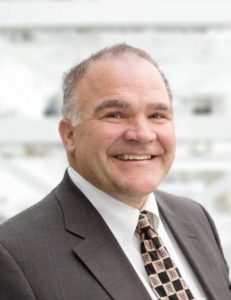
Alan Olsen, is the Host of the American Dreams Show and the Managing Partner of GROCO.com. GROCO is a premier family office and tax advisory firm located in the San Francisco Bay area serving clients all over the world.
Alan L. Olsen, CPA, Wikipedia Bio

GROCO.com is a proud sponsor of The American Dreams Show.
The American Dreams show was the brainchild of Alan Olsen, CPA, MBA. It was originally created to fill a specific need; often inexperienced entrepreneurs lacked basic information about raising capital and how to successfully start a business.
Alan sincerely wanted to respond to the many requests from aspiring entrepreneurs asking for the information and introductions they needed. But he had to find a way to help in which his venture capital clients and friends would not mind.
The American Dreams show became the solution, first as a radio show and now with YouTube videos as well. Always respectful of interview guest’s time, he’s able to give access to individuals information and inspiration previously inaccessible to the first-time entrepreneurs who need it most.
They can listen to venture capitalists and successful business people explain first-hand, how they got to where they are, how to start a company, how to overcome challenges, how they see the future evolving, opportunities, work-life balance and so much more.
American Dreams discusses many topics from some of the world’s most successful individuals about their secrets to life’s success. Topics from guest have included:
Creating purpose in life / Building a foundation for their life / Solving problems / Finding fulfillment through philanthropy and service / Becoming self-reliant / Enhancing effective leadership / Balancing family and work…

MyPaths.com (Also sponsored by GROCO) provides free access to content and world-class entrepreneurs, influencers and thought leaders’ personal success stories. To help you find your path in life to true, sustainable success & happiness. I’s mission statement:
In an increasingly complex and difficult world, we hope to help you find your personal path in life and build a strong foundation by learning how others found success and happiness. True and sustainable success and happiness are different for each one of us but possible, often despite significant challenges.
Our mission at MyPaths.com is to provide resources and firsthand accounts of how others found their paths in life, so you can do the same.
Mastering Business Growth with Howard Shore
Howard Shore, Founder and CEO of Activate Group Inc. discusses managing, even mastering, business growth and the challenges growing quickly can present on Alan Olsen‘s American Dreams Show. Transcript: Alan Olsen Welcome to American Dreams. My guest today is Howard Shore. Howard, welcome to today’s show. Howard Shore Alan, thank you for having me. Alan…
Prosperity and Self-Reliance Zealot Steve Alder
From North America to Ghana, Africa, Steve Alder, President of Ensign Global College (www.ensign.edu.gh), sits down to discuss how a professor helps to build global prosperity and self-reliance on Alan Olsen‘s American Dreams Show. Transcript: Alan Olsen Welcome to American Dreams I’m visiting here today with Steve Alder. Steve, welcome to today’s program. Steve Alder Thank…
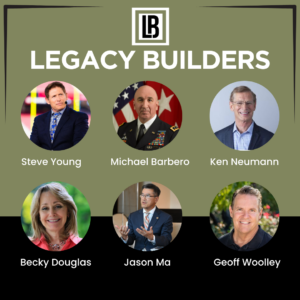
Steve Young on Building an Epic Family Legacy
Retired 49r Steve Young Discusses Building a Family Legacy at the Legacy Builders Event on May 15, 2024 As GROCO celebrates three decades of excellence in family office tax and advisory services, we have developed the Legacy Builders to stands as a testament to the firm’s enduring vision: to transform wealth into a powerful tool…
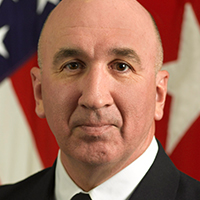
Leadership, Duty, Honor & Country With Lt. Gen. Mike Barbero
Retired US Army Lieutenant General, Michael D. Barbero, discusses leadership, service, duty, honor, and country on Alan Olsen‘s American Dreams Show. Transcript: Alan Olsen Hi, this is Alan Olsen and welcome to American Dreams. My guest today is General Michael Barbero. General, welcome to today’s show. Mike Barbero Thanks, Alan, how are you? Thanks for having me. It’s…