
The Importance of Life Insurance in Estate Planning

Life Insurance for Estate Planning
As part of the estate planning process, you may talk to any number of advisors—from lawyers, accountants and trust officers, to financial and retirement planners. These advisors often provide not only valuable services, but also may be in the business of selling investments, annuities and insurance. You will need to evaluate carefully as you do your planning as to whether or not the products offered are useful to you.
Is life insurance part of an estate planning?
Take life insurance, for instance. At first glance, it may not seem to have a great bearing on how you will dispose of your assets. Yet, life insurance is very often an integral part of a well-thought-out estate plan.
Why life insurance?
The proceeds of a life insurance policy can do much more than provide a large sum to your beneficiaries. Here is just a partial list of the benefits provided by making life insurance a part of your estate planning strategy
• It provides immediate cash at death to pay funeral expenses, debts and final income taxes of the insured.
• The cash provided by the proceeds can be made available to pay estate taxes and, thus, avoid the forced sale of an asset.
• Generally, life insurance proceeds payable to a named beneficiary pass to that beneficiary free of income tax.
• Proceeds from the policy provide a relatively low-cost source of funds that can be transferred to a trust created in the insured’s will for the benefit of, for example, minor children or elderly or handicapped relatives.
• Life insurance proceeds payable to someone other than the insured’s estate can avoid passing through probate when the policy is owned by an irrevocable insurance trust. For example, the funds may be used to satisfy marital settlement obligations for child or spousal support.
• When the insured owns a closely held business, life insurance proceeds may fund a buy-out of his or her interest.

Irrevocable life insurance trusts
One estate planning strategy involving insurance is to establish an irrevocable life insurance trust as a way to avoid federal estate tax on the proceeds paid at the insured’s death. Because the tax benefits are significant, it is important that professionals be involved in the creation of the trust in order to ensure that all the proper steps are taken.
Here’s how an irrevocable life insurance trust works: The owner of the policy transfers it to the trust, or the trustee of the trust purchases the policy. Funds are provided for the trust to pay the premiums due on the policy (unless the policy has been paid up). In order for the proceeds that are paid to the trust to avoid inclusion in the insured’s estate and, thus, be subject to tax, he or she must survive for three years after the transfer.
Another important step in establishing an irrevocable life insurance trust is to be certain that the insured has no “incidents of ownership” in the policy that connect him or her to the life insurance held by the trust. For instance, the right to change a beneficiary or modify the terms of the trust are incidents of ownership that would result in the inclusion of the proceeds in the insured’s estate for estate tax purposes. Further, the trust should have sufficient assets to pay for the premiums, though the insured may make gifts to the trusts in order to pay the premiums. Special technical rules must be observed to ensure that these are gifts of “present interests” in order to minimize the gift tax consequences.
The form of life insurance chosen (whole life, term, etc.) to be transferred to an irrevocable life insurance trust will depend on the age and situation of the insured. If existing policies are transferred, the insurance company must be notified of the ownership change. (Because a large gift may be involved, a gift tax return will have to be filed.) If new policies are purchased, all of the documentation should reflect that the trust is the owner of the policy and that the insured has no interest in it.
Final note
Because a trust can be funded at death by life insurance proceeds, life insurance is often a viable and affordable way to provide for vulnerable loved ones. If the insured is not comfortable with the stringent requirements of an irrevocable trust, a revocable trust may be a good alternative. Although the estate tax savings may be lost, all of the many other benefits of a life insurance strategy may remain in place. For example, trusts are often established to care for minor children, disabled or elderly relatives, or others who rely on the insured for support.
In summary, life insurance can be a valuable tool that, when used properly, can provide financial security for your loved ones, after you no longer can do so.
We hope you found this article about “The Importance of Life Insurance in Estate Planning” helpful. If you have questions or need expert tax or family office advice that’s refreshingly objective (we never sell investments), please contact us or visit our Family office page or our website at www.GROCO.com.
To receive our free newsletter, contact us here.
Subscribe our YouTube Channel for more updates.
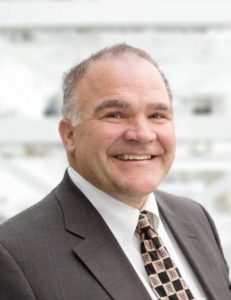
Alan Olsen, is the Host of the American Dreams Show and the Managing Partner of GROCO.com. GROCO is a premier family office and tax advisory firm located in the San Francisco Bay area serving clients all over the world.
Alan L. Olsen, CPA, Wikipedia Bio

GROCO.com is a proud sponsor of The American Dreams Show.

The American Dreams show was the brainchild of Alan Olsen, CPA, MBA. It was originally created to fill a specific need; often inexperienced entrepreneurs lacked basic information about raising capital and how to successfully start a business.
Alan sincerely wanted to respond to the many requests from aspiring entrepreneurs asking for the information and introductions they needed. But he had to find a way to help in which his venture capital clients and friends would not mind.
The American Dreams show became the solution, first as a radio show and now with YouTube videos as well. Always respectful of interview guest’s time, he’s able to give access to individuals information and inspiration previously inaccessible to the first-time entrepreneurs who need it most.
They can listen to venture capitalists and successful business people explain first-hand, how they got to where they are, how to start a company, how to overcome challenges, how they see the future evolving, opportunities, work-life balance and so much more..
American Dreams discusses many topics from some of the world’s most successful individuals about their secrets to life’s success. Topics from guest have included:
Creating purpose in life / Building a foundation for their life / Solving problems / Finding fulfillment through philanthropy and service / Becoming self-reliant / Enhancing effective leadership / Balancing family and work…

MyPaths.com (Also sponsored by GROCO) provides free access to content and world-class entrepreneurs, influencers and thought leaders’ personal success stories. To help you find your path in life to true, sustainable success & happiness. It’s mission statement:
In an increasingly complex and difficult world, we hope to help you find your personal path in life and build a strong foundation by learning how others found success and happiness. True and sustainable success and happiness are different for each one of us but possible, often despite significant challenges.
Our mission at MyPaths.com is to provide resources and firsthand accounts of how others found their paths in life, so you can do the same.
Watch this full video explaining what is “Estate Planning“?
Are you a Corporate, Estate and Trust, Individual, Limited Liability Company, Not for Profit, Partnership, and S Corporation income tax areas &
Looking for WEALTH & TAX PLANNING & PREPARATION SERVICES?

Steve Young on Building an Epic Family Legacy
Retired 49r Steve Young Discusses Building a Family Legacy at the Legacy Builders Event on May 15, 2024 As GROCO celebrates three decades of excellence in family office tax and advisory services, we have developed the Legacy Builders to stands as a testament to the firm’s enduring vision: to transform wealth into a powerful tool…
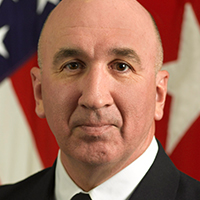
Leadership, Duty, Honor & Country With Lt. Gen. Mike Barbero
Retired US Army Lieutenant General, Michael D. Barbero, discusses leadership, service, duty, honor, and country on Alan Olsen‘s American Dreams Show. Transcript: Alan Olsen Hi, this is Alan Olsen and welcome to American Dreams. My guest today is General Michael Barbero. General, welcome to today’s show. Mike Barbero Thanks, Alan, how are you? Thanks for having me. It’s…
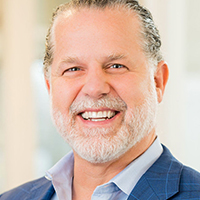
Regenerative Medicine and Creating Health with Dr. David Haase
Dr. David Haase, Founder of the MaxWell Clinic discusses regenerative medicine and creating health on Alan Olsen‘s American Dreams Show. Transcript: Alan Olsen Welcome to American Dreams. My guest today is David Haase. David, welcome to the show. David Haase Thanks, Alan. Alan Olsen So do you have a remarkable background and career obviously that…

VC Success With Silicon Valley Veteran Andrew Romans
Andrew Romans, General Partner of 7BC Venture Capital, Author, and University Professor discusses navigating Silicon Valley, venture capital (VC), startup success, and the future of tech investment on Alan Olsen‘s American Dreams Show. Transcript: Alan Olsen Welcome to American Dreams. My guest today is Andrew Romans. Andrew, welcome to today’s show. Andrew Romans Thank you so…