
Fashioning a Charitable Gift: Creative Ways of Giving

Fashioning a Charitable Gift: Creative Ways of Giving
The idea of “planning” a gift to charity may not spring as readily to mind as investment or retirement planning. Yet there are many ways to give, and many kinds of gifts to consider, especially when your philanthropic impulse is strong.
Initial steps
Of course, the very first step in your planning is to identify the object of your philanthropy. Then consider what you intend your gift to accomplish: how you would like your gift to make a difference both in general and specific terms. At this point you probably will make contact with the director of development at your chosen charitable organization to discuss your gift.
With the procedural steps out of the way, creativity begins. How can you shape your gift? For instance, your gift need not be cash. You may own certain assets that you may want to donate, and your charity will be more than glad to receive. And, of course, however you make use of your resources, you’ll want to fashion the gift in such a way that you can take maximum advantage of all available tax deductions.
Gifts of property
Generally, you are entitled to a federal income tax deduction for your gifts to charity. There’s a tax bonus when you make a gift of a long-term capital asset that has appreciated in value during the time that you owned it.
Here’s how it works: You plan a substantial gift and are considering selling some securities that have grown significantly over the years to fund the gift. You’ll pay a long-term capital gain on the sale and then can pay what’s left over to your charity. If you make a gift of the securities themselves, you will pay no capital gain. The charity can sell the securities without incurring any tax. You also will be entitled to an income tax deduction for the fair market value of the gift of securities.
A more creative approach is to make a gift of personal property, such as a work of art or valuable collectibles. You can deduct the current market value of a gift of appreciated personal property, but there are two caveats: One, if the contributed property is related to the exempt purpose of the organization—rare books to a library, for instance—the full deduction is available. However, if the property is unrelated to the charity’s purpose—the books to a hospital to sell and use the proceeds—your deduction is limited to the property’s cost basis. Two, although you may make deductible cash donations equal to up to 50% of your adjusted gross income (AGI), the limitation on gifts of appreciated property is only 30% of AGI.
Gifts of real estate
For some people a gift of a parcel of land that has appreciated significantly in value may be an especially attractive possibility.
As with other appreciated property, you will have the opportunity to take an income tax deduction for your charitable contribution equal to 100% of the property’s fair market value, which, if you have held the property for some time, may be substantial. In addition, you pay no capital gain on the past appreciation. An added bonus: You are reducing your taxable estate by the value of your gift.
If you would rather take a “wait-and-see” approach, you can fashion the real estate gift as a bequest in your will. Although you receive no current income tax deduction, your estate receives a full deduction for the real estate’s fair market value at your death.
Gifts of insurance
Do you have an existing insurance policy that you no longer need? That often happens when there’s insurance on the life of a business owner and the business is sold; or income replacement insurance is in force after retirement.
Why not consider making a gift of that policy instead of the cash donation that you were planning? As long as all of the rights of ownership are completely transferred to the charity, you receive a current income tax deduction equal to the lesser of your cost basis or the fair market value of the policy (roughly equal to the cash surrender value).
There are other ways to tailor a charitable gift of life insurance. For instance, if you have named your spouse as beneficiary, you might name a charity as successor beneficiary in the event that your spouse predeceases you. Although there are no immediate tax benefits, if your spouse does predecease you, and no successor beneficiary is named, the policy’s proceeds would be included in your estate. Or if your named beneficiary no longer needs the insurance protection—adult children—for example, you may change the beneficiary designation and name your charity. Your estate then would receive a charitable deduction for the proceeds paid to the charity.
An extremely cost-efficient approach is to allow your charity to purchase a policy on your life. Every year you give the charity a tax-deductible amount equal to the annual
premium payment. At your death the proceeds are paid to the charity. With this approach you can make a relatively large gift at a very reasonable cost.
Gifts in trust
Fashioning your gift in trust adds a great deal of flexibility to your gift giving.
There are many ways to establish your trust. For example, you may set up your trust during your lifetime or through provisions in your will. You can arrange for the trust to provide you with income from the trust for your life, or income for someone whom you name in the trust document. You can provide for the gift of income to yourself or the named beneficiary(ies) for a period of time, followed by a transfer to the charity (a charitable remainder annuity, or unitrust); or the reverse—a gift of income to the charity followed by a transfer of assets to the named beneficiary (a charitable lead trust).
You may fund your trust with cash, or be more creative by using the aforementioned appreciated securities, real estate, or life insurance policy. When your donation is placed in the trust, you receive an income tax deduction for the charitable part of the gift. Usually, somewhere between one-fifth to one-half of the value of the property will be deductible, depending on several factors—the age(s) of the trust’s income beneficiary or beneficiaries and the size of the income payments that the creator of the trust chooses.
An “income-only” charitable remainder unitrust should be considered if retirement is still several years away, and you already are taking maximum advantage of your tax-deferred retirement plans. In a nutshell, this kind of trust permits your trustee to invest the trust’s assets for long-term growth until you retire and need income from the trust.
You’ll need to cross all the “t’s” and dot all the “i’s” in order to reap all the possible tax benefits from a charitable gift in trust. Be sure to confer with your attorney, trust consultant and the charity itself when considering any of these creative ways of giving.
—————————————————————————————————————————————————————————————————————
We hope you found this article about “Fashioning a Charitable Gift: Creative Ways of Giving” helpful. If you have questions or need expert tax or family office advice that’s refreshingly objective (we never sell investments), please contact us or visit our Family office page or our website at www.GROCO.com. Unfortunately, we no longer give advice to other tax professionals gratis.
To receive our free newsletter, contact us here.
Subscribe our YouTube Channel for more updates.
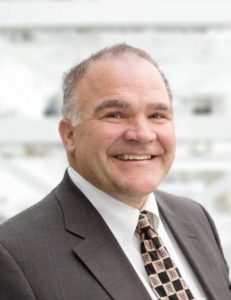
Alan Olsen, is the Host of the American Dreams Show and the Managing Partner of GROCO.com. GROCO is a premier family office and tax advisory firm located in the San Francisco Bay area serving clients all over the world.
Alan L. Olsen, CPA, Wikipedia Bio

GROCO.com is a proud sponsor of The American Dreams Show.
The American Dreams show was the brainchild of Alan Olsen, CPA, MBA. It was originally created to fill a specific need; often inexperienced entrepreneurs lacked basic information about raising capital and how to successfully start a business.
Alan sincerely wanted to respond to the many requests from aspiring entrepreneurs asking for the information and introductions they needed. But he had to find a way to help in which his venture capital clients and friends would not mind.
The American Dreams show became the solution, first as a radio show and now with YouTube videos as well. Always respectful of interview guest’s time, he’s able to give access to individuals information and inspiration previously inaccessible to the first-time entrepreneurs who need it most.
They can listen to venture capitalists and successful business people explain first-hand, how they got to where they are, how to start a company, how to overcome challenges, how they see the future evolving, opportunities, work-life balance and so much more..
American Dreams discusses many topics from some of the world’s most successful individuals about their secrets to life’s success. Topics from guest have included:
Creating purpose in life / Building a foundation for their life / Solving problems / Finding fulfillment through philanthropy and service / Becoming self-reliant / Enhancing effective leadership / Balancing family and work…

MyPaths.com (Also sponsored by GROCO) provides free access to content and world-class entrepreneurs, influencers and thought leaders’ personal success stories. To help you find your path in life to true, sustainable success & happiness. It’s mission statement:
In an increasingly complex and difficult world, we hope to help you find your personal path in life and build a strong foundation by learning how others found success and happiness. True and sustainable success and happiness are different for each one of us but possible, often despite significant challenges.
Our mission at MyPaths.com is to provide resources and firsthand accounts of how others found their paths in life, so you can do the same.
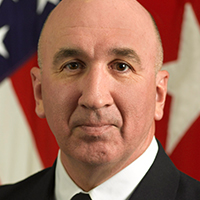
Leadership, Duty, Honor & Country With Lt. Gen. Mike Barbero
Retired US Army Lieutenant General, Michael D. Barbero, discusses leadership, service, duty, honor, and country on Alan Olsen‘s American Dreams Show. Transcript: Alan Olsen Hi, this is Alan Olsen and welcome to American Dreams. My guest today is General Michael Barbero. General, welcome to today’s show. Mike Barbero Thanks, Alan, how are you? Thanks for having me. It’s…
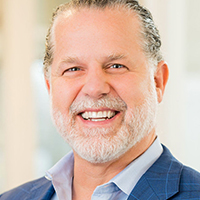
Regenerative Medicine and Creating Health with Dr. David Haase
Dr. David Haase, Founder of the MaxWell Clinic discusses regenerative medicine and creating health on Alan Olsen‘s American Dreams Show. Transcript: Alan Olsen Welcome to American Dreams. My guest today is David Haase. David, welcome to the show. David Haase Thanks, Alan. Alan Olsen So do you have a remarkable background and career obviously that…
VC Success With Silicon Valley Veteran Andrew Romans
Andrew Romans, General Partner of 7BC Venture Capital, Author, and University Professor discusses navigating Silicon Valley, venture capital (VC), startup success, and the future of tech investment on Alan Olsen‘s American Dreams Show. Transcript: Alan Olsen Welcome to American Dreams. My guest today is Andrew Romans. Andrew, welcome to today’s show. Andrew Romans Thank you so…
How Entrepreneurs Shine With Gino Wickman
Gino Wickman, Founder of EOS Worldwide and author of “Shine” and “Traction: Get a Grip on Your Business” discusses How to shine as an Entrepreneur on Alan Olsen‘s American Dreams Show. Transcript: Alan Olsen Hi, this is Alan Olsen and welcome to American Dreams. My guest today is Gino Wickman. To welcome to today’s show. Gino…