
Building an Estate Planning Team

Building an Estate Planning Team
To create an estate plan that serves your unique needs and that will execute your wishes as to the distribution of your assets is an important and, often, a complex task.
Such professionals usually have honed their skills in their own specific fields. Sound estate planning is built upon a multidisciplinary approach. Each advisor that you choose should be able to form cooperative relationships with others and work together as a team to shape and implement your estate plan.
Benefits of the teamwork approach
One of the most important considerations in employing an estate planning team is to put each of your advisors on the same page, so to speak. When advisors act and advise independently of each other, they run the risk of working at cross purposes or with different agendas.
Just looking at individual pieces of a client’s circumstances may lead to a recommendation that is inappropriate when viewed from a broader perspective. A team environment can enjoy the powerful benefit of other team members’ strengths, while contributing their own experience to the quality of the work. This synergy,” they conclude, “not only adds tangible value to the planning process, but also makes the experience educational and enjoyable for the clients and family members involved.”
Virtual teamwork
The concept of working as a team might, at one time, have meant that your team met face to face—something that was often difficult to arrange given busy schedules, not to mention the potential for additional time and expense when significant travel was necessary. With the use of today’s technology—teleconferencing, e-mail, access to networking to exchange documents, virtual teamwork is more the norm.
Virtual teamwork is one of the key principles in a values-based estate plan. Transferring one’s values and ideals is an important part of a legacy. Children and grandchildren should inherit more than stocks and bonds, but also cherished goals and beliefs for which they should strive—for example, recognition of one’s heritage; respect for family traditions; the need to contribute to the community and the world at large.
In values-based, as well as more traditional estate planning, virtual planning teams are likely to be less permanent and less formal than teams of the past. But even so, advisors are still capable of banding together to meet a specific goal—to solve a client’s particular planning needs.
But will the team work together harmoniously?
Fithian addresses this potential problem by discussing the work of Dan Sullivan, founder and president of The Strategic Coach, Inc. Sullivan says that advisors should be chosen for their unique ability—a one-of-a-kind, extraordinary skill that improves continuously. Building a successful team requires aligning the right combination of unique abilities. The best approach, says Sullivan, is to focus on the necessary skills that must be brought to the planning process rather than on a combination of particular people. Identifying and combining unique abilities is critical to building a truly effective team.
Team members, for now and later
A multidisciplinary team approach is likely at some point in time in the estate planning process to consist of an attorney, accountant, trust officer, investment manager, insurance agent, financial planner and individuals associated with charitable giving, perhaps even, in some cases, your heirs.
Most, if not all, of these team members will continue working together after your death. Some will begin to serve only after your death—most particularly, your executor and the trustee of a testamentary trust (a trust in your will).
If you have questions or need expert tax or family office advice that’s refreshingly objective (we never sell investments), please contact us or visit our Family office page or our website at www.GROCO.com. Unfortunately, we no longer give advice to other tax professionals gratis.
To receive our free newsletter, contact us here.
Subscribe our YouTube Channel for more updates.
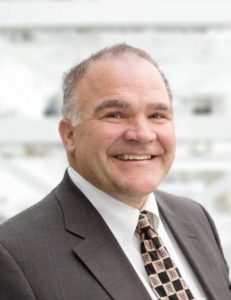
Alan Olsen, is the Host of the American Dreams Show and the Managing Partner of GROCO.com. GROCO is a premier family office and tax advisory firm located in the San Francisco Bay area serving clients all over the world.
Alan L. Olsen, CPA, Wikipedia Bio

GROCO.com is a proud sponsor of The American Dreams Show.
The American Dreams show was the brainchild of Alan Olsen, CPA, MBA. It was originally created to fill a specific need; often inexperienced entrepreneurs lacked basic information about raising capital and how to successfully start a business. Alan sincerely wanted to respond to the many requests from aspiring entrepreneurs asking for the information and introductions they needed. But he had to find a way to help in which his venture capital clients and friends would not mind.
The American Dreams show became the solution, first as a radio show and now with YouTube videos as well. Always respectful of interview guest’s time, he’s able to give access to individuals information and inspiration previously inaccessible to the first-time entrepreneurs who need it most. They can listen to venture capitalists and successful business people explain first-hand, how they got to where they are, how to start a company, how to overcome challenges, how they see the future evolving, opportunities, work-life balance and so much more..
American Dreams discusses many topics from some of the world’s most successful individuals about their secrets to life’s success. Topics from guest have included:
Creating purpose in life / Building a foundation for their life / Solving problems / Finding fulfillment through philanthropy and service / Becoming self-reliant / Enhancing effective leadership / Balancing family and work…

MyPaths.com (Also sponsored by GROCO) provides free access to content and world-class entrepreneurs, influencers and thought leaders’ personal success stories. To help you find your path in life to true, sustainable success & happiness. It’s mission statement:
In an increasingly complex and difficult world, we hope to help you find your personal path in life and build a strong foundation by learning how others found success and happiness. True and sustainable success and happiness are different for each one of us but possible, often despite significant challenges. Our mission at MyPaths.com is to provide resources and firsthand accounts of how others found their paths in life, so you can do the same.
Mastering Business Growth with Howard Shore
Howard Shore, Founder and CEO of Activate Group Inc. discusses managing, even mastering, business growth and the challenges growing quickly can present on Alan Olsen‘s American Dreams Show. Transcript: Alan Olsen Welcome to American Dreams. My guest today is Howard Shore. Howard, welcome to today’s show. Howard Shore Alan, thank you for having me. Alan…
Prosperity and Self-Reliance Zealot Steve Alder
From North America to Ghana, Africa, Steve Alder, President of Ensign Global College (www.ensign.edu.gh), sits down to discuss how a professor helps to build global prosperity and self-reliance on Alan Olsen‘s American Dreams Show. Transcript: Alan Olsen Welcome to American Dreams I’m visiting here today with Steve Alder. Steve, welcome to today’s program. Steve Alder Thank…
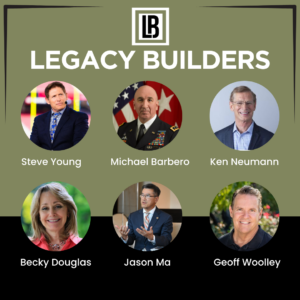
Steve Young on Building an Epic Family Legacy
Retired 49r Steve Young Discusses Building a Family Legacy at the Legacy Builders Event on May 15, 2024 As GROCO celebrates three decades of excellence in family office tax and advisory services, we have developed the Legacy Builders to stands as a testament to the firm’s enduring vision: to transform wealth into a powerful tool…
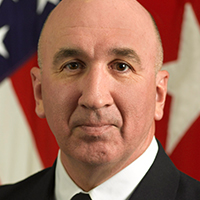
Leadership, Duty, Honor & Country With Lt. Gen. Mike Barbero
Retired US Army Lieutenant General, Michael D. Barbero, discusses leadership, service, duty, honor, and country on Alan Olsen‘s American Dreams Show. Transcript: Alan Olsen Hi, this is Alan Olsen and welcome to American Dreams. My guest today is General Michael Barbero. General, welcome to today’s show. Mike Barbero Thanks, Alan, how are you? Thanks for having me. It’s…