
How to Ride Out a Recession

How to Ride Out a Recession
By Clare Flynn
The natural instincts of most businesses, is to pull in their horns when a recession looms. Just as we consumers are now abandoning the high street and reveling in frugality, so many businesses lean towards cutting costs and hunkering down.
This is a big mistake.
Great companies always outperform their competitors during hard times. They seize the opportunity to grab market share by continuing to invest in their customers, their products and services and keep a long -term focus.
Whilst many companies go to the wall during recessions, history is rich with examples of those that built unassailable gains and rode to greatness in these periods. Some of the world’s most significant inventions and most successful corporations were born during depressions or recessions. New needs emerge in such times: Health insurance was born out of the US Depression as were stereo recordings, digital computers, Monopoly, sunglasses, ballpoint pens, and bubble gum, to name but a few. Messrs Hewlett and Packard got their products rolling from the famous garage in 1939. Despite industry in crisis and companies going under, Fortune magazine, the world’s first and most successful business publication was born at the height of the Great Depression: this was a counter-intuitive and risky venture at the time but proved an unqualified success.
Continue to invest – your money goes further
During recessions, when everyone else is cutting back on marketing expenditure and research and development efforts, the wisest companies continue to invest in these. They are often able to do so because they managed their businesses prudently during easier times, keeping costs under control and building a valuable war chest. This makes sense, as during a recession money goes further, as suppliers cut costs, and are ready to make deals. For those with available resources, this can be a great time to get acquisitive. Sadly most firms work the other way round, spending freely in good times and then savagely cutting costs when times get tough.
Lavish time and effort on customers
For those companies or small businesses that haven’t built up a war chest, there are still great opportunities. What they lack in funds they can make up in time and effort, by lavishing attention on customers. This means spending time to listen to them and find out how to serve them better; to get them to collaborate in dreaming up new products or solutions; to look for ways to offer them more value, rather than lower prices and to find ways to lock in their loyalty.
Keep on advertising
Advertising and marketing is often the first spending victim of recessionary cost-cutting. It is such an easy budget to slash, but you do so at your peril. Look for ways to use the money more efficiently, to seek out better deals and to try new approaches, but NEVER stop communicating with your target market. If your competitors cut back their spending, rub your hands with glee and see it as a golden opportunity to gain share at their expense. In a normal market, marketing is often a game of ‘tit for tat’ that makes it hard to gain ground and often results in standoff. In recessionary times, you can find yourself on an empty dance floor with the audience’s eyes trained on you alone. Go for it!
Ideas and insights are free!
Whilst money may be tight, creativity comes free, as does spending time understanding your customers’ needs. Time spent now hanging out with customers and consumers, observing them, talking with them and listening to them will yield rich insights about their needs and behavior that will give a huge edge to your new product and service development efforts and help you hone your advertising messages.
History shows that it is twice as easy to grow share in a recession than in buoyant economic periods. Those firms that succeed in growing market share in this recession are likely to hang on to it, while those that lose it will have a tough and very costly battle to regain ground when things pick up.
Clare Flynn is the Managing Director of ANT Consulting. ANT helps companies grow their business by developing growth strategies and plans, generating and implementing big ideas and unleashing the creative power of their employees. She spent over 20 years in senior marketing roles in the UK and abroad for global companies Procter & Gamble, Kimberly-Clark and United Biscuits as well as 2 years with?WhatIf! The Innovation Company.
We hope you found this article about “How to Ride Out a Recession” helpful. If you have questions or need expert tax or family office advice that’s refreshingly objective (we never sell investments), please contact us or visit our Family office page or website www.GROCO.com.
To receive our free newsletter, contact us here.
Subscribe our YouTube Channel for more updates.
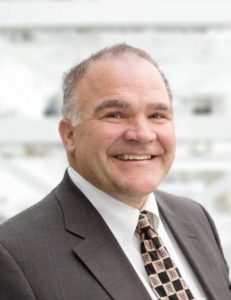
Alan Olsen, is the Host of the American Dreams Show and the Managing Partner of GROCO.com. GROCO is a premier family office and tax advisory firm located in the San Francisco Bay area serving clients all over the world.
Alan L. Olsen, CPA, Wikipedia Bio

GROCO.com is a proud sponsor of The American Dreams Show.

The American Dreams show was the brainchild of Alan Olsen, CPA, MBA. It was originally created to fill a specific need; often inexperienced entrepreneurs lacked basic information about raising capital and how to successfully start a business.
Alan sincerely wanted to respond to the many requests from aspiring entrepreneurs asking for the information and introductions they needed. But he had to find a way to help in which his venture capital clients and friends would not mind.
The American Dreams show became the solution, first as a radio show and now with YouTube videos as well. Always respectful of interview guest’s time, he’s able to give access to individuals information and inspiration previously inaccessible to the first-time entrepreneurs who need it most.
They can listen to venture capitalists and successful business people explain first-hand, how they got to where they are, how to start a company, how to overcome challenges, how they see the future evolving, opportunities, work-life balance and so much more..
American Dreams discusses many topics from some of the world’s most successful individuals about their secrets to life’s success. Topics from guest have included:
Creating purpose in life / Building a foundation for their life / Solving problems / Finding fulfillment through philanthropy and service / Becoming self-reliant / Enhancing effective leadership / Balancing family and work…

MyPaths.com (Also sponsored by GROCO) provides free access to content and world-class entrepreneurs, influencers and thought leaders’ personal success stories. To help you find your path in life to true, sustainable success & happiness. It’s mission statement:
In an increasingly complex and difficult world, we hope to help you find your personal path in life and build a strong foundation by learning how others found success and happiness. True and sustainable success and happiness are different for each one of us but possible, often despite significant challenges.
Our mission at MyPaths.com is to provide resources and firsthand accounts of how others found their paths in life, so you can do the same.
Mastering Business Growth with Howard Shore
Howard Shore, Founder and CEO of Activate Group Inc. discusses managing, even mastering, business growth and the challenges growing quickly can present on Alan Olsen‘s American Dreams Show. Transcript: Alan Olsen Welcome to American Dreams. My guest today is Howard Shore. Howard, welcome to today’s show. Howard Shore Alan, thank you for having me. Alan…
Prosperity and Self-Reliance Zealot Steve Alder
From North America to Ghana, Africa, Steve Alder, President of Ensign Global College (www.ensign.edu.gh), sits down to discuss how a professor helps to build global prosperity and self-reliance on Alan Olsen‘s American Dreams Show. Transcript: Alan Olsen Welcome to American Dreams I’m visiting here today with Steve Alder. Steve, welcome to today’s program. Steve Alder Thank…
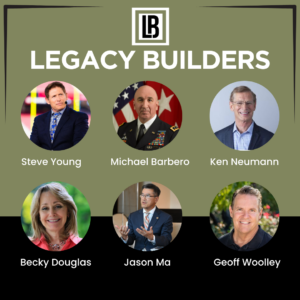
Steve Young on Building an Epic Family Legacy
Retired 49r Steve Young Discusses Building a Family Legacy at the Legacy Builders Event on May 15, 2024 As GROCO celebrates three decades of excellence in family office tax and advisory services, we have developed the Legacy Builders to stands as a testament to the firm’s enduring vision: to transform wealth into a powerful tool…
Leadership, Duty, Honor & Country With Lt. Gen. Mike Barbero
Retired US Army Lieutenant General, Michael D. Barbero, discusses leadership, service, duty, honor, and country on Alan Olsen‘s American Dreams Show. Transcript: Alan Olsen Hi, this is Alan Olsen and welcome to American Dreams. My guest today is General Michael Barbero. General, welcome to today’s show. Mike Barbero Thanks, Alan, how are you? Thanks for having me. It’s…