
5 Marketing Moves for Business Success

5 Marketing Moves for Business Success
By David Newman
Effective marketing can be simplified into five moves – five concrete actions – that you can implement immediately. Your challenge: try one or more of these NOW.
Marketing has traditionally been broken down to a formula known as “the 5P’s” – the five factors that make up an organization’s marketing strategy. If these are done consistently, well, and for a long enough period of time, these 5 factors also become part of their brand.
So far, so good. But the problem is that no one can seem to agree on exactly which 5 P’s are important, so the list typically includes: people, product, place, process, price, promotion, paradigm, perspective, persuasion, passion, positioning, packaging, and performance.
Wow. Sounds complicated, huh? I’m going to try and simplify effective marketing into five moves – five concrete actions – that you can implement immediately. Your challenge: try one or more of these NOW.
Move 1: Move Up
Want to try something different? The next time you’re speaking with a prospect, when the question of price comes up, DOUBLE your normal price and see what happens.
Am I crazy?
Maybe, maybe not. The other side of the coin is that maybe YOU’RE crazy for not charging for VALUE, but instead competing on PRICE. Businesses that compete on price lose. Period.
The easiest thing your competition can do is undercut your price. In fact, the first thing they will copy is your price. It takes no imagination, no creativity, no innovation, no market leadership, and no vision to lower the cost of something. And it hurts all parties involved. Lower prices always mean lower profits. Studies have shown that a 1% drop in price leads to an 8% drop in profit.
What happens when you double your usual price?
Several things. Prospects perceive:
An increase in the value of your product/service
An increased level of prestige in owning/using your product/service
An increased level of trust in you – and all your other offerings (the halo effect)
An increased level of confidence that your product/service really works
A marketing consultant that I respect once gave me a very valuable piece of advice. She said, “Be expensive or… be free.” Being one of the most expensive providers of a service is remarkable – people talk about their $200,000 Italian sports car or $21,000 platinum-plated cell phone. Nobody talks about their $19,000 GM sedan.
I’ve helped companies double their prices, with great success, and I’ve helped independent consultants double [and in one case triple] their fees. In each of those cases, they got more clients, not fewer. Details on how to do this in Move 3. And perhaps this means you’ll lose a few unprofitable clients along the way. If you don’t lose some unprofitable clients, you won’t have room to serve the more profitable ones when they come along. It’s professional suicide to continue focusing on serving a market sector “that can afford” to pay your old (low) prices. Price doesn’t find clients. VALUE finds clients. And those clients that value your work should – and will – pay according to that value.
Free is also a powerful price point. And, of course, free is remarkable. Which is another facet to moving up – you move up when you give VALUE first. For free. Got a great idea for a prospect? Great! SEND IT TO THEM. Even better, got a business lead for them? Hand it over! Did you come across an article, a profile, or a piece of research that directly impacts their business? Clip it and mail it to the top person with a brief note. That prospect’s door is now open.
Move 2: Move In
Moving in means moving closer to the customer. Live in their world, think about their problems, and think about their clients and prospects. What’s the first step? Research. Preparation. Homework. Industry, regional, business, and company news are now at every salesperson’s fingertips on the Internet. If you’re not intelligently researching your prospect’s issues, challenges, and pressures, how can you possibly come in with a credible solution?
Don’t like sitting at the computer all day? An even better idea is to hit the street. Visit businesses, talk to your contacts in the fields you serve, get some firsthand information about what’s going on in their world – what are their challenges, perspectives, obstacles, priorities; what are their dreams, their “only-ifs,” and their biggest aspirations?
Is this a lot of work? You bet. Do the majority of salespeople put in this kind of effort? No way. Which is exactly why YOU should. That brings us to Move 3.
Move 3: Move Ahead
Moving ahead means going above and beyond what most salespeople are doing. It means putting in the work – yes, the real, hard work – that makes the difference between being a peddler and being a partner.
Want to move ahead? Start by avoiding doing things your prospects dislike.
Here are the top 10 things salespeople do that buyers dislike according to a Purchasing magazine survey. See if you (or your sales team) might be guilty of any of the following professional no-no’s:
10.Failure to keep promises
9. Lack of creativity
8. Failure to make and keep appointments
7. Lack of awareness of the customer’s operation (“What do you guys do here?”)
6. Taking the customer for granted
5. Lack of follow-through
4. Lack of product knowledge
3. Overaggressiveness and failure to listen
2. Lack of interest or purpose (“Just checking in”)
… and the Number 1 dislike: Lack of preparation.
You can also move ahead by charging more (remember Move 1?) and DEMONSTRATING the VALUE of your product service with hard numbers.
In his insightful book, How to Become a Rainmaker, author Jeffrey Fox calls this process dollarizing. Dollarizing is one of the most powerful sales techniques because once you show (with real numbers that your prospect will provide you with) the return on investment – how THIS much spent will generate THIS much savings, or profits, or sales, or new clients, or hours, etc. – you basically shift the conversation from selling what you’re selling to SELLING MONEY.
In my seminars, I do an exercise called “The Money Machine” that will help you spell this out in hard dollars, very clearly.
The Money Machine goes one step further because you can use it monetize against:
competing products/services
the prospect doing nothing
the prospect doing it themselves
other things the prospect is already comfortable spending money on
Suddenly, your product/service becomes a real “investment”: meaning, you can show people the math behind “this much IN” for “this much OUT.” There’s nothing much easier than selling money at a discount!
Here’s another way to move ahead: stop the ridiculous game of “closing the sale.” Closing is not a technique; closing is not a trick; closing is not about magic phrases and looks and power games. Closing should be a natural extension of your conversation, and the two most effective questions you should ask your prospect as you near the end of your value-based discussion are:
Does what we’ve talked about so far make sense?
What would you like me to do next?
Answer to Question 1: If you’ve prepared for the meeting, discussed the prospect’s key issues, and monetized the value of your solution, of course it makes sense!
Answer to Question 2: “Let’s go ahead” or “Let’s do the paperwork.” Or if your prospect answers this with “Get Out” or “Drop Dead,” you have a pretty good idea that the sale is not ready to close. Seriously, carefully listening to the answer to this question will allow you to address any hidden concerns, hesitations, or issues – right then and there before the prospect would otherwise blurt out an abrupt “No!” to any other traditional “ask for the sale” verbiage that so many sales trainers recommend. Remember, you’re not there to sell – you’re there to HELP THE PROSPECT BUY. If you need to tattoo that on your forehead, be my guest..
Move 4: Move Aside
Here’s another thing that most sales and marketing people have a hard time with: you can’t be all things to all people. Move Aside is about finding your niche, and claiming your expertise in a narrow area of specialty. In plain English, this means you want to become the “Go-To Guy” for your specific product or service – the exact opposite of a “jack-of-all-trades and master of none.”
The people you speak with will have a very different reaction to these two mental images of your product/service:
“I think we can make this fit.”
“This is exactly what we’ve been looking for.”
Let me give you an example. There’s a real company that lists among its services “Carpet removal, house cleaning, odd jobs, catering.” Now, I don’t know about you, but when I want a caterer, I’m looking for someone who does catering 24/7. I don’t want to have to worry about “Did they wash their hands after the carpet removal job and before serving my guests?” In fact, if I’m looking for a caterer for a wedding, I might even be drawn to “Wedding Bells Catering” much more so than “Sam’s Catering” or “Good Eats Catering.”
Here’s another example. There are lots of graphic design companies that do all sorts of work – websites, logo design, brochures, collateral material, wine labels, book packaging, etc. You name it, they do it. And business is generally OK. (But let’s face it, if they were going like gangbusters, they probably wouldn’t have sought out my help!) Some of them had a hard time differentiating themselves from the competition and others found it challenging to develop a strong client base and referral network. We’ve had some good success developing their current business, but when we delve into the possibilities of “Moving Aside” and carving out a real niche, or developing one thing that is their flagship specialty, most of my clients get cold feet.
One company (not my client – too bad for me!) that has done this with fabulous results is MaxEffect. They made a tough call. They moved aside. They could obviously do a wide variety of things with their graphic design and advertising skills, but they do ONE THING: they work exclusively on yellow pages ads. That’s it. If you want a killer yellow pages ad with bold graphics, custom or stock photography, clean layout, and a strong, compelling message, these are your go-to people. They’ve designed hundreds and hundreds of yellow pages ads and they’ve built a fanatical client base, and they get a steady stream of referrals – not to mention the steady and growing flow of client work.
Move 5: Move Alone
Right now, you are lost in a sea of gray. Me-too rules the day. Everywhere you look, there is more and more and MORE of the SAME OLD THING sold by the SAME OLD PEOPLE in the SAME OLD WAY. Boring. And deadly.
The problem is that people don’t buy gray. If you and your company and your offerings blend into the background, you might as well close up shop right now. Let me put it another way: all companies go bankrupt. It’s just a matter of time. Want proof? Out of the 100 largest companies of 50 years ago, 17 survive today. And none of those 17 are the market leaders they used to be.
Why? Shift happens. If you’re not separating yourself from the crowd, you’re blending in – and nobody will even notice you, much less seek you out and tell their friends about you.
Here’s an example of a company that really hasn’t been doing a bad job – but they’re also not the standouts they used to be.
On a recent call to American Express, an executive was straightening out a billing problem. At the end of the call, the operator asked her, “Have I exceeded your expectations for this call?” and the exec flatly answered, “No.” She had a billing problem, and the rep fixed it. That’s the expectation.
Now, if the rep had offered the executive a $50 American Express gift check to be used at any of American Express’ online retail partners, THAT would have exceeded expectations, right? That story would be worth repeating to 10-20 people. Can you imagine the executive telling anyone, “Hey, I called AmEx to fix my billing error. Guess what? They did it!” That’s not moving alone.
Here’s a good test to see if your marketing and sales strategies are in the category of “moving alone” – they are if you’re doing something that:
is “simply not done” in your industry
customers will make a remark about (remarkable!)
goes against conventional wisdom (I call this “uncommon sense”)
others (including your competition) think is “crazy”
others (including your competition) will actually be AFRAID to copy
Get silly. Get crazy. Get an attitude. Get noticed.
Author Seth Godin perhaps put this most succinctly when he said, “Safe is risky. And risky is safe.”
Let me conclude with a recap of the 5 Marketing Moves:
Move Up = Get more valuable
Move In = Get closer
Move Ahead = Get smarter
Move Aside = Get specialized
Move Alone = Get noticed
Taken together, these will also help you make the Ultimate Move = Get insanely great.
And remember the immortal words of Jerry Garcia:
“You don’t want to be considered the best of the best.
You want to be considered the only ones who do what you do.”
Marketing and innovation expert David Newman has written 8 books and has been quoted in dozens of national media outlets. David is also a sought-after speaker and seminar leader.
We hope you found this article about “5 Marketing Moves for Business Success” helpful. If you have questions or need expert tax or family office advice that’s refreshingly objective (we never sell investments), please contact us or visit our Family office page or our website at www.GROCO.com. Unfortunately, we no longer give advice to other tax professionals gratis.
To receive our free newsletter, contact us here.
Subscribe to our YouTube Channel for more updates.
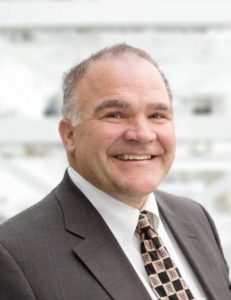
Alan Olsen, is the Host of the American Dreams Show and the Managing Partner of GROCO.com. GROCO is a premier family office and tax advisory firm located in the San Francisco Bay area serving clients all over the world.
Alan L. Olsen, CPA, Wikipedia Bio

GROCO.com is a proud sponsor of The American Dreams Show.

The American Dreams show was the brainchild of Alan Olsen, CPA, MBA. It was originally created to fill a specific need; often inexperienced entrepreneurs lacked basic information about raising capital and how to successfully start a business.
Alan sincerely wanted to respond to the many requests from aspiring entrepreneurs asking for the information and introductions they needed. But he had to find a way to help in which his venture capital clients and friends would not mind.
The American Dreams show became the solution, first as a radio show and now with YouTube videos as well. Always respectful of interview guest’s time, he’s able to give access to individuals information and inspiration previously inaccessible to the first-time entrepreneurs who need it most.
They can listen to venture capitalists and successful business people explain first-hand, how they got to where they are, how to start a company, how to overcome challenges, how they see the future evolving, opportunities, work-life balance and so much more..
American Dreams discusses many topics from some of the world’s most successful individuals about their secrets to life’s success. Topics from guest have included:
Creating purpose in life / Building a foundation for their life / Solving problems / Finding fulfillment through philanthropy and service / Becoming self-reliant / Enhancing effective leadership / Balancing family and work…

MyPaths.com (Also sponsored by GROCO) provides free access to content and world-class entrepreneurs, influencers and thought leaders’ personal success stories. To help you find your path in life to true, sustainable success & happiness. It’s mission statement:
In an increasingly complex and difficult world, we hope to help you find your personal path in life and build a strong foundation by learning how others found success and happiness. True and sustainable success and happiness are different for each one of us but possible, often despite significant challenges.
Our mission at MyPaths.com is to provide resources and firsthand accounts of how others found their paths in life, so you can do the same.
Mastering Business Growth with Howard Shore
Howard Shore, Founder and CEO of Activate Group Inc. discusses managing, even mastering, business growth and the challenges growing quickly can present on Alan Olsen‘s American Dreams Show. Transcript: Alan Olsen Welcome to American Dreams. My guest today is Howard Shore. Howard, welcome to today’s show. Howard Shore Alan, thank you for having me. Alan…
Prosperity and Self-Reliance Zealot Steve Alder
From North America to Ghana, Africa, Steve Alder, President of Ensign Global College (www.ensign.edu.gh), sits down to discuss how a professor helps to build global prosperity and self-reliance on Alan Olsen‘s American Dreams Show. Transcript: Alan Olsen Welcome to American Dreams I’m visiting here today with Steve Alder. Steve, welcome to today’s program. Steve Alder Thank…

Steve Young on Building an Epic Family Legacy
Retired 49r Steve Young Discusses Building a Family Legacy at the Legacy Builders Event on May 15, 2024 As GROCO celebrates three decades of excellence in family office tax and advisory services, we have developed the Legacy Builders to stands as a testament to the firm’s enduring vision: to transform wealth into a powerful tool…
Leadership, Duty, Honor & Country With Lt. Gen. Mike Barbero
Retired US Army Lieutenant General, Michael D. Barbero, discusses leadership, service, duty, honor, and country on Alan Olsen‘s American Dreams Show. Transcript: Alan Olsen Hi, this is Alan Olsen and welcome to American Dreams. My guest today is General Michael Barbero. General, welcome to today’s show. Mike Barbero Thanks, Alan, how are you? Thanks for having me. It’s…