
Family Limited

This FLP Alert is directed at clients and their advisors who have already established Family Limited Partnership irs (“FLP’s”) and those clients who are considering a partnership as part of their estate plan.
With all the attacks the IRS has made on FLP’s over the past few years, culminating at the Strangi III decision in July 2005, many have inquired as to the continued viability of FLP’s, particularly with respect to estate tax valuation discounts.
The Strangi cases (I, II and III) were extreme cases involving a fact pattern that weighed heavily against the taxpayer and should be used to clarify how to structure an FLP in order to minimize tax consequences.
Background – In the Strangi case, Mr. Strangi’s son-in-law, acting as his agent under a durable power of attorney, created an FLP two months before his death in 1994. Approximately 98% of Mr. Strangi’s net worth was transferred to the FLP and he became the 99% limited partner; however, he also retained a small percentage of the 1% general partnership interest.
On Mr. Strangi’s estate tax return, the executor reported the value of Mr. Strangi’s partnership interest at a discount from the value of the underlying partnership assets using the “estate tax valuation discount.” In claiming this discount the executor asserted that the FLP agreement created restrictions that would cause a third party to value the are limited partnership distributions taxable interest lower than the value of the underlying assets held by the partnership.
On audit, the IRS disagreed and informed the executor that it was seeking an additional $2.5 million in estate taxes. Litigation has continued since then, with the most recent decision in favor of the IRS, referred to a Strangi III. It is unknown at this time whether the Estate will appeal this decision to the U.S. Supreme Court.
§ 2036(a) of the Internal Revenue Code provides that transferred assets can still be included in the taxable estate if prior to death the decedent retained (1) possession or enjoyment of the assets or (2) the right to designate persons who shall possess or enjoy the assets. In Strangi II, which was upheld by Strangi III, the courts determined that § 2036(a) applied to the assets held by the Strangi FLP, thereby increasing the estate’s tax liability considerably.
Lessons from Strangi III – Here is what we have learned as far as what to avoid in the formation of FLP’s, and things to look for in the operation and management of FLP’s.
• Don’t put all your assets in the partnership. The partnership should be viewed as a business or investment vehicle, not a tax planning vehicle or account. Reserve an amount of assets outside of the partnership sufficient to allow you to live in your desired standard of living for the remainder of your anticipated life expectancy.
In addition, in the Strangi case, the IRS was highly critical that the FLP paid estate administration expenses following Mr. Strangi’s death. Therefore, it is probably a good idea to include anticipated expenses in the reserve described above, perhaps even considering a reserve for estimated estate and inheritance taxes, or providing for those taxes through a life insurance policy.
• Don’t put “personal use” assets in the partnership. One of the many facts that caught the IRS’s attention was Mr. Strangi’s occupying his home rent-free after it had become a partnership asset. Personal use assets include vacation homes, boats, airplanes, art collections and similar items. It’s just not a good idea to put these in a family partnership tax return.
• Don’t make any distribution that fails to follow the terms of the partnership agreement. Most FLP agreements require that when the general partner makes distributions to the partners, the distributions must be made pro-rata based on each partner’s proportionate interest in the partnership.
Distributions to only one limited partner implies to the IRS that there is some sort of agreement among the partners to benefit one partner over others This can provide the IRS with significant ammunition against the valuation discounts.
• Don’t make too many distributions. The IRS is consistently arguing that most FLP’s have no business purpose, and in certain situations is finding success with that argument in the courts. Treat the partnership like a business and have a business purpose for the FLP. Most well run businesses do not distribute every dollar – they assess their opportunities and first seek to reinvest in the business. If adequate reserves have been identified, the partnership cash flow should not be necessary to support the lifestyle of the limited partners. The retained funds should then be invested for the benefit of all the partners.
• Don’t fail to re-title assets that belong to the partnership. Once it is determined what assets will be transferred to the partnership, be sure to change their title. For example, if an investment account is to be a partnership asset, then change the account title to the name of the partnership, even if this requires opening a new account and closing the old. A very clear line needs to be maintained between which assets belong to the partnership and which assets belong to the limited partners as individuals.
• Don’t think that once the partnership document is signed you can rest easy. Be cautious in the operation of the partnership entity. Keep accurate books and records. Do not use partnership assets for non-partnership purposes and do not co-mingle partnership funds or expenses with personal funds or expenses.
• Don’t concentrate control in a limited partner. Be aware of retained voting rights, the right to remove general partners, and rights to amend the agreement. It’s not just about the percentages. Pay attention to control held in different capacities, for example, individually and as trustee.
• Don’t have the senior family member (who in many cases contributes most of the assets) serve as the general partner or have control over the general partners. This has to do with control over partnership assets, and the IRS is looking at who ultimately determines who gets to enjoy those assets. When the IRS perceives that the person who contributed those assets also has the right to make these determinations, it may seek to include the partnership assets in that person’s estate, thereby ignoring the discounts. Because of this, it is essential that the person contributing the bulk of the assets is comfortable with that loss of control.
• Don’t procrastinate. If you are interested in this type of planning and have not done so, make your decision. Many FLP’s have successfully been attacked by the IRS in situations that involved the death of the founder closely after the creation of the partnership. One of the many non-tax reasons to form as FLP is the potential asset protection features a limited partner may enjoy.
• Don’t assume that your existing partnership has been adequately managed simply because the partnership tax return has been filed every year. The idea of FLPs generating valuation discounts has been a popular estate planning tool since the late 1980’s.
Many partnerships have been created and have operated since that time. As any advisor will tell you, what may have seemed an appropriate design feature in 1990 may not be a good idea today. Similarly, income tax returns alone typically will not identify and expose problems in the management of the partnership. Failure to address these issues in many older partnerships will simply provide ample ammunition to the IRS.
• Don’t try to do it alone. Hire competent advisors, including an attorney, CPAs and valuation specialists. While the professional fees are sometimes expensive, failure to properly plan and carry out the operation of the partnership properly can have expensive consequences.
If you are considering an FLP, consider reviewing these points with your advisors to insure they are covered. If you, or a family member, have an existing FLP, you may want to consider a “checkup” to ensure your structure and operations will have a better chance of withstanding the potential for IRS scrutiny.
To receive our free newsletter, contact us here.
Subscribe our YouTube Channel for more updates.
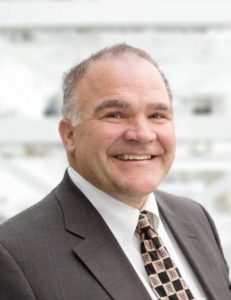
Alan Olsen, is the Host of the American Dreams Show and the Managing Partner of GROCO.com. GROCO is a premier family office and tax advisory firm located in the San Francisco Bay area serving clients all over the world.
Alan L. Olsen, CPA, Wikipedia Bio

GROCO.com is a proud sponsor of The American Dreams Show.

The American Dreams show was the brainchild of Alan Olsen, CPA, MBA. It was originally created to fill a specific need; often inexperienced entrepreneurs lacked basic information about raising capital and how to successfully start a business.
Alan sincerely wanted to respond to the many requests from aspiring entrepreneurs asking for the information and introductions they needed. But he had to find a way to help in which his venture capital clients and friends would not mind.
The American Dreams show became the solution, first as a radio show and now with YouTube videos as well. Always respectful of interview guest’s time, he’s able to give access to individuals information and inspiration previously inaccessible to the first-time entrepreneurs who need it most.
They can listen to venture capitalists and successful business people explain first-hand, how they got to where they are, how to start a company, how to overcome challenges, how they see the future evolving, opportunities, work-life balance and so much more..
American Dreams discusses many topics from some of the world’s most successful individuals about their secrets to life’s success. Topics from guest have included:
Creating purpose in life / Building a foundation for their life / Solving problems / Finding fulfillment through philanthropy and service / Becoming self-reliant / Enhancing effective leadership / Balancing family and work…

MyPaths.com (Also sponsored by GROCO) provides free access to content and world-class entrepreneurs, influencers and thought leaders’ personal success stories. To help you find your path in life to true, sustainable success & happiness. It’s mission statement:
In an increasingly complex and difficult world, we hope to help you find your personal path in life and build a strong foundation by learning how others found success and happiness. True and sustainable success and happiness are different for each one of us but possible, often despite significant challenges.
Our mission at MyPaths.com is to provide resources and firsthand accounts of how others found their paths in life, so you can do the same.
Leadership, Duty, Honor & Country With Lt. Gen. Mike Barbero
Retired US Army Lieutenant General, Michael D. Barbero, discusses leadership, service, duty, honor, and country on Alan Olsen‘s American Dreams Show. Transcript: Alan Olsen Hi, this is Alan Olsen and welcome to American Dreams. My guest today is General Michael Barbero. General, welcome to today’s show. Mike Barbero Thanks, Alan, how are you? Thanks for having me. It’s…
Regenerative Medicine and Creating Wellness with Dr. David Haasse
Dr. David Haasse, Founder of the MaxWell Clinic discusses regenerative medicine and creating wellness on Alan Olsen‘s American Dreams Show. Transcript: Alan Olsen Welcome to American Dreams. My guest today is David Haasse. David, welcome to the show. David Haasse Thanks, Alan. Alan Olsen So do you have a remarkable background and career obviously that lot…
VC Success With Silicon Valley Veteran Andrew Romans
Andrew Romans, General Partner of 7BC Venture Capital, Author, and University Professor discusses navigating Silicon Valley, venture capital (VC), startup success, and the future of tech investment on Alan Olsen‘s American Dreams Show. Transcript: Alan Olsen Welcome to American Dreams. My guest today is Andrew Romans. Andrew, welcome to today’s show. Andrew Romans Thank you so…

How Entrepreneurs Shine With Gino Wickman
Gino Wickman, Founder of EOS Worldwide and author of “Shine” and “Traction: Get a Grip on Your Business” discusses How to shine as an Entrepreneur on Alan Olsen‘s American Dreams Show. Transcript: Alan Olsen Hi, this is Alan Olsen and welcome to American Dreams. My guest today is Gino Wickman. To welcome to today’s show. Gino…