
Employee Ownership Update
Employee Ownership
The following article appeared in the New York Times on May 21, 2006 and is one of the best articles about employee ownership that I have seen. It illustrates a few great examples of how employee ownership has helped companies achieve extraordinary success.
These Workers Act Like Owners (Because They Are)
By William C. Taylor
www.nytimes.com/2006/05/ 21/business/yourmoney/21mgmt.html
Unlike so many other chief executives, Cecil Ursprung will never be accused of losing sight of his shareholders. He sees them every day – in the parking lot, in the hallways, even on the factory floor.
That’s because, as chief executive of the Reflexite Corporation, he runs an enterprise largely owned by the people who work there: 500 employees who attend town hall meetings to discuss strategic issues, get monthly updates on finances and operating results and are steeped in the company’s overall performance.
“My bosses are all around me,” Mr. Ursprung said in an interview at the company’s technology center in Avon, Conn. “Three-quarters of the equity of this company is in the hands of people who have a direct impact on the business. We attract people who want to be in business for themselves, just not by themselves.”
Business at Reflexite has been good. It has annual sales of roughly $100 million, up substantially over the last few years, and major facilities in Connecticut and in Rochester, as well as 14 sites outside the United States. The company makes reflective material that is attached to tractor trailers and police cars, construction cones and road-work signs, firefighters’ coats and cycling vests. It also makes components for overhead projectors and motion sensors, as well as thin films that are an important part of the screens for mobile phones and laptops.
Reflexite’s operations are decidedly high tech. (“We believe in full employment for scientists and engineers,” Mr. Ursprung said.) The main reason his company has held its own against giant rivals like 3M, he asserts, is that its employees are so invested in the success of the company – literally.
Once a year, based on the performance of their business unit or site, workers get shares in the employee stock ownership plan that are worth 6 to 18 percent of their salaries. That includes 60 workers in a factory in the former East Germany and, starting next year, 110 workers in China. Workers can buy more shares and stock options for their personal accounts, and many do.
The shares have performed well. Reflexite’s ESOP took shape in 1985, with an initial contribution of $150,000. By 1995, the ESOP shares were worth $20 million. Today, it’s $40 million. “People are at their best when they’re in a constant state of mild dissatisfaction, when they’re always looking to make things a little better,” Mr. Ursprung said. “That’s what ownership does. It’s remarkable what gets unleashed when people share in the wealth they help create.”
Corey Rosen, executive director of the National Center for Employee Ownership, has been making that point for 25 years. Mr. Rosen says he believes that employee ownership has the potential to reverse two worrisome trends: the concentration of wealth in fewer and fewer hands, and disappointing corporate performance.
One obvious way to spread the benefits of capitalism is to invite employees to share ownership of the businesses that employ them. Back in 1981, when Mr. Rosen helped to found his organization, perhaps four million Americans owned shares in the companies where they worked. Today, the number may be as high as 30 million. “There are literally millions of people who are accumulating more assets through employee ownership than any other form of wealth outside the value of their home,” he said.
Employees who own a big share of their company are more likely to innovate, stay focused on quality and hold management accountable. As some companies struggle under slipshod governance, ineffective leadership and bloated costs, organizations that build an “ownership culture” in the workplace develop a stronger position in the marketplace. “Companies need more people to make more decisions about more things more quickly,” Mr. Rosen said. “Employee ownership is a model for that kind of engagement. It’s better for the C.E.O., too. It’s more fun to be the boss when everyone cares about the company and knows what makes it tick.”
Richard J. Resch, the chief executive of KI, an office furniture maker in Green Bay, Wis., has seen firsthand the power of an engaged work force. He took charge of the company in the early 1980’s, when it was a tiny manufacturer of standard-issue products like metal folding chairs. Today, KI makes stylish furniture for Microsoft and other clients. The company has 3,000 employees and annual revenue of $600 million.
“When I joined the company there were just three shareholders, and there was no information about how we were doing financially,” Mr. Resch said. “Today, everyone is an owner, and I have tried to teach every person, right down to the technicians on the shop floor, how to think like a businessperson.”
Every month, for example, Mr. Resch and a delegation of managers squeeze into a conference room to scrutinize results by region, customer segment, factory and other variables. These managers then share the data with their teams or departments, so that by the end of the process the company’s marketers, designers, accountants and factory workers alike know which product lines are behind or ahead of plan, which operations are struggling and what they can do to help the company meet its targets.
This organizational transparency has paid huge dividends for KI’s owners. Outside investment bankers have performed annual appraisals that value KI as if it were a publicly traded company. Back in 1990, the appraisal valued its shares at $3.80 each. By the end of 2004, even after the dot-com bust that unraveled many of KI’s high-tech markets, the shares were worth $27 apiece.
“There are no secrets here,” Mr. Resch said. “Everyone has access to the data they need to help run the business. The power of an entrepreneurial company, owned by its employees, with total freedom of information – it’s a phenomenal competitive engine.” Of course, one potential obstacle to widespread employee ownership is that it asks so much of the employees: Is it reasonable to expect every person in an organization to act like a business owner? Mr. Ursprung of Reflexite says that it is – so long as you attract the right kind of person. His company has a 16-step hiring process to screen out candidates who cannot think like owners. “We like people who like to be in control of their future,” he said.
Fredrica Thode, president and C.E.O. of Hot Dog on a Stick, based in Carlsbad, Calif., is even more optimistic. The company has 1,300 workers, most of them part time. It is wholly owned by its employees, 85 percent of whom are women and 92 percent of whom are under 25 years old. The average age is 19 (which is the minimum age to be vested in the ESOP), but employees start as young as 15.
These youthful owners operate 105 food-court restaurants that win over customers with their simple menus, fun-loving presentation and high-energy workers wearing loud, unapologetically retro uniforms and wildly colorful hats. “Our employees are so bright,” Ms. Thode said. “They schedule their locations, order the food, look at the profit-and-loss statements. It’s like being C.E.O. of their own store.”
Indeed, last month, Mr. Rosen’s organization gave Ms. Thode’s company an award that emphasized the quality of its ESOP-related training materials. Ms. Thode explained later that they were designed by employees who were 20 and 21 years old. “We know how to get young employees ready for success in their lives,” she said. “People would be shocked at the level of understanding these kids have about the business.”
William C. Taylor, a founding editor of Fast Company, is co-author of “Mavericks at Work,” to be published in October by William Morrow.
To receive our free newsletter, contact us here.
Subscribe our YouTube Channel for more updates.
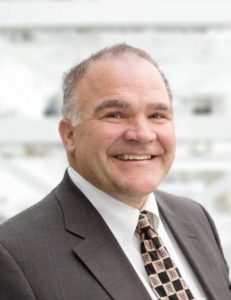
Alan Olsen, is the Host of the American Dreams Show and the Managing Partner of GROCO.com. GROCO is a premier family office and tax advisory firm located in the San Francisco Bay area serving clients all over the world.
Alan L. Olsen, CPA, Wikipedia Bio

GROCO.com is a proud sponsor of The American Dreams Show.
The American Dreams show was the brainchild of Alan Olsen, CPA, MBA. It was originally created to fill a specific need; often inexperienced entrepreneurs lacked basic information about raising capital and how to successfully start a business.
Alan sincerely wanted to respond to the many requests from aspiring entrepreneurs asking for the information and introductions they needed. But he had to find a way to help in which his venture capital clients and friends would not mind.
The American Dreams show became the solution, first as a radio show and now with YouTube videos as well. Always respectful of interview guest’s time, he’s able to give access to individuals information and inspiration previously inaccessible to the first-time entrepreneurs who need it most.
They can listen to venture capitalists and successful business people explain first-hand, how they got to where they are, how to start a company, how to overcome challenges, how they see the future evolving, opportunities, work-life balance and so much more..
American Dreams discusses many topics from some of the world’s most successful individuals about their secrets to life’s success. Topics from guest have included:
Creating purpose in life / Building a foundation for their life / Solving problems / Finding fulfillment through philanthropy and service / Becoming self-reliant / Enhancing effective leadership / Balancing family and work…

MyPaths.com (Also sponsored by GROCO) provides free access to content and world-class entrepreneurs, influencers and thought leaders’ personal success stories. To help you find your path in life to true, sustainable success & happiness. It’s mission statement:
In an increasingly complex and difficult world, we hope to help you find your personal path in life and build a strong foundation by learning how others found success and happiness. True and sustainable success and happiness are different for each one of us but possible, often despite significant challenges.
Our mission at MyPaths.com is to provide resources and firsthand accounts of how others found their paths in life, so you can do the same.
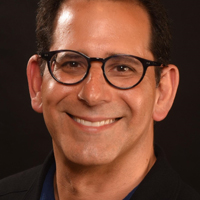
Mastering Business Growth with Howard Shore
Howard Shore, Founder and CEO of Activate Group Inc. discusses managing, even mastering, business growth and the challenges growing quickly can present on Alan Olsen‘s American Dreams Show. Transcript: Alan Olsen Welcome to American Dreams. My guest today is Howard Shore. Howard, welcome to today’s show. Howard Shore Alan, thank you for having me. Alan…
Prosperity and Self-Reliance Zealot Steve Alder
From North America to Ghana, Africa, Steve Alder, President of Ensign Global College (www.ensign.edu.gh), sits down to discuss how a professor helps to build global prosperity and self-reliance on Alan Olsen‘s American Dreams Show. Transcript: Alan Olsen Welcome to American Dreams I’m visiting here today with Steve Alder. Steve, welcome to today’s program. Steve Alder Thank…
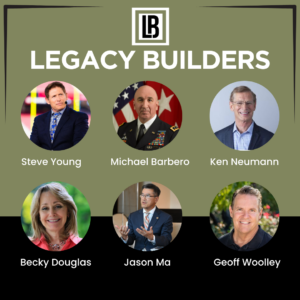
Steve Young on Building an Epic Family Legacy
Retired 49r Steve Young Discusses Building a Family Legacy at the Legacy Builders Event on May 15, 2024 As GROCO celebrates three decades of excellence in family office tax and advisory services, we have developed the Legacy Builders to stands as a testament to the firm’s enduring vision: to transform wealth into a powerful tool…
Leadership, Duty, Honor & Country With Lt. Gen. Mike Barbero
Retired US Army Lieutenant General, Michael D. Barbero, discusses leadership, service, duty, honor, and country on Alan Olsen‘s American Dreams Show. Transcript: Alan Olsen Hi, this is Alan Olsen and welcome to American Dreams. My guest today is General Michael Barbero. General, welcome to today’s show. Mike Barbero Thanks, Alan, how are you? Thanks for having me. It’s…