
Employee Hiring Decisions

Employee Hiring Decisions
Making Better Hiring Decisions
One of the most powerful ways a company can improve its profitability is to attract and retain quality employees.
In the “Simple Tools to Help Make Better Hiring Decisions” session of The Work Truck Show, consultant Fred Yetka offered guaranteed ways to reduce turnover — and the wasted costs that go with it.
Steven Sill, president of Aspen Equipment Company in Bloomington, Minnesota, followed by explaining how these techniques have been helping his truck equipment company for the past 10 years.
“If you do any one of these things, I guarantee you that you will make better hiring decisions, reduce costs, and save an awful lot of time,” said Yetka president of Yetka Management Group in Richfield, Ohio.
One of Yetka’s basic recommendations is to verify what applicants say. According to Yetka, about 35% of job applicants claim untrue achievements.
“You need to protect yourself and to be in charge of the entire employment process,” he said. “A simple reference check will take care of a number of these things. Check school credentials. Did they graduate with the degree they said they did? Do they have the course work that they said they did? Many employers never check those things — they accept them at face value.
In addition, 70% of job applicants puff up their credentials.
“We would like to give you some tools to weed through that and be able to hire people who are as they say they are,” Yetka said.
Turning it over
Employee turnover is huge, Yetka said. On average, 35% of current employees are actively looking for jobs. Another 40% of U S workers are willing to leave for slightly better pay or working conditions.
“About 75% of your workers could be on the market,” Yetka said.
Cost of turnover is staggering — approximately $1 million average annually for companies with 100 employees. Costs include expenses related to recruitment, training, lost customer relationships, overtime, and morale.
“These are tremendous costs, but you can do something about them,” Yetka said.
Compounding the turnover problem is the transition in management the industry is undergoing, including a switch from autocratic styles.
“The old management mentality was to hire for skill,” Yetka said. “We hired the best skilled people we could find — with little concern about how they fit in the organization. Today, we are hiring for fit and looking at culture. We are paying a lot more attention to employees today and training them to develop their skills.”
The big disconnect
A major reason for difficulties in attracting and retaining employees is erroneous assumptions by management regarding what employees consider important in a job.
To illustrate, Yetka presented the results of a survey first conducted in 1949 and updated several times since. Employees and management are asked to rank from one to 10 the factors employees value most in their jobs. The results, he says, have been consistent through the years. Through time, management has shown that on average it does not know what is important to its employees.
What matters most?
A look at what employees value and what management thinks employees want
Issue
Emp
Mgt
Appreciation
1
8
Good wages
5
1
Good working conditions
9
4
Interesting work
6
5
Job security
4
2
Promotion/growth opportunities
7
3
Management’s loyalty to workers
8
6
Feeling “in” on things
2
10
Sympathetic help with problems
3
9
Tactful discipline
10
7
Source: Lawrence Lindahl Personnel
“Employees want to be appreciated,” Yetka said. “That is what they value most. How many of you, before you left for this conference, told anyone in your shop that you appreciate the job they did? There is a big separation between manager’s understanding of employees and what employees want.”
Yetka cautioned business owners to evaluate their supervisory personnel.
“The vast majority of employees quit their managers long before they quit the company,” Yetka said. “If they are working for a lousy boss at a great company, they will leave. But I have seen employees stay with terrible working conditions when they work for someone they love and respect.”
The SIR principle
Yetka said research repeatedly shows that the most important things employees want can be summed up in this acronym: SIR (significance, integrity, and relationship).
Significance is the desire to be part of something bigger than they are.
“They want to know that what they are doing makes a difference inside that organization,” Yetka said. “Are they important? Are they doing something of value? If they ever feel that they aren’t, their productivity falls and their enthusiasm drops off. They want access to their leaders, and they want their leaders to listen to them. Don’t just meet with them when there is a problem. They want to participate in the decision-making process. They don’t want to be told what to do — they want to be asked what they think.”
Under integrity, Yetka said employees want to be able to trust their employers. They want to be told honestly how the company is performing, including any major orders that have been won or lost and how that may affect them.
Regarding relationships, employees want to know that management cares about them and that they have a life outside their jobs.
“Recognize and encourage their outside interests,” Yetka advised.
Employees also value personal growth. In order to grow, however, they must be allowed to make some mistakes.
“Most importantly, your employees want their families to be proud of their work and the company they work for.”
The bad apples
Yetka said companies may still have personnel problems even if they have a low turnover rate. He challenged management to identify an employee who should not be on the payroll.
“If you can think of that person, your employees also know that person,” Yetka said. “They are asking themselves how he can keep his job and still be disruptive and someone who brings down your workforce.
“Beliefs and perceptions drive values. Values create the culture of your company. It’s beliefs and assumptions held by your employees that drive productivity. All research tells us that your employees’ beliefs are directly connected to your bottom line.”
Yetka provided the audience with a printed guide for evaluating a company’s culture. The company, after being evaluated, should reflect Yetka’s SIR principle.
“If your company does not reflect a culture offering significance, integrity, and strong relationships, you are spending time and money training talent for your competitors.”
How to hire
Yetka offered a suggested hiring process which he says will save companies substantial time, money, and effort.
Create a written description of the position. “If you don’t, your wants will begin to change as you interview different candidates,” Yetka said.
Give employees a gauge for measuring their success. What do you want them to do or accomplish in 30, 60, and 90 days?
Receive resumes electronically so that you don’t get buried in paperwork. For those candidates that interest you, further screen them by e-mailing them a questionnaire.
If you like the answers to the questionnaire, send the candidate an Internet assessment tool.
Multiple companies offer Internet assessment tools, or assessments that are administered in person. Yetka was particularly positive about the Myers-Briggs Type Indicator test and one offered over the Internet by RightPath Resources.
When questioned about using this approach to hire technicians, Yetka said it should apply to all types of jobs.
“You are narrowing the funnel,” he said. “When you finally talk to someone, then you bring them in for what I call a behavioral interview. You have all this data before you, and you can use that interview to verify that data.
Yetka’s final steps are to select a candidate, check references, and finalize the offer. Once the candidate has been hired, the company must make it a point to help him fit in.
“You can’t just bring someone on and put them in a corner,” Yetka said. “You have to give them information.”
We hope you found this article about “Employee Hiring Decisions” helpful. If you have questions or need expert tax or family office advice that’s refreshingly objective (we never sell investments), please contact us or visit our Family office page or our website at www.GROCO.com. Unfortunately, we no longer give advice to other tax professionals gratis.
To receive our free newsletter, contact us here.
Subscribe our YouTube Channel for more updates.
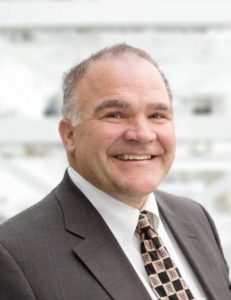
Alan Olsen, is the Host of the American Dreams Show and the Managing Partner of GROCO.com. GROCO is a premier family office and tax advisory firm located in the San Francisco Bay area serving clients all over the world.
Alan L. Olsen, CPA, Wikipedia Bio

GROCO.com is a proud sponsor of The American Dreams Show.

The American Dreams show was the brainchild of Alan Olsen, CPA, MBA. It was originally created to fill a specific need; often inexperienced entrepreneurs lacked basic information about raising capital and how to successfully start a business.
Alan sincerely wanted to respond to the many requests from aspiring entrepreneurs asking for the information and introductions they needed. But he had to find a way to help in which his venture capital clients and friends would not mind.
The American Dreams show became the solution, first as a radio show and now with YouTube videos as well. Always respectful of interview guest’s time, he’s able to give access to individuals information and inspiration previously inaccessible to the first-time entrepreneurs who need it most.
They can listen to venture capitalists and successful business people explain first-hand, how they got to where they are, how to start a company, how to overcome challenges, how they see the future evolving, opportunities, work-life balance and so much more..
American Dreams discusses many topics from some of the world’s most successful individuals about their secrets to life’s success. Topics from guest have included:
Creating purpose in life / Building a foundation for their life / Solving problems / Finding fulfillment through philanthropy and service / Becoming self-reliant / Enhancing effective leadership / Balancing family and work…

MyPaths.com (Also sponsored by GROCO) provides free access to content and world-class entrepreneurs, influencers and thought leaders’ personal success stories. To help you find your path in life to true, sustainable success & happiness. It’s mission statement:
In an increasingly complex and difficult world, we hope to help you find your personal path in life and build a strong foundation by learning how others found success and happiness. True and sustainable success and happiness are different for each one of us but possible, often despite significant challenges.
Our mission at MyPaths.com is to provide resources and firsthand accounts of how others found their paths in life, so you can do the same.
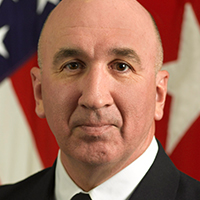
Leadership, Duty, Honor & Country With Lt. Gen. Mike Barbero
Retired US Army Lieutenant General, Michael D. Barbero, discusses leadership, service, duty, honor, and country on Alan Olsen‘s American Dreams Show. Transcript: Alan Olsen Hi, this is Alan Olsen and welcome to American Dreams. My guest today is General Michael Barbero. General, welcome to today’s show. Mike Barbero Thanks, Alan, how are you? Thanks for having me. It’s…
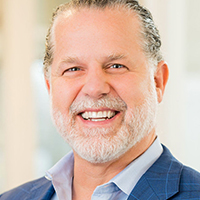
Regenerative Medicine and Creating Health with Dr. David Haase
Dr. David Haase, Founder of the MaxWell Clinic discusses regenerative medicine and creating health on Alan Olsen‘s American Dreams Show. Transcript: Alan Olsen Welcome to American Dreams. My guest today is David Haase. David, welcome to the show. David Haase Thanks, Alan. Alan Olsen So do you have a remarkable background and career obviously that…
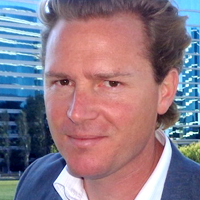
VC Success With Silicon Valley Veteran Andrew Romans
Andrew Romans, General Partner of 7BC Venture Capital, Author, and University Professor discusses navigating Silicon Valley, venture capital (VC), startup success, and the future of tech investment on Alan Olsen‘s American Dreams Show. Transcript: Alan Olsen Welcome to American Dreams. My guest today is Andrew Romans. Andrew, welcome to today’s show. Andrew Romans Thank you so…

How Entrepreneurs Shine With Gino Wickman
Gino Wickman, Founder of EOS Worldwide and author of “Shine” and “Traction: Get a Grip on Your Business” discusses How to shine as an Entrepreneur on Alan Olsen‘s American Dreams Show. Transcript: Alan Olsen Hi, this is Alan Olsen and welcome to American Dreams. My guest today is Gino Wickman. To welcome to today’s show. Gino…